
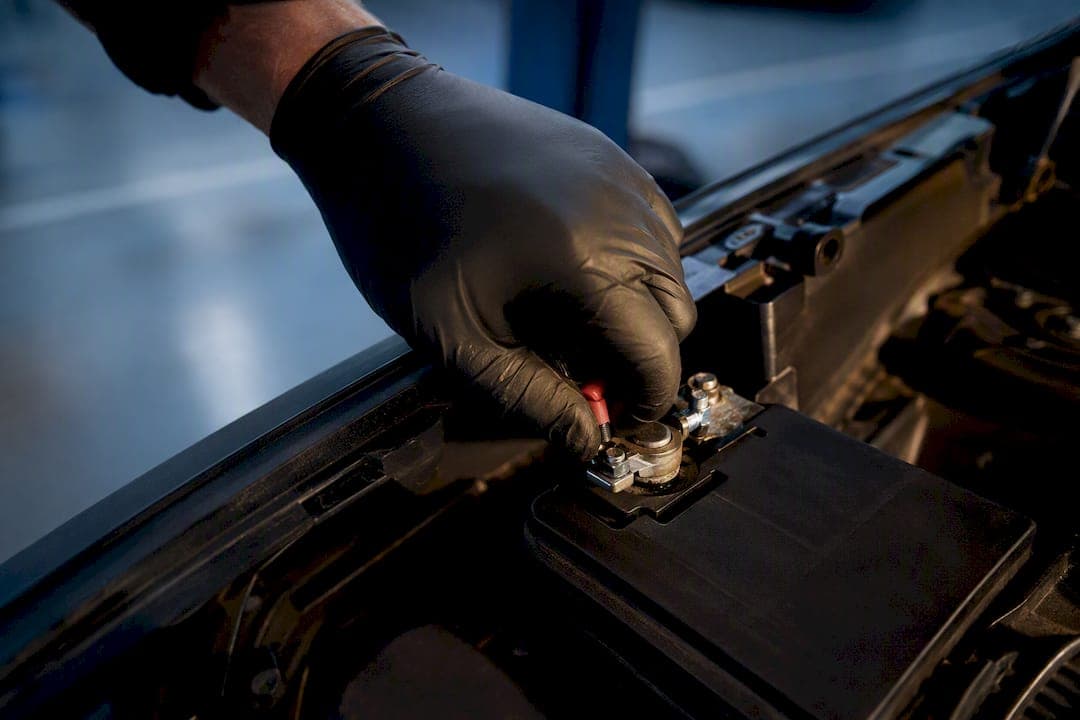
A postal bench crash-data reset on your original SRS module is the standard fix when the airbag light stays on because the module has recorded crash data. It clears the fault permanently, keeps your VIN and coding intact, and costs far less than dealer replacement. There's one condition: any deployed airbag, fired pretensioner or damaged sensor must be repaired first. Reset before that, and you risk sending the car back out with a restraint system that won't fire when it's needed.
TL;DR:
- A reset of the crash data inside the SRS module restores the airbag light without replacing the entire unit, provided all deployed hardware is repaired first.
- EEPROM crash data is stored permanently and requires a bench reset, as scan tools cannot erase this non-volatile memory.
- Modules with water damage, corrosion, or physical damage are typically beyond repair and must be replaced instead of reset.
- Manufacturers' safety recalls take priority, and modules under active recall must be handled according to official instructions rather than reset.
- Proper handling, including waiting for capacitor discharge and using anti-static protections, is essential to avoid damaging the module during shipping and repair.
Table of Contents
- Why an airbag light after battery replacement often means stored crash data
- When a reset isn't the right call
- How do you prepare and post an SRS module for reset?
- What happens once the module reaches the bench?
- Advice for independent garages and trade technicians
- What I've learned watching garages get this wrong
- Book a postal crash-data reset with Airbag Reset UK
- Sources
Why an airbag light after battery replacement often means stored crash data
Not every airbag light after a battery job is a coincidence. Reconnecting a battery after a knock, a minor shunt, or even aggressive off-roading can trip a sensor threshold and write a crash-data event to the SRS module's memory. Once that happens, the module locks itself into a fault state that a simple battery disconnect or scan-tool clear won't touch. That's the mechanism worth understanding before you troubleshoot anything else.
The module stores this event in EEPROM, non-volatile memory that survives a dead battery, a jump start, or a full disconnect and reconnect. It's built that way deliberately: crash data is supposed to be permanent evidence of what happened, useful for insurers and workshops alike. The catch is that this permanence is exactly why the light won't clear on its own.
A standard OBD-2 scanner can wipe volatile diagnostic trouble codes, but it generally can't remove EEPROM-stored crash data because that memory sits behind a level of protection ordinary tools don't reach. You'll see the codes vanish on the scanner, then watch the airbag light come straight back on the next self-test. That's the tell. If codes keep returning after every clear attempt, you're not dealing with a wiring fault or a loose connector. You're dealing with a locked crash-data record.
A bench reset works differently. It targets the module's non-volatile memory directly, deleting the stored event at chip level while leaving the vehicle-specific coding untouched. That distinction matters for cost:
- Scan-tool clear: removes surface-level DTCs, does nothing to locked crash data, light returns within one drive cycle.
- Bench crash-data reset: removes the event record itself, preserves VIN and coding, and the module goes straight back into the car.
- Dealer replacement: solves the problem but usually means buying a new module and paying for reprogramming on top.
When a reset isn't the right call
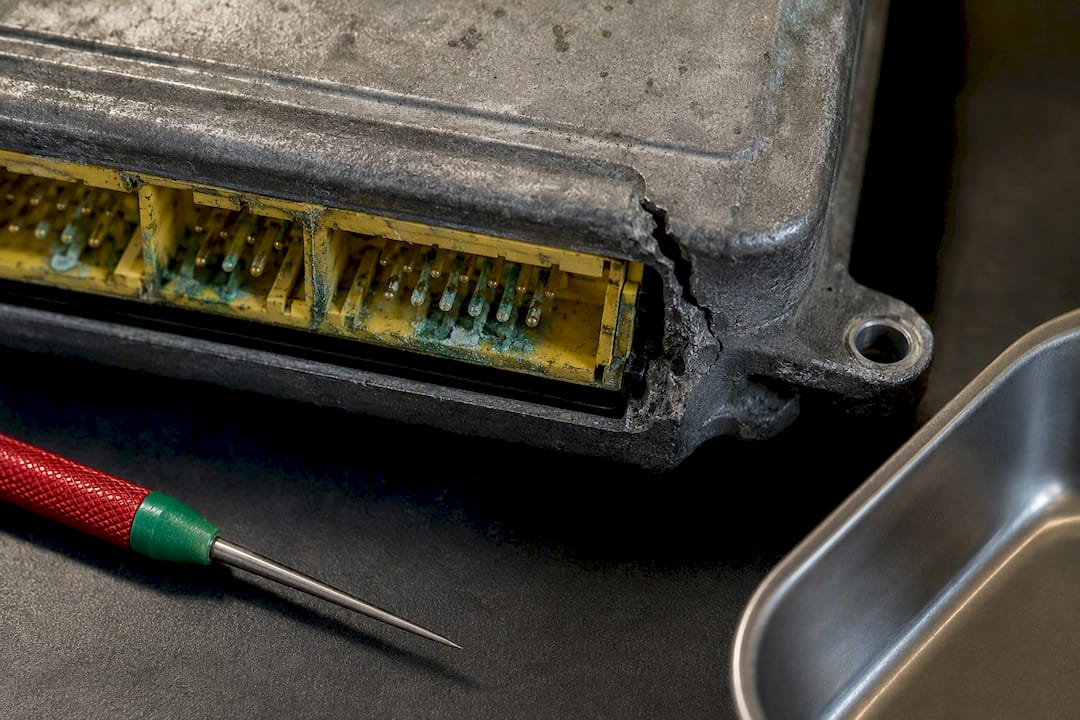
Some modules simply can't be saved, and pretending otherwise wastes money and risks safety. Water ingress, physical crushing, or corrosion on the module's pins usually means the internal electronics are compromised beyond a data-level fix. If the housing is cracked or the connector pins are green with corrosion, that's a replacement job, not a reset job.
Recalled modules are a separate issue entirely. Some part numbers get pulled by manufacturers for genuine safety defects unrelated to crash history, and any module flagged under an active recall needs handling per the manufacturer's specific instructions rather than being reset and reused. Checking the part number against recall databases before you do anything else takes minutes and avoids a serious liability problem later.
Statistic to remember: the sequence isn't optional. Manufacturer and industry guidance is consistent on repairing or replacing deployed hardware before any crash-data clear happens, because arming a module over broken sensors or spent pretensioners leaves the restraint system non-functional in a real second impact.
- Water damage or physical crushing: usually irreparable, plan for replacement.
- Active safety recall on that part number: follow manufacturer instructions, don't reuse.
- Deployed airbags or fired pretensioners not yet replaced: repair first, reset second, never the other way round.
How do you prepare and post an SRS module for reset?
Getting this sequence right protects both the car's safety system and your shipment. Follow it in order:
- Confirm hardware repairs are complete. Check every deployed airbag, pretensioner, and seatbelt tensioner has been replaced. Photograph the repair and keep receipts or invoices as proof.
- Disconnect the battery and wait. Give the system the manufacturer-specified time for capacitors to discharge fully before touching the module. Rushing this step is how people get hurt.
- Handle with ESD precautions. Static discharge can damage the module's internals before it even reaches the bench, so use an anti-static wrist strap or mat if you have one.
- Bag and box it properly. An anti-static bag inside a cushioned box protects the module from both static and transit knocks.
- Confirm the bench supports your part number before you post, and include the part number, your vehicle's VIN, contact details, and proof of hardware repair in the parcel.
- Ship tracked and insured. A module in transit with no tracking is a module you can't prove was ever sent.
Pro Tip: Photograph the module's label and part number before you disconnect anything. If a bench provider asks for identification, a clear photo often confirms compatibility faster than trying to describe the part over the phone.
What happens once the module reaches the bench?
Pricing for postal crash-data resets typically starts low for straightforward jobs, with more complex or multi-module resets costing more depending on the vehicle. Airbag Reset UK's services start at £35, with price matching offered against genuine like-for-like quotes from other providers, which is worth checking if you've already had a dealer quote.
Turnaround usually comes in tiers. Same-day processing is common for many standard modules once they arrive, while more complex units or those needing further diagnosis may take longer. Your choice of shipping method affects the total time more than the bench work itself does, so tracked next-day postage is worth the extra few pounds if downtime matters to you.
On the bench, the process typically runs:
- Archive the module's original crash data before touching anything, so there's a record of the pre-reset state.
- Clear the stored crash-event data at chip level.
- Test communication to confirm the module responds correctly.
- Return the part via tracked shipping.
Once it's back in the car, a properly reset module functions as before and shouldn't need dealer-level reprogramming. Confirm the fix with an SRS-capable scan tool, run a full self-test, and drive it long enough to be sure the light stays off rather than reappearing after a few dozen miles.
Advice for independent garages and trade technicians
Running postal resets through a workshop is straightforward once you build it into your process properly. Trade accounts typically bring discounted pricing, priority handling, and a portal for tracking multiple jobs at once, which matters when you're juggling several vehicles at different repair stages.
The workflow that protects you: inspect and replace all deployed restraint hardware in-house first, batch-ship modules together where volume allows it, and keep VIN records alongside repair paperwork for every job. If a customer or insurer ever questions the work, you'll want proof the hardware repair came before the reset, not after.
- Discounted trade rates and priority processing reduce per-job cost at volume.
- Batch shipping multiple modules together cuts postage overhead.
- Scan logs and hardware repair receipts protect you if liability is ever questioned.
Pro Tip: Keep a standard photo checklist for every SRS job, before removal, after hardware repair, and before shipping. It takes two minutes and saves arguments later.
Diagnostic equipment for capacitor discharge testing and ESD handling is worth having on the bench permanently rather than borrowing it each time; suppliers like HVAC Prime's automotive range stock relevant tools for workshops setting this up properly.
What I've learned watching garages get this wrong
Most mistakes I see happen at the shipping stage, not the technical stage. Somebody skips the capacitor discharge wait because the car's already on the ramp for the next job. Somebody posts a module in a plain envelope with no tracking, then can't prove it was sent when it goes missing. Somebody sends a module that's visibly cracked and expects a miracle.
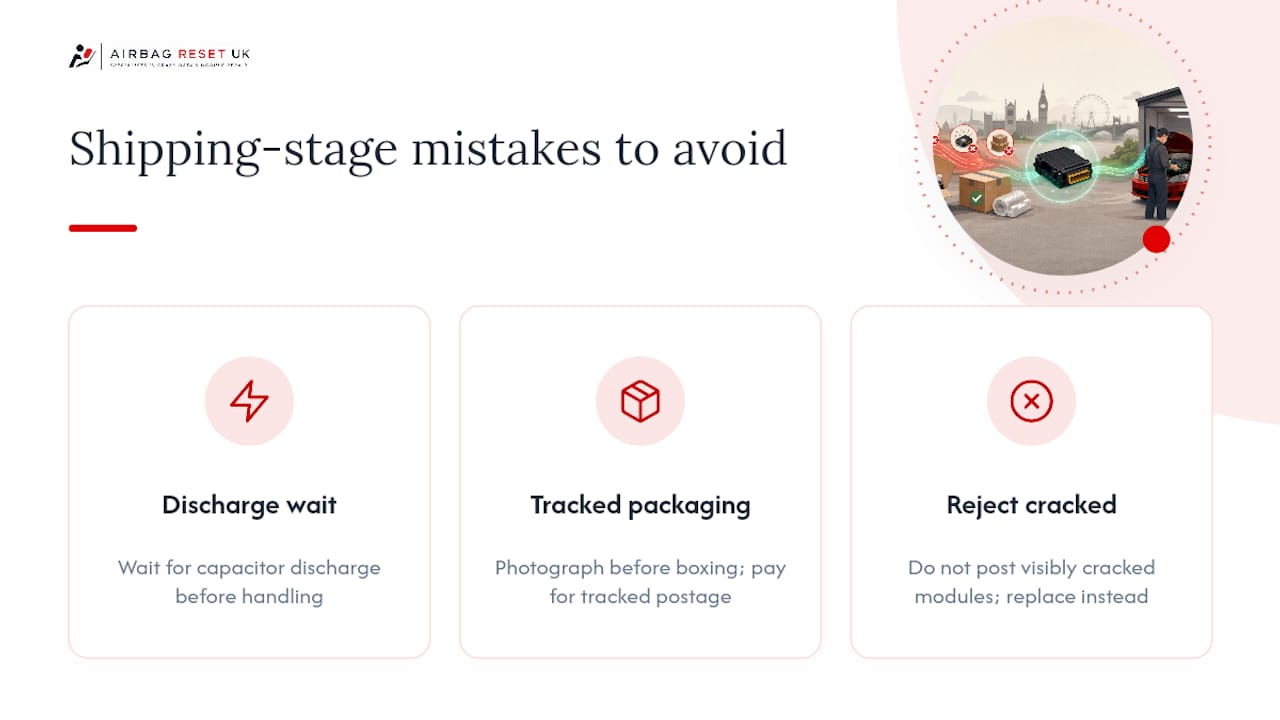
My checklist for anyone doing this for the first time: verify the part number twice, photograph the module before you box it, confirm every hardware repair is genuinely finished, and always pay for tracked postage. None of that is expensive, and all of it prevents the calls nobody wants to make.
The workshops that handle this well treat the reset as the last five minutes of a job that started properly, not a shortcut around a repair. Same-day turnaround only helps you if everything before shipping was done right. Get the sequence backwards and no bench service on earth can save you from a restraint system that doesn't work.
— John
Book a postal crash-data reset with Airbag Reset UK
If your airbag light won't clear after a battery change and you've already ruled out a wiring fault, a bench crash-data reset is the direct route back to a clean dashboard, and it costs a fraction of what dealers quote for a full module swap. Airbagresetuk handles cars, vans and motorhomes through a UK-wide postal service, with technicians bringing over 40 years of combined experience to every module that lands on the bench.
Every reset preserves your original VIN and coding, so there's no reprogramming headache once the module goes back in the car. Many jobs get same-day turnaround, services start at £35, and price matching applies against genuine like-for-like quotes if you've already shopped around. Trade accounts get discounted rates and priority handling, which is worth setting up if your garage sends more than the occasional module.
To book, check your module's part number against Airbagresetuk's supported list, or send a photo if you're not certain. Include your VIN and a note of any hardware repairs completed, then post the module tracked and insured. Get your quote and booking details here.