
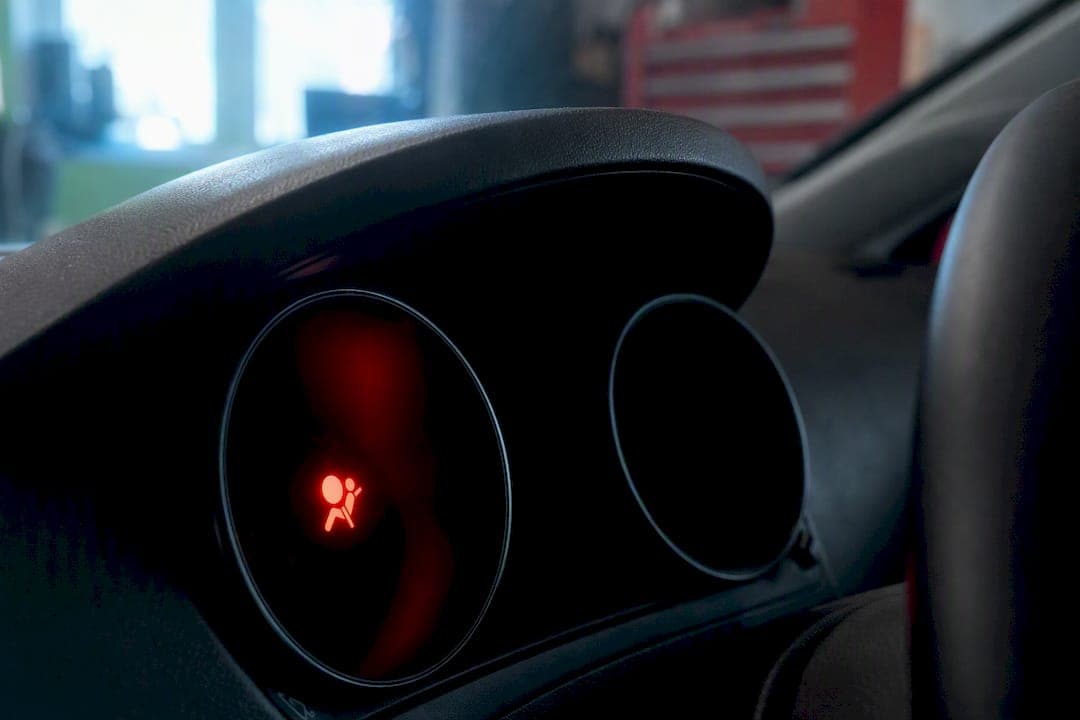
Your airbag light staying on with no stored codes almost always means the SRS system has flagged or disabled itself for safety reasons the generic scanner simply cannot see. Do not dismiss it as a glitch. Check your battery voltage and fuses, visually inspect the yellow seat connectors, and book an SRS-capable diagnostic within 48 hours.
TL;DR:
- Most airbag lights without stored codes are caused by intermittent issues like loose or corroded seat connectors, rather than a permanent fault.
- Generic OBD-II scanners typically can't access the necessary safety module data, risking false negatives during diagnostics.
- Voltage problems from low batteries or poor wiring can trigger faults that aren't visible on basic scans, and water damage or crash data can lock the system in a fault state.
- DIY checks for seat connector seating, fuse integrity, and steering wheel controls can reveal simple causes before professional intervention is needed.
- Proper diagnostics require SRS-capable tools or professional equipment, especially if previous attempts with cheap scanners show no codes but the warning persists.
Table of Contents
- What causes an airbag light no codes situation?
- Why does a scan show no codes when the light is on?
- Safe checks to try before booking a diagnostic
- When should you book a professional SRS diagnostic?
- How a postal module reset service actually works
- Inspecting airbag components beyond the connectors
- Can a software glitch cause the light without any stored fault?
- What happens if you ignore the airbag light?
- Technician perspective: why owners should act quickly but sensibly
- Book a module reset: how to prepare and what happens next
- Sources
What causes an airbag light no codes situation?
An empty fault memory doesn't mean nothing's wrong. It usually means the fault is intermittent, protected, or sitting somewhere your scanner can't reach.
The most common culprit by far is a loose or corroded yellow seat connector. Every modern car with side airbags runs a connector under each front seat, and these get flexed thousands of times as people slide the seat back and forth. Over a few years the pins loosen, moisture creeps in, or the plastic housing cracks slightly. The result is an intermittent connection that trips the light when you hit a bump or adjust the seat, then seemingly "fixes itself" a few miles later. Loose seat connectors are one of the most frequently cited causes of an unexplained SRS warning.
A failing clock spring is the second big one, and it's worth knowing the tell-tale signs beyond the dashboard light. The clock spring is the coiled ribbon cable that lets electrical signals pass through the steering column while still allowing the wheel to rotate. When it starts to fail, you'll often notice your horn stops working intermittently, cruise control buttons go dead, or steering wheel controls behave erratically before the airbag light ever comes on. That combination is a strong clue you're dealing with a clock spring, not a random electrical gremlin.
Voltage problems deserve more attention than most owners give them. SRS modules are fussy about power quality. A weak battery, a failing alternator, or even a jump start done badly can cause a brief voltage dip that the module interprets as a fault. Some modules log this kind of event as a "history" fault rather than a "current" one, which is precisely the kind of entry a basic scanner will skip straight past.
Then there's physical damage: wiring corrosion, water ingress around footwells or boot floors, and impact-damaged crash sensors in the bumpers or door pillars. These tend to be less common but more serious, and water damage in particular usually needs professional attention rather than a DIY fix.
Finally, if the car has been in any kind of collision, however minor, the module may have already recorded crash data. That data can lock the module into a fault state that persists even though nothing is currently "broken." Clearing it isn't something a generic scan tool touches.
The main causes, roughly in order of how often they turn up:
- Loose or corroded yellow seat connectors — the single most common cause, often intermittent
- Clock spring failure — usually paired with horn or steering control problems
- Low battery or voltage dip — can trigger a fault the module logs but a basic scanner won't show
- Wiring corrosion or water ingress — less frequent but often needs professional repair
- Stored crash data — the module has recorded an impact and needs a proper reset, not just a code clear
Why does a scan show no codes when the light is on?
Because most scan tools plugged into the OBD-II port simply weren't built to talk to the SRS module properly. This is the single biggest source of confusion for owners, and it's rarely explained well at the point of sale for cheap code readers.
A standard £15 to £30 OBD-II reader is designed for engine and emissions codes. Manufacturers put SRS diagnostics behind a different protocol, often requiring what's called an SRS-capable scanner or a dealer-level tool that can read "B" codes (body codes) rather than the "P" codes engine readers handle. Generic OBD-II tools frequently cannot access this data at all, which means a clean scan tells you almost nothing definitive.
There's also the intermittent fault problem. A loose connector might only break contact while the car is moving over rough road, or only when the seat is in a certain position. Plug a scanner in while the car is parked and stationary, and the fault simply isn't present to read. Some modules do log these as "history" faults, but only if the scanner you're using is sophisticated enough to pull that history rather than just the current fault list.
The fault exists. The tool just isn't seeing it.
Module communication failures compound the problem further. If the SRS module itself has a fault that stops it responding properly to a scan request, some cheap tools will simply report "no codes" rather than flagging a communication error, which is misleading in the worst way.
To actually confirm what's going on, you need one of the following:
- A dedicated SRS/airbag scan tool that reads manufacturer-specific body codes
- A main dealer diagnostic session using factory-level software
- An independent auto-electrical specialist with SRS-capable equipment
- A specialist reset service that can also read protected crash-data areas the average garage scanner skips
Safe checks to try before booking a diagnostic
You can rule out a surprising number of simple causes yourself, provided you stick to checks that don't involve touching the airbags or their wiring directly. Here's the order that makes sense.
- Check the battery voltage and terminals. With the engine off, a healthy 12-volt battery should read around 12.4 to 12.6 volts. Anything notably lower, or terminals with visible corrosion, points towards a voltage-related SRS fault. Charge or replace the battery, then drive for a day or two and see whether the light behaviour changes.
- Inspect the SRS fuses. With the engine off and key removed, find the airbag/SRS fuse in your fuse box (check the owner's manual for the exact location and rating) and look for a visibly blown element. Replace like-for-like only.
- Reseat the yellow seat connectors. With the engine off, slide each front seat forward, locate the yellow SRS connector underneath, and check it's clipped in fully. Push it firmly until you hear or feel the latch engage. Never do this with the ignition on.
- Listen for clock spring symptoms. Test your horn and steering wheel controls. If they're intermittent or dead, that points towards the clock spring rather than a connector issue.
- Clear and re-test. After each check, start the car and watch whether the light behaves differently. A change in pattern (even if it doesn't fully resolve) tells you which fix is working.
Pro Tip: Do all of this with the ignition off and the key out of the car. Airbag connectors carry a small stored charge even after disconnection, and there's no upside to testing your luck.
What you should never do: don't unbolt or probe near the airbag units themselves, don't jam foreign objects into connectors to "test" continuity, and don't attempt a DIY ECU reset using bargain-bin tools unless you fully understand what data you're clearing. Getting this wrong can mask a genuine fault rather than fix it.
When should you book a professional SRS diagnostic?
If your DIY checks haven't changed anything, the car has been in a recent accident, or you're seeing other electrical faults alongside the light, stop troubleshooting yourself and get a proper diagnostic booked.
A competent specialist will run through a structured process: connect an SRS-capable scanner, pull both current and historical fault codes, then physically check sensors and wiring for resistance and continuity issues. This typically includes testing the crash sensors in the bumpers and pillars, checking the clock spring's resistance values, and assessing whether the module itself has recorded protected crash data.
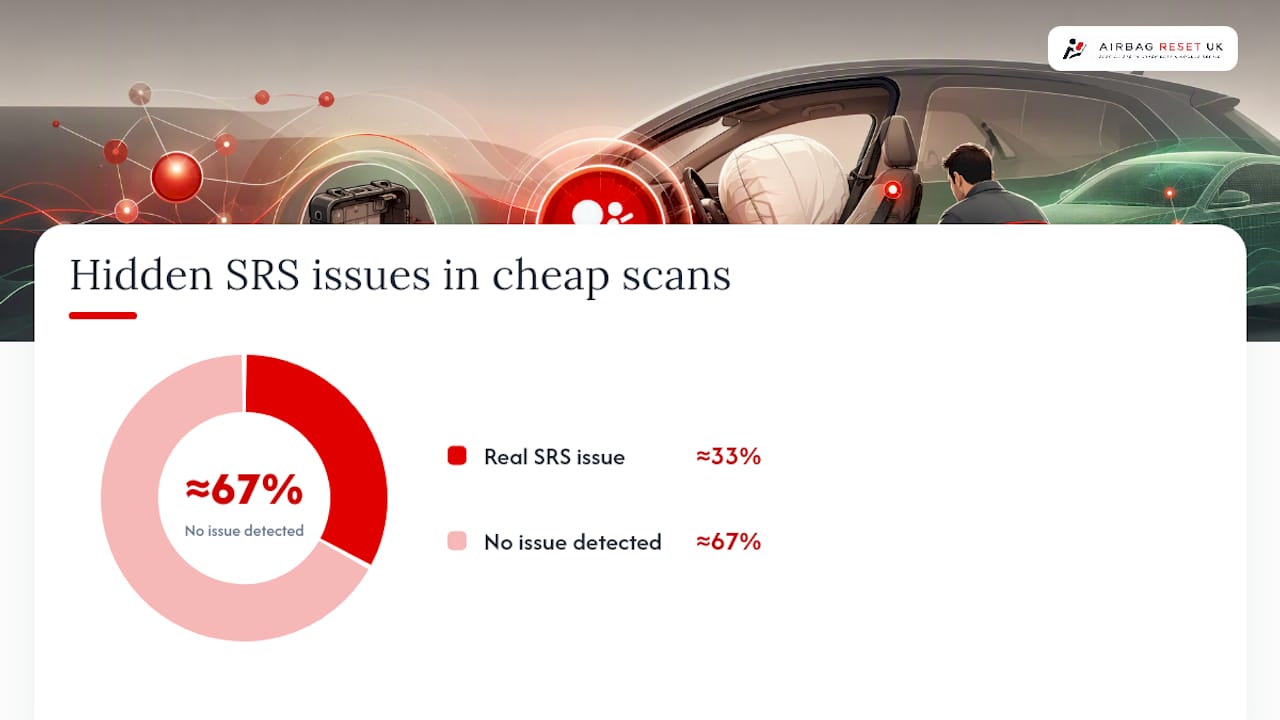
Roughly one in three "no fault found" scans on cheap tools still conceal a real SRS issue, which is exactly why a proper diagnostic session matters even after your own checks come up empty.
Costs vary depending on what's found, but a typical structure looks like this:
- Initial SRS diagnostic scan: usually a fixed fee, separate from any repair work
- Simple repairs (reseated connectors, replaced fuses, minor wiring fixes): lower cost, often resolved same day
- Clock spring replacement: a mid-range repair, parts plus labour
- Module reset or replacement: varies significantly depending on whether the existing module can be reset or needs replacing entirely
Ask any workshop three things before booking: do they have genuine SRS-capable diagnostic equipment (not just a generic OBD-II reader), can they handle a crash-data reset if that's what's needed, and will they give you a written quote before starting work. A shop that hesitates on any of those three is worth avoiding.
How a postal module reset service actually works
For modules holding stored crash data or presenting a genuine reset requirement, sending the unit away to a specialist is often faster and cheaper than a full workshop teardown.
The process with Airbagresetuk runs like this:
- Identification — send a part number or a clear photo of the module label, and get confirmation of what's involved before committing
- Dispatch — package the module and post it using the instructions provided
- Reset and testing — most modules are turned around same-day, with proper test procedures applied before return
- Return — the reset module comes back ready to refit
Pricing starts at £35, with price matching against genuine like-for-like quotes and discounted trade accounts for garages and mobile technicians processing multiple units. The team draws on over 40 years of combined technician experience, and you can ask for confirmation of the test procedure applied to your specific module before you commit.
Inspecting airbag components beyond the connectors
Once you've checked the obvious connector and fuse points, a proper visual inspection goes further, though always with the engine off and ignition removed.
Look along the visible wiring harness runs under the seats, along the door sills, and near the footwells for signs of chafing, pinching, or discolouration that suggests heat damage. A harness that's been pinched during a seat refit or floor mat installation is a surprisingly common, entirely preventable cause of intermittent faults.
Check the crash sensors themselves where visible, typically mounted behind the front bumper cover and sometimes in the door pillars or under the dashboard. You're looking for obvious physical damage such as cracked housings, disconnected mounting brackets, or corrosion around the sensor's electrical connection. If the car has had any bumper work, panel repair, or even a minor kerb strike, these sensors are worth a closer look.
Around the boot floor and rear wheel arches, water ingress is the thing to rule out. Damp carpet, a musty smell, or visible tide marks near wiring runs are strong indicators that moisture has reached electrical connections, and corrosion from water damage is one of the higher-severity causes that typically needs professional repair rather than a simple reseat.
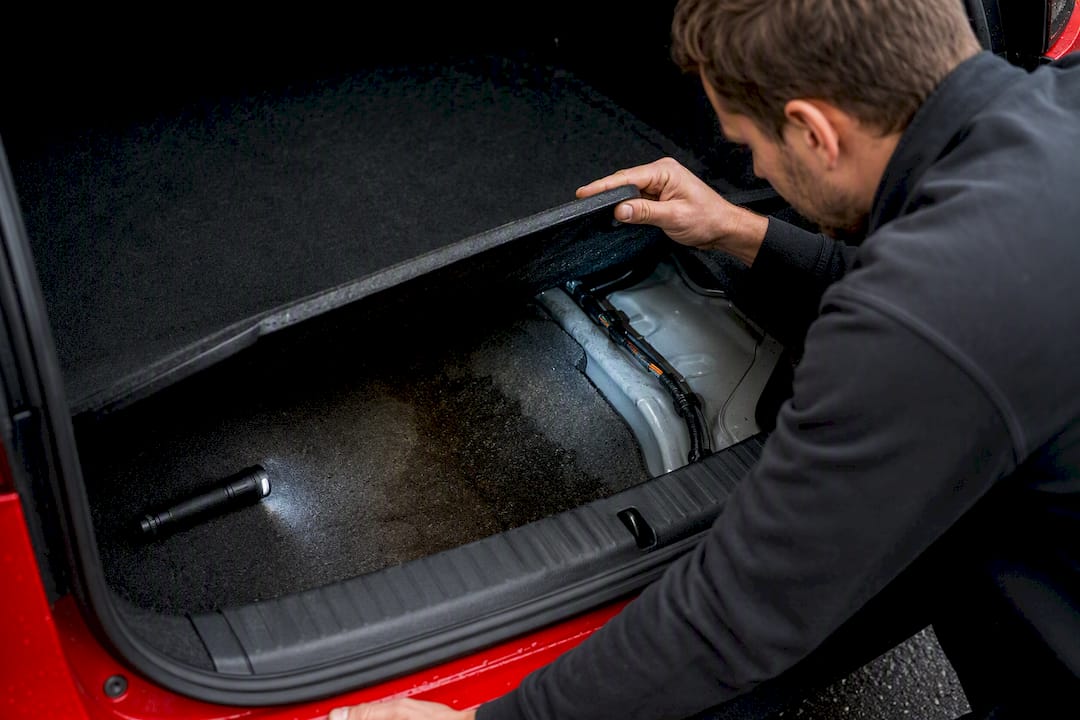
None of this requires specialist tools, just patience and a torch. What it does require is stopping the moment you spot something beyond a loose connector and getting it assessed properly rather than pushing on regardless.
Can a software glitch cause the light without any stored fault?
Yes, and it's more common than most owners assume. Modern SRS modules run embedded software that occasionally misfires without any physical fault existing at all.
A brief voltage interruption during a jump start, a flat battery reconnection, or even certain aftermarket alarm and stereo installations that tap into the vehicle's wiring can cause the module to enter a fault state during its power-up self-check. If that self-check gets interrupted partway through, the module can set the warning light without ever committing a proper fault code to memory, because from its perspective the diagnostic sequence never actually finished.
Some modules also have a known quirk where a fault clears itself internally after a set number of successful drive cycles, but the light stays illuminated until the module is properly reset or power-cycled correctly. This is different from clearing the light with a basic code reader, which often doesn't reset the internal counter the module is actually watching.
Software-related sticking points like this are precisely why a genuine reset, rather than a generic clear, tends to be the fix that actually holds. Clearing the dash light without addressing what the module is internally tracking usually means the light returns within days.
What happens if you ignore the airbag light?
The immediate risk is invisible, which is exactly what makes it dangerous. An illuminated SRS light generally means the system has disabled itself as a precaution, and in many cases that means your airbags and seatbelt pretensioners won't deploy in a collision.
There's no dashboard warning that tells you the difference between "minor connector glitch" and "airbags fully disabled." From the driver's seat, both look identical: a light and nothing else. That's the fail-safe design working as intended. The system would rather stay off entirely than fire unpredictably or fail to fire when needed, but it means every day you drive with the light on is a day without the protection you're used to relying on.
Beyond the immediate safety risk, there's a practical cost to waiting. Faults that start as a loose connector can develop into corrosion damage if moisture keeps getting in. A clock spring on the way out can fail completely, taking your horn and airbag deployment path with it. And if you're ever in an accident with the light already on, insurers may scrutinise whether you knew about an existing fault, which can complicate a claim regardless of who was at fault for the collision itself.
Treat the light as a deadline, not a suggestion.
Technician perspective: why owners should act quickly but sensibly
Most of the airbag light complaints that come across a specialist's bench turn out to be exactly what you'd expect: a seat connector that's worked itself loose over years of normal use, or a clock spring quietly dying while everyone assumes it's "just the dashboard being weird." The pattern repeats so often that experienced technicians can usually guess the cause before they've even plugged in a scanner.
The mistake owners make isn't ignoring the light entirely, it's clearing it with a cheap tool and assuming that's the fix. It buys you a few quiet days and nothing more. Diagnosis on a well-understood fault usually takes under an hour once you've got the right scanner attached, and most connector or fuse issues resolve the same visit. What actually resolves things is treating the light as a genuine safety flag from day one rather than something to manage around.
— John
Book a module reset: how to prepare and what happens next
If your investigation points to a module that's holding crash data or refusing a straightforward reset, sending it away tends to be faster and less expensive than a full dealer replacement.
Start by identifying your exact module using either the part number printed on its label or a clear photograph, which lets Airbagresetuk confirm turnaround and pricing before you commit to anything. Package the unit securely, following the dispatch instructions, and post it off. Most jobs are turned around the same day it arrives, with testing carried out before it's sent back to you ready to refit.
A reset makes sense whenever the existing module is otherwise sound but locked by stored crash data or an unresolved fault state that generic tools can't clear, which covers a large share of post-accident and unexplained-light cases. It's usually the cheaper route compared with a full replacement module, and pricing starts at £35 with price matching available against genuine like-for-like quotes. Garages and mobile technicians handling multiple vehicles can also set up a trade account for discounted rates.
Get your part number ready and check pricing for your module before you book.
Sources
For anyone wanting to dig deeper into why an SRS light behaves this way, a few explainers are worth your time: