
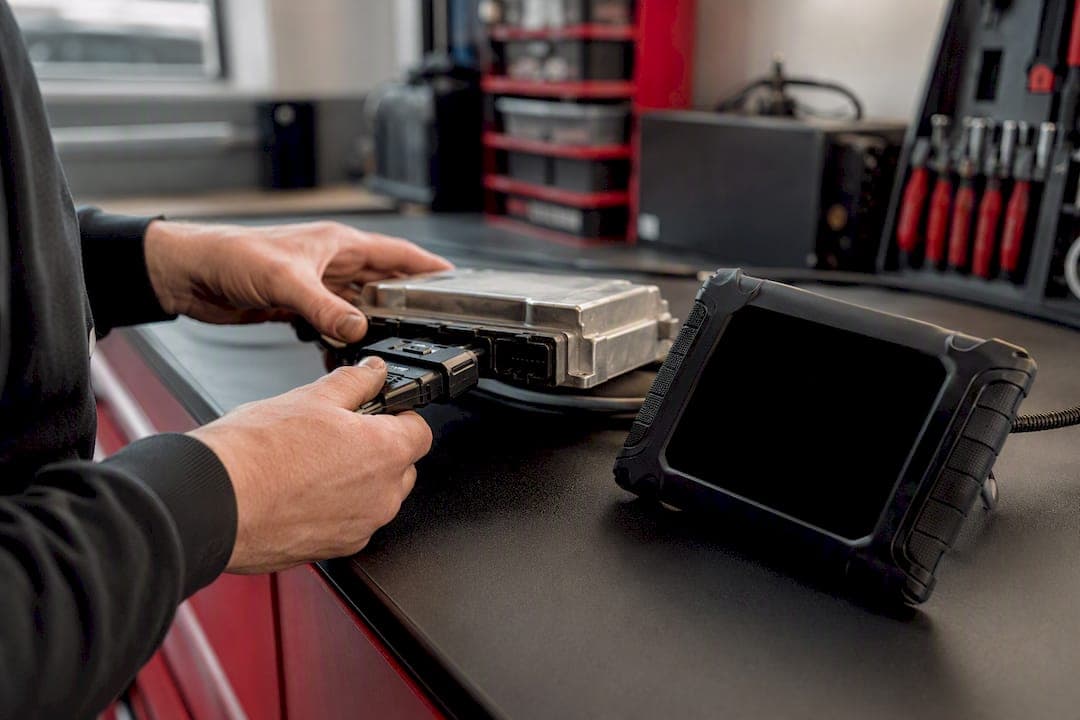
Here, airbag module coding means a crash‑data reset. It's the electronic final step that re‑arms the airbag system once deployed components are replaced, not a way to programme or reconfigure the module's software from scratch.
You should never proceed until a full SRS repair and diagnostic scan has confirmed all the physical parts are fixed. That means new airbags, pretensioners, seatbelt buckles, and clocksprings where needed, plus a scan that reads and records every stored diagnostic trouble code (DTC). Once that's done, the practical route for most owners and workshops is a postal bench reset carried out by a qualified specialist, rather than a dealer visit or a risky software download.
- Step 1: Repair or replace deployed airbags, sensors, and wiring.
- Step 2: Run a professional SRS scan to confirm no live faults remain.
- Step 3: Send the module for a bench-level crash-data reset.
- Step 4: Re-fit, rescan, and verify the warning light stays off.
Key Takeaways
A safe airbag module coding job always follows physical repair and a professional SRS scan, with the crash-data reset performed last on a verified bench.
| Point | Details |
|---|---|
| Reset comes last | Repair damaged airbags, pretensioners, and sensors before any crash-data reset is attempted. |
| Bench access is standard | Crash flags sit in protected memory, so most resets need EEPROM read, checksum rewrite, and verification. |
| Demand documentation | Ask for a pre-clear EEPROM dump, post-clear scan, and bench arm-test evidence before accepting the module back. |
| Match the route to the job | Postal bench reset suits routine jobs; mobile suits large vehicles; dealer suits VIN-linked replacement modules. |
| Airbag Reset UK offers the documented route | Fixed pricing from £35, same-day bench turnaround on most modules, and archived crash data with trade accounts available. |
Table of Contents
- How does a bench crash-data reset actually work?
- Who actually needs a reset, and who needs a replacement?
- Mail-in, mobile, or dealer: which service option fits?
- What's the checklist before, during, and after sending a module?
- What does a crash-data reset typically cost, and how long does it take?
- What red flags should make you walk away from a provider?
- What makes a specialist mail-in bench service worth trusting?
- What most guides get wrong about airbag module coding
- How do you book a postal reset with Airbag Reset UK?
- Frequently asked questions
- Sources
How does a bench crash-data reset actually work?
Once a module reaches a specialist's bench, the process is more surgical than most owners expect. Crash-event flags sit in protected memory addresses that in-vehicle diagnostic tools generally can't touch, which is why bench-level EEPROM access is commonly required to clear them properly.
The typical workflow runs in a fixed order:
- Dump the EEPROM. The technician reads the module's full memory contents onto a bench tool.
- Locate the crash flag. This is the specific data marker that tells the module a deployment event occurred.
- Rewrite and recompute the checksum. The flag is cleared and the checksum recalculated so the module's own firmware accepts the change as valid.
- Verify and bench-arm test. A verification read confirms the new EEPROM signature matches expectations, and a bench arm test simulates the squib load to check the module arms correctly after the clear.
One thing worth understanding clearly: this process changes the module's software record only. It does not repair, refill, or restore any physical inflator, sensor, or pretensioner. If damaged hardware is still in the vehicle, the reset simply removes a flag from a system that remains unsafe underneath.
Many platforms store these flags in manufacturer-specific memory locations, which is why bench access and platform knowledge matter more than generic OBD2 tools here.
Who actually needs a reset, and who needs a replacement?
Not every airbag warning light means the module needs a reset. Certain fault code patterns point clearly towards a stored crash event rather than a live electrical fault.
- Repeated crash-related DTCs that persist after clearing with a standard scan tool.
- A warning light that returns immediately after every ignition cycle post-repair.
- Codes referencing deployment loops, squib circuits, or "severe event" memory rather than wiring faults.
- Physical signs of damage to the module casing itself, cracked mounting points, water ingress, or scorching.
If the module casing is cracked, corroded, or the connector pins are damaged, no reset will fix it. Replacement is the only safe option, and a replacement unit usually needs its own coding to match sensor types and index settings.
Independent garages and fleet technicians tend to favour postal bench services precisely because in-house bench time is limited. Sending several modules out at once and getting them back with documented verification keeps a workshop moving without tying up a technician on one job all day.
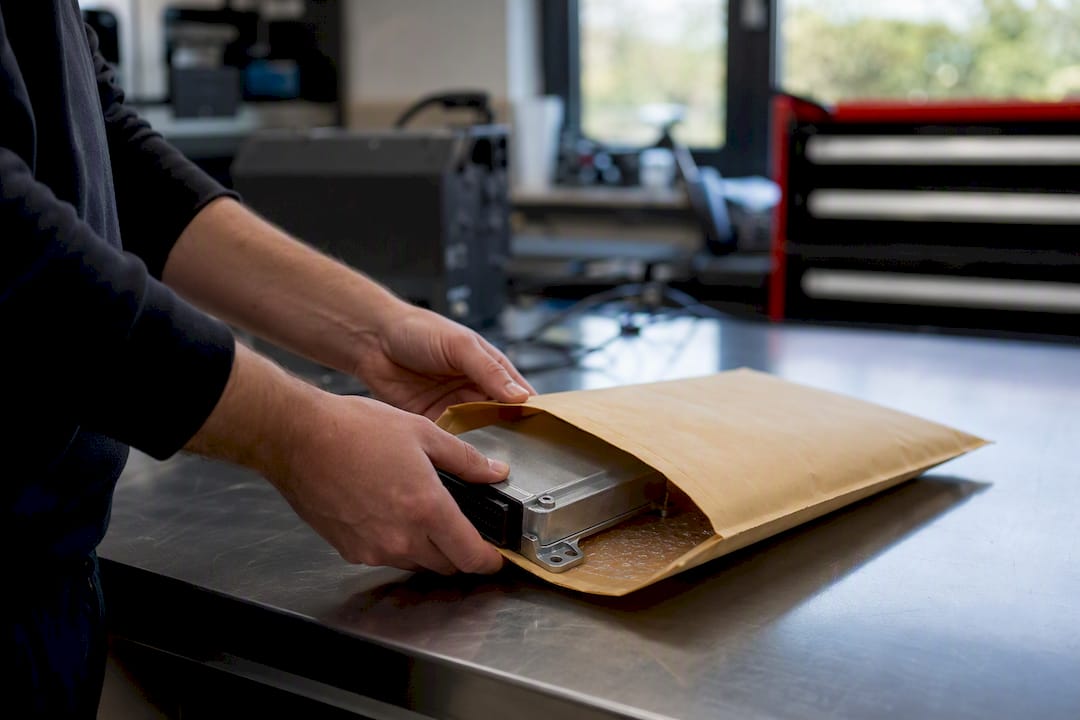
Pro Tip: Photograph the module's part number and any visible damage before you remove it. If a provider later queries compatibility, you'll have the evidence ready instead of waiting on a second inspection.
Mail-in, mobile, or dealer: which service option fits?
Three broad routes exist for getting a module reset once repairs are complete, and each has its own trade-offs.
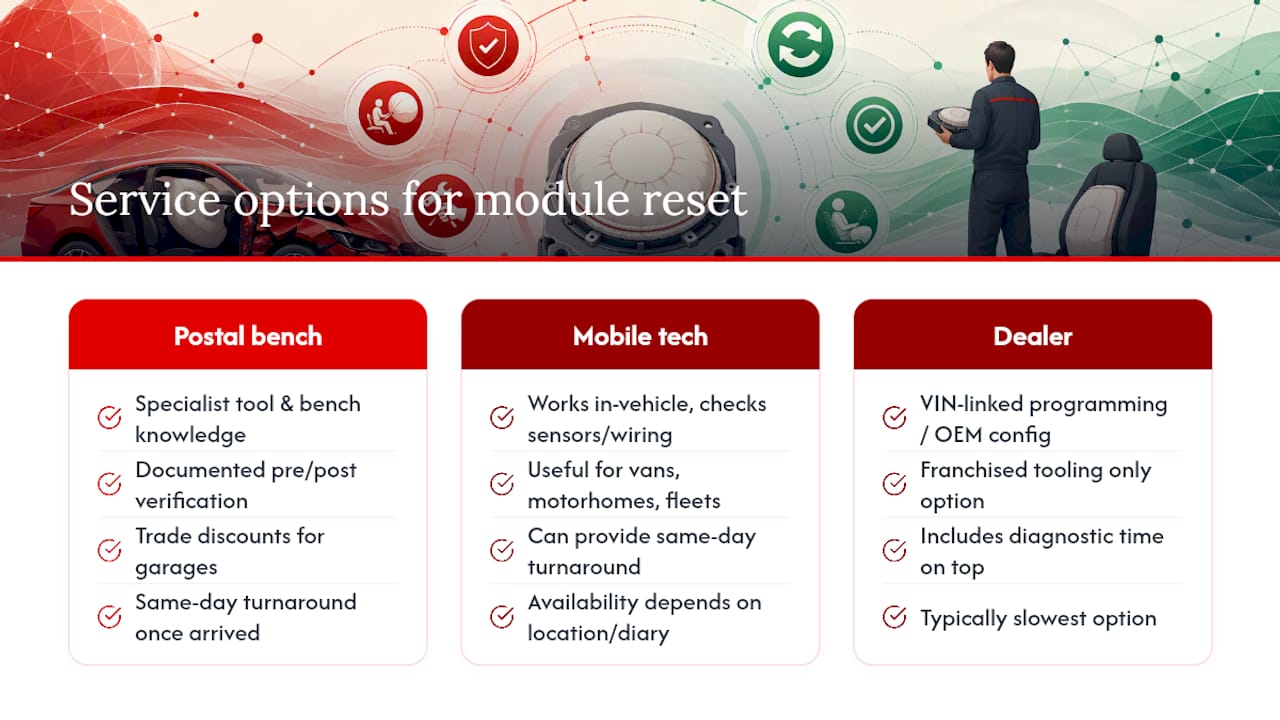
Postal bench reset. A specialist tool and platform-specific bench knowledge that in-vehicle tools can't replicate. You get documented pre and post-clear verification, and trade accounts often bring discounted rates for garages sending regular volume. The trade-off is shipping time, though many specialists offer same-day turnaround once the module actually arrives.
Mobile technician. Useful when a van, motorhome, or fleet vehicle is awkward to move, or when sensors and wiring need checking in-situ before the module comes out. Turnaround can be same-day, but availability depends on your location and the technician's diary.
Dealer. Makes sense when a full replacement module needs VIN-linked programming or OEM-specific configuration that only franchised tooling supports. It's typically the slowest and most expensive route for a straightforward crash-data reset, since you're paying for diagnostic time on top of parts.
For a simple "repairs are done, light needs clearing" job, postal bench reset tends to offer the best balance of cost, verification, and turnaround.
What's the checklist before, during, and after sending a module?
Getting this right the first time avoids delays and disputes later. Break it into three phases.
Before you send anything:
- Run a full SRS diagnostic scan and record every DTC.
- Photograph the module, its part number, and the VIN plate.
- Confirm in writing which parts have already been replaced.
While packaging and shipping:
- Label the module clearly with your name, vehicle registration, and a callback number.
- Ask the provider to supply a pre-clear EEPROM dump and photos before they touch anything.
- Use tracked, insured postage. This isn't optional for a safety-critical part.
After the module comes back:
- Re-fit and run a fresh SRS scan to confirm no codes remain.
- Request bench-test evidence showing the arm test result.
- Keep the archived pre-clear crash data on file, in case of insurance or resale queries later.
Skipping the "before" steps is the most common reason disputes happen. Without a pre-repair DTC record, you've got nothing to compare against if the light comes back.
What does a crash-data reset typically cost, and how long does it take?
Pricing for the electronic reset itself is generally less expensive than full component replacement costs, as it involves specialist bench labour rather than parts. Full SRS repairs involving new airbags and pretensioners typically cost more due to the price of inflators, clocksprings, and seatbelt assemblies.
Turnaround depends mostly on shipping rather than the bench work itself. Bench-level verification, including the EEPROM dump, checksum rewrite, and arm test, can often be completed the same day a module arrives. Postal transit time both ways usually dictates the total.
Look for these signs of fair, transparent pricing:
- A fixed fee quoted before you send anything, not an estimate that changes later.
- Price matching against genuine like-for-like quotes from other providers.
- Discounted trade account rates may be available for garages or bodyshops sending modules regularly.
What red flags should make you walk away from a provider?
The single most important rule here: never let anyone clear crash data before the physical repair is finished. A reset on an unrepaired system just hides a fault, it doesn't fix one.
Watch for these warning signs when choosing a provider:
- Refusal to supply a pre-clear EEPROM dump or photographic evidence on request.
- No verification scan or bench-test proof offered after the reset.
- A price so low it doesn't cover basic tracked shipping, let alone specialist labour.
- Pressure to skip the SRS scan step "to save time."
There's also an ethical line worth stating plainly.
A crash-data reset carried out for genuine safety reasons, after full repair, is entirely legitimate. Using a reset to conceal a vehicle's crash history from a future buyer without disclosure is a different matter entirely, and one that can create real problems at resale or in an insurance claim.
If a coding attempt on a replacement module gets rejected outright, it's often down to an incorrect index or incompatible sensor hardware, not a fault with the reset process itself. Worth checking before you assume the worst.
What makes a specialist mail-in bench service worth trusting?
Trade customers and owners both need the same thing from a provider: proof, not promises. Airbag Reset UK builds its process around exactly that, with technicians drawing on over 40 years of combined experience across the platforms most commonly sent in.
- A documented workflow: scan, repair verification, bench reset, then a final verification scan.
- Pre-clear EEPROM data archived and available on request, so nothing gets erased without a record.
- Fixed pricing agreed before the module ships, with price matching against genuine competitor quotes.
- Trade accounts for garages and bodyshops that need consistent, discounted turnaround on volume.
For an independent workshop, that combination of transparency and speed removes the guesswork from a job that's easy to get wrong.
What most guides get wrong about airbag module coding
Most advice on this topic treats the reset as the whole job. It isn't. The reset is the last five minutes of a process that should have started with a proper SRS scan and a genuine parts repair.
The gap between what's advertised and what actually matters is verification. Plenty of services will clear a flag and hand the module back. Far fewer will show you the pre-clear data, the checksum result, or a bench arm test that proves the module actually re-armed correctly. That evidence is what separates a provider you can defend to an insurer or a customer from one you're simply trusting on faith.
If there's one thing worth prioritising above cost or speed, it's documentation. A cheap reset with no verification paperwork can cost a workshop far more later, in disputes, warranty claims, or a light that reappears three weeks after the job. Fix the hardware first, demand the evidence, and treat the reset itself as the straightforward part it actually is.
How do you book a postal reset with Airbag Reset UK?
Airbag Reset UK is built specifically for the workflow this article has walked through: repair the hardware, scan it, then send the module for a documented bench reset rather than gambling on unverified software or a lengthy dealer booking. Pricing starts at £35, with price matching against genuine like-for-like quotes and discounted trade accounts for garages sending modules regularly.
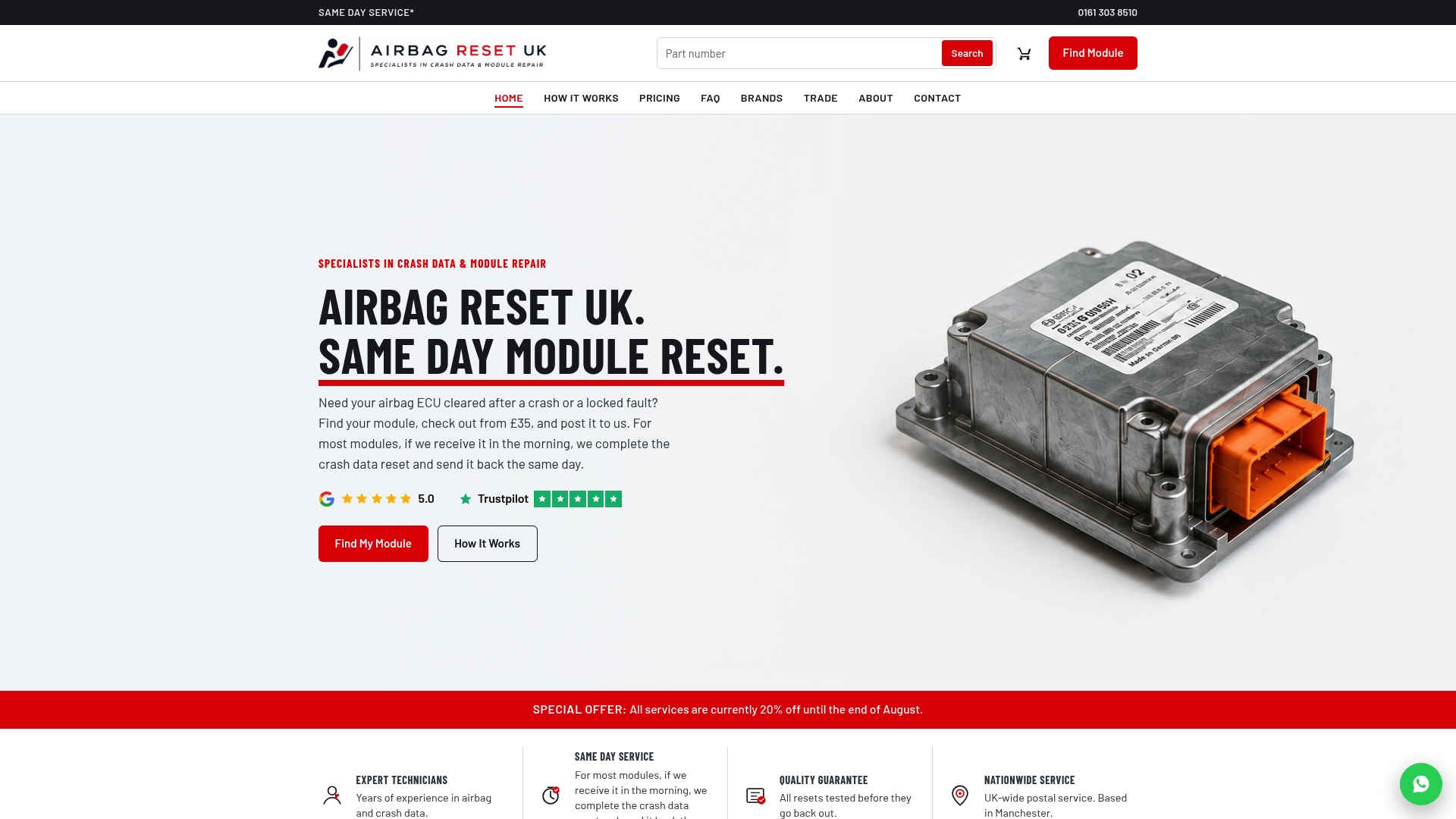
Sending a module is straightforward. Package it securely with your vehicle details and a note confirming which parts have been repaired, then arrange tracked postage. Most modules get a same-day bench turnaround once they arrive, and every job includes a pre-clear EEPROM dump preserved on file, a post-clear verification scan, and photographic bench-test evidence you can hand to a customer or an insurer.
Whether you're an individual owner clearing a light after a repair, or a bodyshop processing several modules a week, you can start a reset request directly and get a fixed quote before anything ships.
Frequently asked questions
Does airbag module coding mean reprogramming the ECU's software? No. In the context of a crash-data reset, coding refers to clearing the stored crash-event flag on the bench, not rewriting the module's core software or VIN-linked configuration.
Can I reset an airbag module myself with an OBD2 tool? Standard OBD2 tools generally can't clear crash flags stored in protected memory, which is why an OBD2 airbag reset procedure alone usually fails and bench-level access is needed instead.
Will a crash-data reset fix a damaged airbag module? No. A reset only clears the software record of a deployment event. If the module casing, connectors, or sensors are physically damaged, replacement is the only safe option.
How long does a postal airbag ECU reset usually take? Bench work itself is often completed the same day the module arrives; total turnaround mostly depends on how long tracked postage takes each way.
What happens if I skip the SRS scan before sending the module? You lose the DTC record needed to confirm what was wrong originally, which makes it harder to prove the repair was complete if the light returns or a dispute arises later.
Sources
For deeper technical detail on bench procedures, the complete guide to SRS crash-data clearing and the Ross-Tech airbag coding wiki are worth bookmarking. For understanding owner authorisation standards on remote or mail-in repairs, see this explainer on remote repair authorisation.