
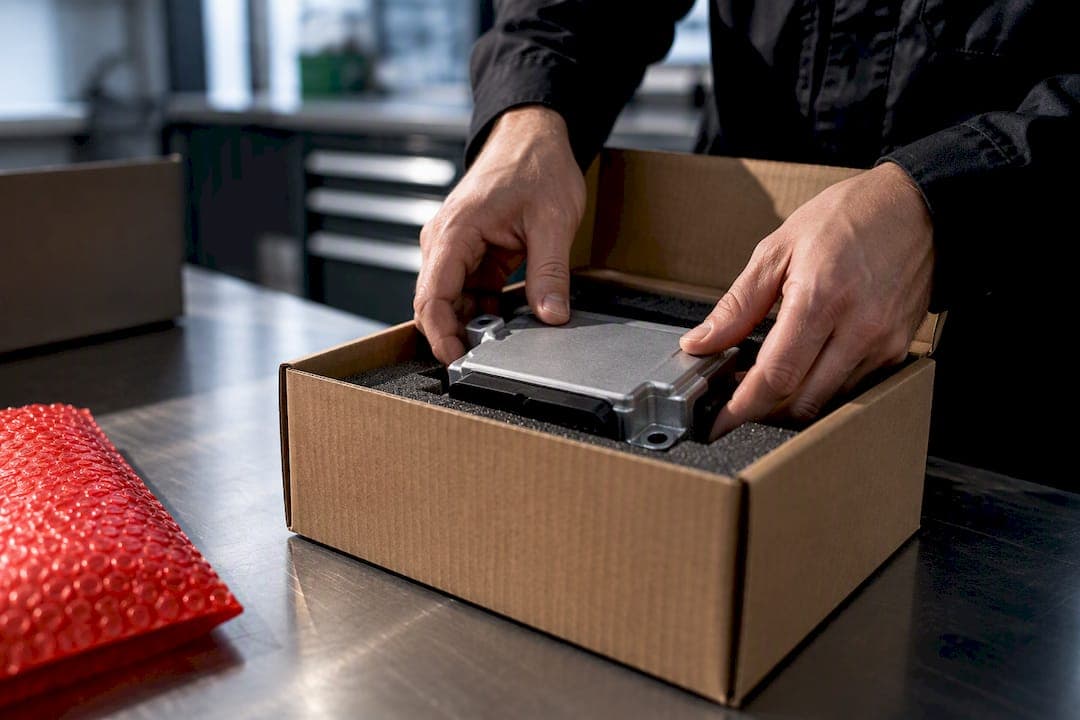
A locked airbag module usually means the system has recorded a crash event and needs professional assessment before it can be cleared. Do not ignore a persistent SRS warning light, and do not rely on battery disconnects or repeated code-clearing to fix it. The correct route is to have any deployed airbags, pretensioners or sensors repaired first, then have the module itself assessed for a reset or replacement.
TL;DR:
- A locked airbag module indicates the system has recorded a crash event and requires professional assessment before being reset or replaced.
- Warning signs include persistent SRS lights, a passenger airbag off indicator remaining lit, and warning messages referencing restraint system faults.
- Resetting the module without repairing deployed components and verifying crash data can be unsafe and may result in non-compliance with MOT standards.
- Preparing detailed information such as fault codes, part numbers, photographs, and incident description is crucial before seeking professional reset services.
- Costs for a postal reset start at £35, with rapid turnaround, but complex modules or motorhome ECUs may require higher fees and longer processing times.
Table of Contents
- How to tell the airbag module is locked
- Why modules lock after a crash
- Safety, MOT and legal implications of a locked SRS
- What to gather before requesting an assessment
- The correct practical route
- Removing, packaging and shipping a module safely
- Typical costs and turnaround for a reset service
- Why a documented repair beats a DIY reset
- How Airbag Reset UK can help
- Sources
- FAQ
How to tell the airbag module is locked
A locked module rarely announces itself with a single obvious sign. Instead, you get a combination of dashboard behaviour and diagnostic evidence that points to recorded crash data rather than a routine electrical fault.
Watch for these signals:
- A persistent SRS or airbag warning light that stays on or flashes after the engine starts.
- A passenger airbag "off" indicator that stays lit even when the seat is occupied.
- Warning lights that return within seconds of being cleared with a generic code reader.
- Any dashboard message referencing "SRS fault", "restraint system" or "service airbag system".
The lamp alone is not enough to confirm a crash lock. According to the MOT inspection manual, the module continuously monitors SRS circuits and illuminates the warning lamp whenever it detects a malfunction, which could mean wiring damage, a faulty sensor, a power issue or a genuine crash record. A full SRS diagnostic scan is the only way to tell the difference.
When you take your vehicle to a specialist, bring the exact fault codes shown on the scan tool, not just a description of the warning light. Photographs of the scan-tool screen, the module's part number label and any visibly deployed components (airbags, seatbelt pretensioners) give a technician far more to work with than a verbal account, and they speed up the assessment considerably.
Why modules lock after a crash
Airbag control units are deliberately conservative. When sensors detect a deployment event, the module writes that event to non-volatile memory and applies safing logic that stops the system reactivating until someone has confirmed it is safe to do so. This is not a bug or an overcautious default: it is the point.
Technical documentation on ECU design describes a safing system built around separate safing and firing circuits, often supported by dual microprocessors and independent trigger sensors. The firing side decides whether a deployment condition has been met, while the safing side acts as an independent check, and both must agree before airbags fire. That same conservative design is what keeps a module locked once it registers a crash: an ordinary code clear touches the fault memory, not the underlying safing latch.
Because this logic is proprietary to each manufacturer, there is no single universal reset procedure. Some platforms allow a straightforward reset once the crash data has been read and the physical system is confirmed safe. Others require replacement outright, particularly where the module itself sustained damage or where the manufacturer restricts reuse for regulatory reasons. This variation is exactly why a generic scan tool or a forum-sourced workaround rarely gets you anywhere useful; the module was built to resist casual intervention.

Safety, MOT and legal implications of a locked SRS
Driving with an active SRS warning light is not a grey area. If the system has detected a malfunction, it may not deploy correctly, or at all, in a subsequent collision. The sensible move is to arrange recovery or a professional inspection rather than continuing to drive on the assumption that the light will sort itself out.
This is also reflected in how the vehicle is tested. The MOT inspection manual classifies an SRS malfunction indicator lamp showing a genuine system fault as a major defect, which results in a fail. An inoperative or missing airbag falls into the same category. A locked module that has not been properly repaired and reset will typically keep that warning lamp lit, so the fault will not clear itself between now and your next test.
There is a documentation angle too. If your vehicle has been in a collision, keep records of every repair step: which components were replaced, when the module was assessed, and what the outcome was. Insurers and future buyers may ask for this evidence, and a paper trail showing a proper repair sequence, rather than a quick clear-and-hope, protects you if questions come up later.
What to gather before requesting an assessment
A specialist can only tell you whether your module is a viable reset candidate once they have the right information in front of them. Preparing this in advance saves a round of back-and-forth before any work can start.
- Vehicle details: make, model, year and full VIN.
- The exact airbag module part number, taken from the label on the unit itself.
- Clear photographs of the module label, its connector, and any visibly deployed airbags or pretensioners.
- The scan-tool fault codes retrieved during diagnosis.
- A plain description of the incident: which restraints deployed, and the general nature of the impact.
Sending this upfront lets a reset specialist confirm compatibility and give you an accurate quote rather than a guess.
The correct practical route
There is a right order to this process, and skipping steps is where things go wrong. The sequence that keeps a vehicle genuinely safe, rather than just quiet on the dashboard, looks like this: a full SRS diagnostic scan to establish exactly what has happened, physical repair or replacement of any deployed airbags, pretensioners, impact sensors or damaged wiring, a bench assessment of the module itself, and finally a reset where the manufacturer's design permits it, or replacement where it does not.

Each stage suits a different kind of expertise. The diagnostic scan and physical restraint repairs belong with a qualified bodyshop or workshop that has proper SRS training, since fitting a new airbag or pretensioner incorrectly creates its own hazard. The module assessment and reset, by contrast, is specialist bench work that reads and interprets crash data using manufacturer-specific tools, which is why it is usually handled separately from general repair work.
Resetting a module while deployed airbags or damaged sensors remain unrepaired is not just ineffective, it is unsafe. The reset clears a recorded event; it does not repair the physical components that made the system unsafe in the first place. A vehicle returned to the road on that basis can fail to protect its occupants in another collision, and depending on how the work was recorded, it may also fall short of the standards an MOT tester or insurer would expect to see documented.
Removing, packaging and shipping a module safely
If your module needs to go for assessment by post, how it is removed and packaged matters as much as the diagnosis itself. Airbag components are pyrotechnic devices, and mishandling one, even an already-deployed unit, carries real risk.
HSE guidance on handling airbags and pretensioners sets out the basics:
- Disconnect the battery and allow the recommended waiting period before touching any restraint components.
- Carry a removed module with the trim side facing away from your body.
- Never place a module face-down on a bench or in storage.
- Store and transport modules in secure, purpose-designed containers rather than loose in a boot or bag.
Because of this, most owners are better off asking a qualified workshop to remove and reinstall the module rather than doing it themselves. A reputable postal reset service will also have its own requirements: proof of identification, confirmation of the part number before dispatch, secure return packaging, tracked shipping, and a clear estimate of turnaround before you commit.
Pro Tip: Photograph the module and its connector before removal, so reassembly is straightforward once it comes back reset.
Typical costs and turnaround for a reset service
Pricing depends heavily on which module you have. Standard passenger-car units are the cheapest and quickest to process; rarer or luxury ECUs, and motorhome-specific modules, take longer and cost more because they need additional diagnosis and, in some cases, different tools entirely.
As a reference point, Airbag Reset UK lists postal resets starting at £35, with same-day turnaround claimed for most modules received in the morning. Complex or motorhome units can take longer, since the assessment itself is more involved.
Booking typically follows a simple pattern: identify the module by part number or photo, get a fixed quote, pay, then post the unit using tracked shipping and wait for it to be returned once the work is complete.
Why a documented repair beats a DIY reset
I have seen enough cases where a quick code clear masked a genuine crash record, only for the same warning light to reappear weeks later, sometimes after the car changed hands. A module that goes back into service without documented restraint repairs and a proper bench reset is a liability wearing a clean dashboard.
The safer pattern is straightforward: repair what deployed, confirm the module on a bench, reset or replace it accordingly, and keep a record of each step. Garages and mobile technicians dealing with volume work benefit from the same discipline, and trade accounts exist precisely because that repeat, documented process matters at scale, not just for a single owner's peace of mind.
— John
How Airbag Reset UK can help
Once the physical repairs are done and the module has been checked over, getting it reset shouldn't add days to the job. Airbag Reset UK runs a UK-wide postal service built around that gap: send the module, get it identified by part number or photo, and get a fixed quote before you commit to anything.
The service covers standard passenger vehicles, vans and motorhome-specific units, with support for owners who are not sure which module they have or whether it is even a reset candidate.
- Postal reset with same-day turnaround for most modules received in the morning.
- Fixed pricing for airbag module resets starting at £35, with price matching against genuine like-for-like quotes.
- A dedicated motorhome airbag reset service for £65, covering the specialist units these vehicles use.
- A mobile airbag reset option from £75 where removal or postal shipping is not practical.
To get started, send the part number or a photo of the module label for identification, confirm the quote, then post the unit or arrange mobile assessment. Visit Airbag Reset UK to check your module and get a price.
Sources
For readers or technicians who want to check the underlying guidance, the MOT inspection manual sets out defect categories for airbag and SRS faults, HSE guidance covers safe handling and storage, and the depollution guidance for end-of-life vehicles explains safe deployment and disposal procedures. A related resource on pre-repair sensor checks is useful when restraint work overlaps with sensor verification.
- Gov
- Storing and handling airbags and seat belt pretensioners safely - HSE
- Development of the electronic 'Safing' system for airbag ECUs
FAQ
How do I reset my airbag module?
A genuine reset requires reading the recorded crash data with manufacturer-specific tools and confirming the physical restraint system has been repaired first. This is specialist bench work rather than something a generic code reader can do, so it is normally handled by a dedicated reset service.
Can I drive with an airbag module removed?
Driving with the airbag module removed or with the SRS warning light indicating a system fault is not safe, since the MOT inspection manual treats this as a major defect. Arrange recovery or a professional assessment rather than continuing to drive.
How much does it cost to have an airbag module reset?
Standard postal resets from Airbag Reset UK start at £35, while motorhome-specific resets cost £65 and mobile reset options start from £75. Complex or rare modules can cost more due to additional diagnosis time.
How can you identify that the airbag ECU is locked?
A locked ECU typically shows as a persistent SRS or airbag warning light that returns quickly after a generic code clear, often alongside fault codes referencing deployment or crash data. Confirming this requires a full SRS diagnostic scan rather than relying on the dashboard light alone.