
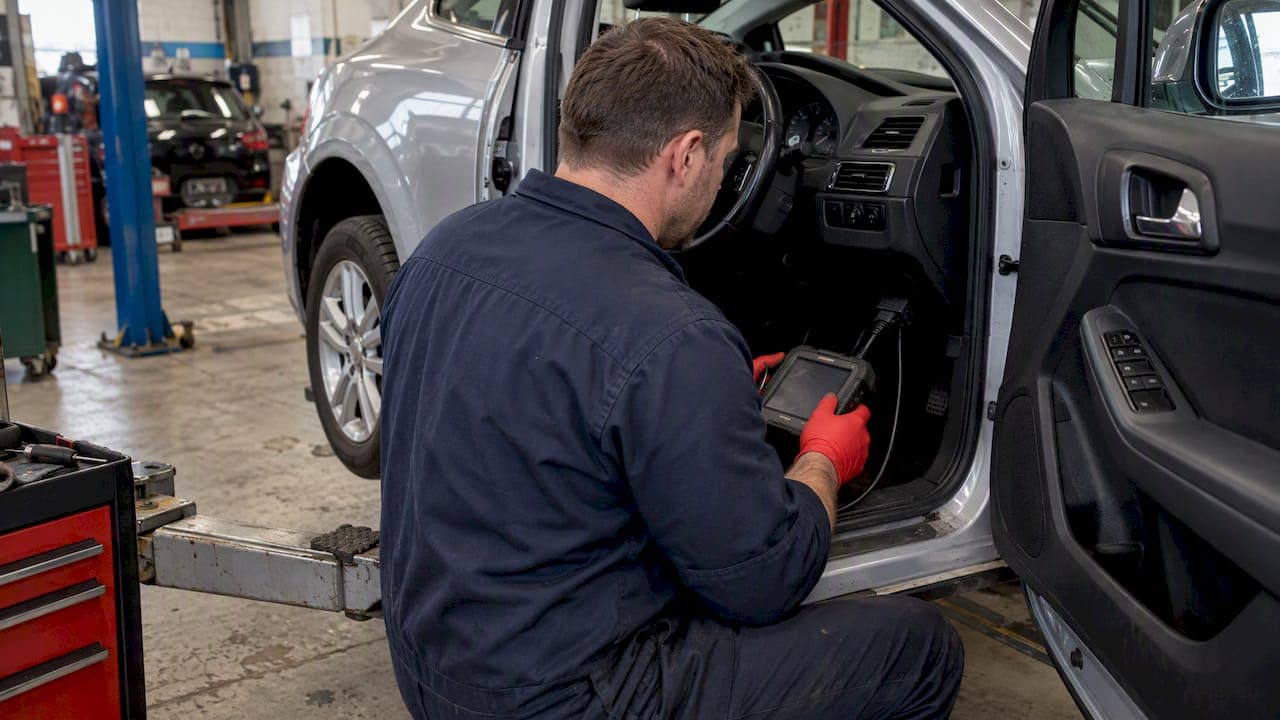
Yes, a competent garage can reset an airbag or SRS warning light, but only after the underlying fault has been diagnosed and repaired and safety procedures have been followed. Clearing codes without fixing the cause is unsafe and risks masking a genuine defect. An SRS malfunction indicator lamp is classed as a major MOT defect, and when crash data sits in the airbag ECU, a specialist reset or module replacement is usually the only safe route.
TL;DR:
- Resetting an airbag or SRS warning light requires diagnosing and repairing the underlying fault before clearing codes to avoid masking genuine defects.
- It is crucial to follow manufacturer safety procedures, including disarming the system correctly and logging DTCs before attempting any reset.
- Most common causes for SRS lights include faulty clock springs, seat connectors, occupant sensors, and damaged wiring, which often need proper reset or realignment procedures.
- Faulty modules with stored crash data cannot be cleared locally and must be sent to a specialist reset service or replaced to ensure safety and MOT compliance.
- Using an SRS-capable diagnostic tool or outsourcing resets to a professional service is essential, especially for modules with crash data or complex faults.
Table of Contents
- Quick diagnostic checklist for workshop triage
- Step-by-step diagnostic and reset procedure for SRS and airbag lights
- Common causes and the correct workshop fix
- Safety, manufacturer cautions and MOT implications
- Tools and equipment: what reliably reads and resets SRS
- When to send a module to a specialist postal reset service
- Getting the basics right matters more than the reset itself
- Airbag Reset UK: trade services, pricing and how to engage
- FAQ
- Sources
Quick diagnostic checklist for workshop triage
Before touching any SRS component, run through a short triage routine. Skipping this step is the fastest way to cause rework or a failed retest.
- Check battery condition and follow the correct LV power disconnect and ignition cycling sequence before disturbing any SRS wiring.
- Inspect seat connectors, seatbelt pretensioner plugs and occupant classification sensors for corrosion or poor seating.
- Look for damaged SRS wiring, especially around the steering column and seat harnesses.
- Connect an SRS-capable diagnostic tool and log every current and stored DTC before attempting a clear.
- Never use a multimeter on SRS circuits, since the applied voltage can trigger unintended deployment.
- Do not open or disassemble any airbag module or clock spring.
That sequence keeps the diagnosis honest and protects both the technician and the customer from a repeat fault.
Step-by-step diagnostic and reset procedure for SRS and airbag lights
Start with the paperwork. Capture the VIN, recent repair or accident history, and try to reproduce the fault condition, whether that means a cold start, a bump in the road or a specific switch operation. A fault that only shows under certain conditions points to a connector or wiring issue rather than a dead module.
- Connect an SRS-capable diagnostic tool, OEM or a reputable aftermarket equivalent, and read and log every current and stored DTC.
- Map the DTC groups to physical checks: clock spring codes to steering column continuity, seat or OCS codes to connector seating, crash sensor codes to impact zones.
- Disarm the system safely: disconnect LV power and observe the manufacturer's wait time, or use an RCM disarm command through diagnostic software, before handling any SRS component.
- If the scan shows stored crash data, do not attempt to clear it locally. Follow the manufacturer's reset workflow or send the module to a specialist reset service.
- Once the physical repair is complete, re-scan the system, cycle the ignition and confirm the SRS MIL behaves correctly, then road test.
Many manufacturers document a mandated LV power disconnect wait, often two minutes or longer, before SRS harnesses can be safely disturbed, and set out matching RCM disarm and re-arm steps.
Pro Tip: Log the DTCs before you clear anything. If the same code returns after a repair, that log is the only way to prove the fault was genuinely fixed rather than just reset.

Common causes and the correct workshop fix
Most SRS lights trace back to one of a handful of causes, and guessing wrong means a wasted part and a second visit.
- Clock spring faults often show as an intermittent horn, cruise control or airbag fault; always realign to the neutral marks and run the manufacturer's zero-point procedure after fitting a replacement.
- Seat connector and occupant classification sensor faults frequently need a dedicated zero-point reset after seat removal or service, and a missed reset can leave the passenger airbag disabled.
- Crash data stored in the ECU blocks a standard code clear and usually calls for a specialist reset service rather than a straight part swap.
- Wiring and connectors damaged during a previous repair are a common hidden cause, especially under seats where harnesses get pinched during reinstallation.
- Intermittent wiring faults tend to clear and return with vibration or temperature, while a genuine module failure stays constant, so a short road test helps tell the two apart.
Safety, manufacturer cautions and MOT implications
Manufacturer guidance is consistent: never open or attempt to repair an airbag module or clock spring. Service procedures state that faulty units are replaced, not repaired, and that a deployed module must always be replaced.
- Store removed modules pad face up, away from contamination, and never drop them.
- Disconnect LV power and observe the wait time before handling any SRS harness, or use the RCM disarm procedure in the diagnostic software.
- Never test SRS circuits with a standard multimeter, since the applied voltage can cause unintended deployment.
- Record the fault, the repair carried out and customer authorisation on the job sheet before any work begins.
An SRS MIL indicating a malfunction is a Major defect under the MOT inspection manual, which means the vehicle fails its test outright until the fault is properly resolved.
Tools and equipment: what reliably reads and resets SRS
A generic OBD-II reader will often pull a basic fault code but cannot reliably read, interpret or clear every SRS-specific DTC, and it certainly cannot handle a crash data reset. Technician forum discussion on SRS diagnostic costs notes that cheap readers rarely address airbag modules at all.
- SRS-capable aftermarket tools or OEM diagnostic suites are needed for reliable fault reading and clearing.
- Licence fees and hardware costs for full OEM coverage are hard to justify for a workshop that only sees occasional SRS work.
- A trade account with a specialist reset service, a mobile reset option, or an occasional postal send-off often works out cheaper than buying and maintaining full OEM software.
- Keep diagnostic software licences current, since SRS protocols change across model years and a lapsed licence can leave a tool unable to communicate at all.
Pro Tip: If SRS jobs are rare in your workshop, outsourcing the reset usually costs less over a year than maintaining an OEM licence you barely use.
When to send a module to a specialist postal reset service
When crash data sits in the ECU and a local clear is not possible, a postal reset service lets a garage keep the original module rather than fitting a new one.
- Supply clear photos of the module and its part number so the service can confirm compatibility before it arrives.
- Trade customers typically get discounted rates and a same-day turnaround for most modules received in the morning.
- Build the send-off into your workflow: code the job, get written customer authorisation, then refit and re-scan once the module returns.
This route suits garages that want to avoid selling a customer an unnecessary replacement ECU when the original unit is otherwise sound.
Getting the basics right matters more than the reset itself
The mistake that costs garages the most time isn't a wrong diagnosis, it's clearing a code before the root cause is confirmed. A reset without a genuine repair behind it tends to return within days, and if it reappears before the next MOT, you've done the job twice for one invoice. Keep a full diagnostic log and get written customer consent before anything gets cleared. When stored crash data blocks a safe in-workshop clear, a specialist reset service is the sensible next step rather than forcing a local fix.
— John
Airbag Reset UK: trade services, pricing and how to engage
When a module holds crash data that blocks a safe local reset, Airbag Reset UK offers garages a postal route that keeps the original ECU in service rather than pushing a customer towards a new one. The service runs UK-wide by post, with same-day turnaround for most modules received in the morning, fixed and transparent pricing, and price matching against genuine like-for-like quotes.
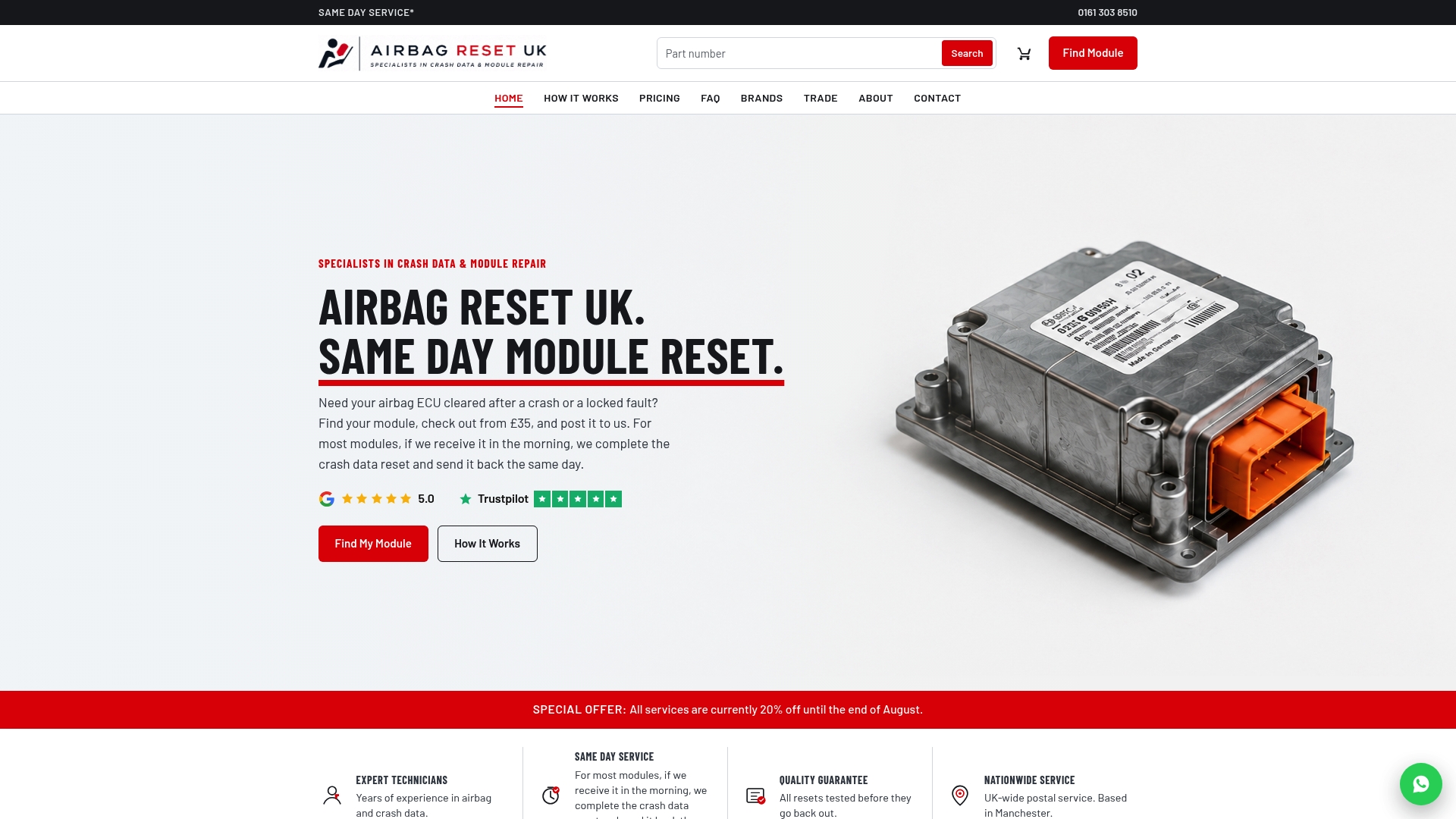
- Standard airbag module resets start from £35, with trade discounts available for garages and bodyshops that send jobs regularly.
- Motorhome airbag resets are priced at £65, covering the specialised modules found in larger vehicles.
- Where a module can't be posted, the mobile reset service starts from £75 for on-site work.
Send a photo and the part number for a quick identification check, then book the job online or by phone to get the module moving.
FAQ
How much does it cost to get your airbags reset?
Standard airbag module resets start from £35 through Airbag Reset UK's pricing page, with motorhome resets priced at £65 and mobile on-site resets starting from £75. Trade accounts can access discounted rates for regular volume.
How do I reset the airbag system?
A garage first diagnoses and repairs the underlying fault using an SRS-capable diagnostic tool, then clears the stored codes and verifies the light stays off through an ignition cycle and road test. If the module holds crash data, a specialist reset service or module replacement is usually needed instead of a local clear.
Can I pass MOT with an airbag light on?
No. An SRS malfunction indicator lamp that shows a genuine fault is classed as a Major defect under the MOT inspection manual, which fails the test until the fault is resolved.
Why is my airbag light still on even after I replaced the clockspring?
A new clock spring that hasn't been aligned to its neutral marks or taken through the manufacturer's zero-point procedure will often leave the SRS light on. It's also worth checking nearby seat connectors and occupant classification sensors, since a loose connector can produce the same symptom as a faulty clock spring.