
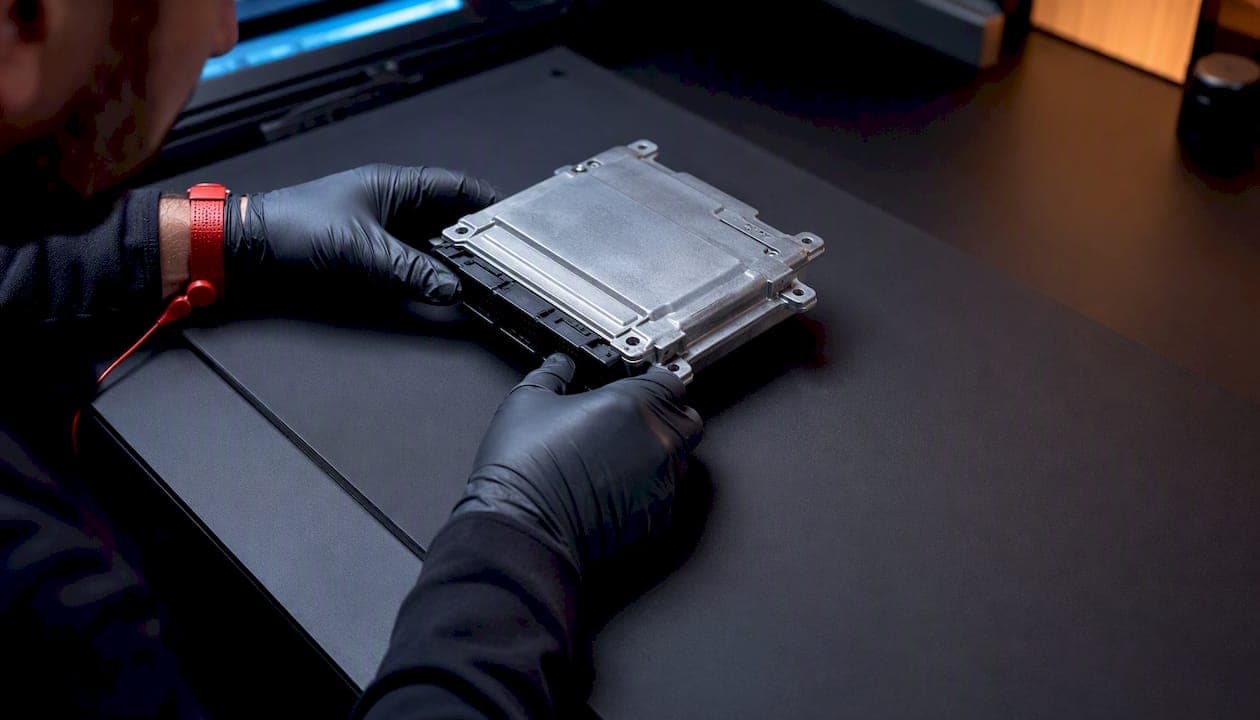
A bench crash-data reset is the correct fix once every deployed inflator, pretensioner, and damaged sensor has already been replaced and the wiring checked. If the module still shows crash data and the hardware repair is genuinely complete, sending it for a postal reset clears the fault properly. If repairs are not yet done, do not send the module. Confirm the repair, document it, then book a reputable bench reset.
TL;DR:
- A crash data reset should only be performed after all impact sensors, inflators, pretensioners, and wiring have been fully replaced and inspected for damage.
- The reset process involves reading and archiving the module’s entire EEPROM data before rewriting the crash-flag bytes, ensuring data integrity and verification.
- Postal resets are usually completed the same day if the module is properly prepared, labeled, and shipped with the correct documentation and secure packaging.
- Clearing crash data does not address physical damage or internal circuit faults; modules with internal damage require replacement, not software resets.
- A clean scan after reinstallation confirms only the current software status, not the integrity of structural repairs or electrical systems.
Table of Contents
- What is an airbag squib fault in this context?
- When is a bench reset actually appropriate?
- What happens during the bench crash data clear?
- How do you send a module in for a postal reset?
- How do you verify the reset once the module is back in the car?
- What are the risks and limits of a crash data reset?
- Why postal bench resets make sense when the repairs are already done
- How to book a postal crash data reset with Airbag Reset UK
- Sources
- FAQ
What is an airbag squib fault in this context?
An "airbag squib fault" in this sense is not a wiring fault at all. It is crash data written into the airbag ECU's protected memory at the moment sensors detect an impact severe enough to trigger deployment. That data locks the module and keeps the warning light on, and it stays locked until someone clears it properly.
Most SRS modules record this event in non-volatile memory specifically so it cannot be wiped by a generic OBD-II reset. Plug in a cheap code reader and clear the fault, and it will simply reappear because the tool never reaches the protected block. Only bench-level EEPROM access or manufacturer tools can clear that flag.
What actually gets recorded tends to include:
- Delta-V (the change in velocity during the impact)
- Seatbelt buckle status at the moment of the crash
- Which deployment commands the module issued, and to which circuits
- Timing data showing how the crash event unfolded in milliseconds
Pro Tip: Modules typically store more than one event slot. If your vehicle has had a prior knock, the ECU may hold an older event alongside the current one, so ask the reset service to confirm exactly which crash flags are being cleared.
None of this touches the electrical squib circuit itself, connectors, clock springs, or resistance faults. That is a separate wiring issue with a separate diagnostic path, and it sits outside what this guide covers.
When is a bench reset actually appropriate?
A crash-data reset is not a shortcut around physical repairs. It is the final step after them, and sending a module before the hardware work is finished wastes money and risks a fault reappearing days later.
- Confirm every deployed component has been replaced. Inflators, pretensioners, and any impact sensors that fired must be swapped for new parts, and damaged wiring repaired, before the module goes anywhere near a bench.
- Check the module itself for physical damage. No scorch marks, no cracked housing, no sign of water ingress. A module that fails an initial bench power-up test is a repair or replacement job, not a clear.
- Gather your paperwork. A photo of the part number label and a copy of the repair invoice or workshop statement let the reset technician confirm compatibility before they start, rather than after.
- Watch for the red flags that mean clear, not repair. Blown driver ICs, internal microcontroller corruption, or heavy PCB damage from fire or flooding cannot be fixed by rewriting a flag. Those modules need replacing.
Sending a module that fails on any of these points usually means it comes back unresettable, and you have paid twice for the same job.
What happens during the bench crash data clear?
A proper bench process follows a fixed sequence, and skipping any step is how sloppy resets end up voiding the fix or destroying evidence a customer might need later.
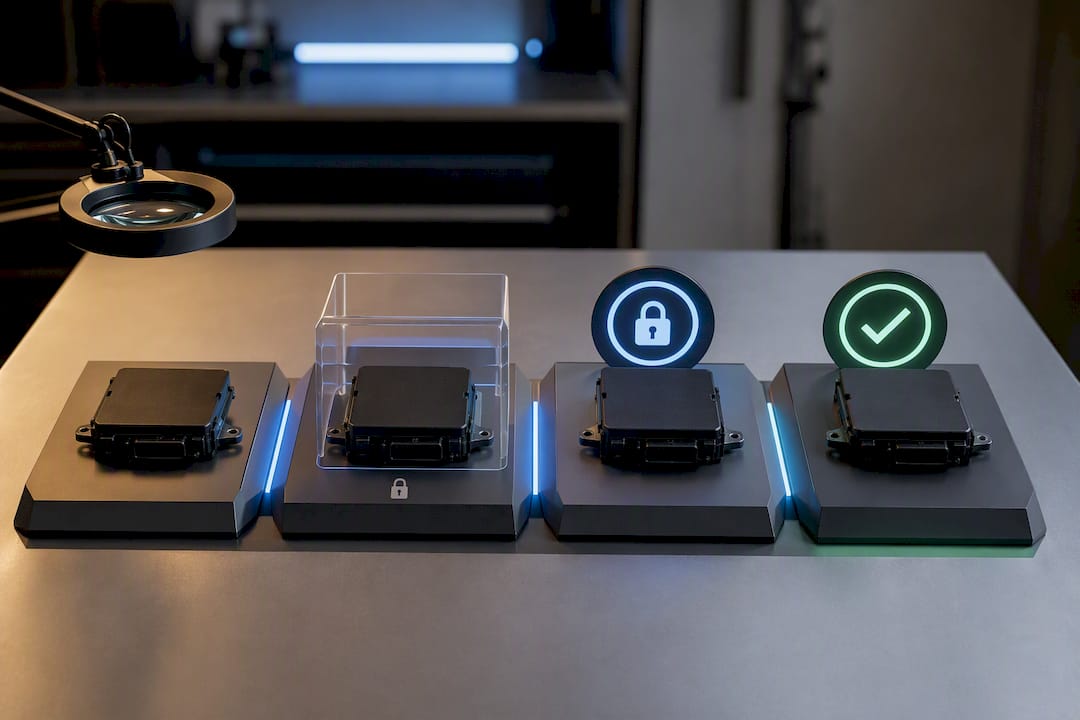
The technician reads and archives the full EEPROM or EDR dump before touching anything, because a reputable bench process reads and preserves the data before any rewrite happens. That archive gets handed over on request, which matters for insurance claims and any later dispute over what the module recorded.
From there the process runs:
- Locate the specific crash-flag byte inside the memory map
- Rewrite that flag, then recalculate the checksum or CRC so the module accepts the change
- Write back to the chip and immediately verify the readback matches
- Run a bench power-up, communications test, and simulated circuit check to confirm the module arms correctly
The module comes back with photos of the process and a written verification log, not just a fault light that has gone quiet.
How do you send a module in for a postal reset?
Postal resets work well precisely because the preparation is predictable. Get these steps right and most modules go from doorstep to cleared and dispatched the same day.
- Confirm the part number from the label, or photograph it clearly if you are unsure how to read it.
- Remove the module carefully and label it with your vehicle registration and a contact number.
- Include the repair invoice, or a signed workshop statement confirming inflators and pretensioners were replaced.
- Pack it in a padded box that prevents shock and keeps moisture out entirely.
- Ship with a tracked, insured courier, particularly for expensive or hard-to-source modules.
Turnaround for most standard modules is same day once the technician has the paperwork in hand. Pricing for a straightforward postal reset typically starts from a flat fee, with complex or specialist units such as motorhome modules costing more depending on the diagnostic time involved.
How do you verify the reset once the module is back in the car?
Fitting the module back is not the end of the job. Run a full SRS and airbag scan and confirm there is no crash-event flag and no hard fault code lingering anywhere in the system.
- A clean scan tells you the module's current state, nothing more. It is not proof that the structural repairs behind the deployment were done to a good standard.
- Ask for the archived EDR file if you might need it for an insurance claim or any dispute down the line, and keep your original repair invoices with it.
- A reset alone does not verify the crash was repaired correctly. That still requires a full vehicle diagnostic to confirm the restraint circuits are healthy once the module is back in place.
- If any warning persists after refitting, the next move is a fresh bench check on the module, or a harness and sensor diagnosis on the car itself.
What are the risks and limits of a crash data reset?
A bench clear rewrites a software flag. It does nothing for physical damage, and a module with a blown driver IC or serious internal corrosion needs replacing outright, not clearing.
- Never use a reset to hide crash damage that has not actually been repaired. Keep every invoice and workshop statement, because that paper trail protects you if the vehicle is ever inspected or resold.
- If a module might be needed for an insurance investigation or legal claim, preserve the EDR data before anything else happens to it. Chain of custody matters once data has left the vehicle, since multi-event storage and overwrite risk mean early preservation protects the record.
- When in doubt, pair the reset with a post-reinstallation vehicle diagnostic rather than trusting the clear alone to confirm system integrity.
Why postal bench resets make sense when the repairs are already done
Experienced technicians perform this exact job, and that matters because a rushed reset on a module that was not actually repaired properly is worse than no reset at all. Bench clearing tends to be a cost-effective route back to a working SRS system once the module itself checks out, and it usually beats module replacement outright on cost. For trade accounts, the appeal is speed and predictability: fixed pricing, competitive quotes, and a same-day turnaround that means a bodyshop can promise a customer a real collection date rather than a guess.
— John
How to book a postal crash data reset with Airbag Reset UK
If your module has passed its bench power-up and the hardware repairs are genuinely finished, a postal reset is usually an efficient way back to a clean SRS system compared with sourcing a replacement unit. Some services offer same-day turnaround for most modules and competitive pricing with price matching against like-for-like quotes.
Getting started is straightforward: confirm your part number from the label or send a clear photo if you are not sure, package the module securely, and include your repair invoice or workshop statement so the crash history can be matched against your documented repairs. Vehicles with damp or corroded wiring loom connectors sometimes complicate this stage, so it is worth checking guidance on electrical damage after winter moisture before you box anything up. Garages and mobile technicians can also set up a trade account for discounted rates and a dedicated turnaround. Head to the Airbag Reset UK booking page to confirm your part number and get a fixed price before you post.
Sources
Technical detail in this guide draws on bench crash-data clear procedures, NTSB airbag module imaging documentation, and forensic EDR analysis standards.
- Airbag SRS Crash-Data Clear: The Complete 2026 Guide
- NTSB / Subaru ACM image (redacted) — EDR and recording limitations
FAQ
What does "airbag squib fault" mean in this article?
It refers to crash data stored in the airbag ECU's protected memory after an impact, which keeps the warning light on until a proper bench reset clears the flag.
Can I clear an airbag squib fault with a normal OBD-II scanner?
No. The crash-event flag sits in protected memory that ordinary scan tools cannot reach, so it requires bench-level EEPROM access or manufacturer tools.
How much does a postal crash data reset cost?
Pricing for a straightforward postal reset typically starts from a flat fee, with complex or specialist units such as motorhome modules costing more depending on the diagnostic time involved.
Does a cleared module prove the crash repairs were done correctly?
No. A clean scan after reinstallation only confirms the module's current software state, not that the structural repair work was carried out to a proper standard.
What if my module has a burnt or cracked case?
Physically damaged modules, including those with blown driver ICs or corroded circuit boards, cannot be safely cleared and should be repaired or replaced instead.