
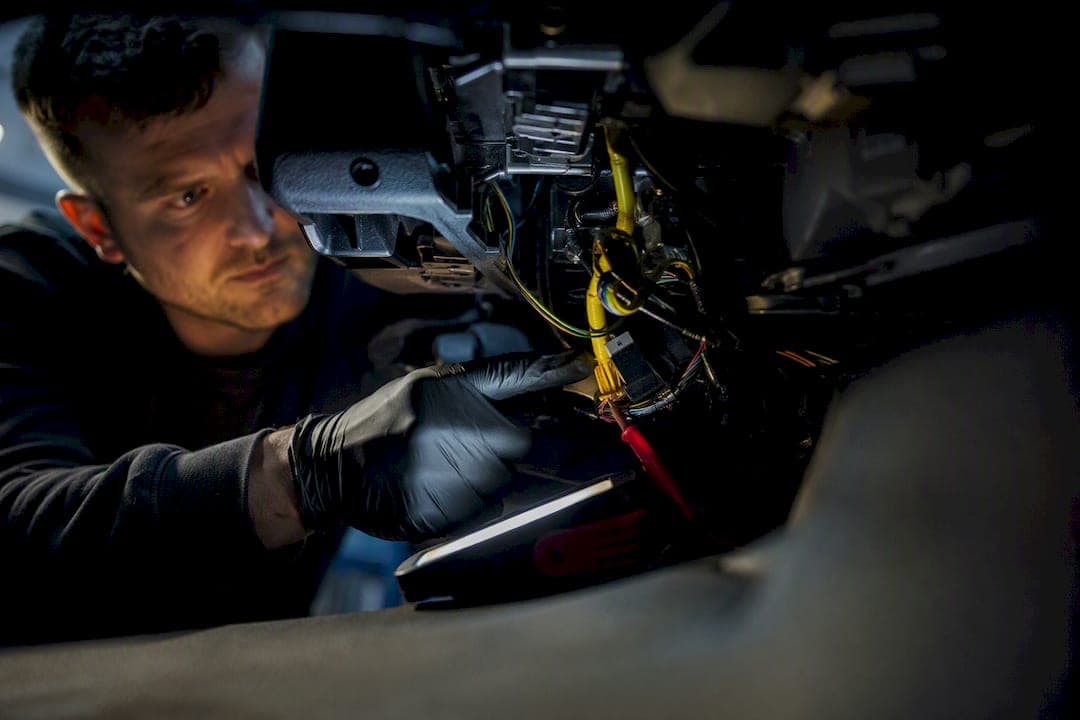
Yes, airbags deploy without a crash occurring, though it's rare and almost always traceable to a specific fault. Electrical shorts, corroded wiring, a failing SRS control module, or an undercarriage strike hard enough to fool the sensors can all trigger deployment with no collision involved. If this happens to you, check yourself and any passengers for injury first, then avoid driving the vehicle until it's been inspected.
TL;DR:
- False airbag deployment is most commonly caused by electrical faults, corrosion, or damaged wiring near the steering wheel or undercarriage.
- Mechanical impacts from potholes, debris, or undercarriage strikes can mimic crash deceleration and trigger airbags without a collision.
- Most deployment thresholds are around 10 to 16 mph, but voltage issues or faulty sensors can cause false triggers even at lower speeds.
- Proper diagnosis involves checking fault codes, wiring, and battery voltage, with resets often addressing false crash data without replacing the entire module.
- Unintentional deployments pose injury risks, especially to the face and hands, and require immediate inspection, proper documentation, and possibly a recall check.
Table of Contents
- Common causes of airbags deploying without an apparent collision
- How airbag sensors decide when to fire
- What to do right after an unexpected deployment
- Common faults, diagnostics and what a workshop will check
- Injury risks and why the vehicle isn't safe to drive afterwards
- Recalls, VIN checks and reporting the incident properly
- When a crash-data reset is the practical fix
- What actually matters when your airbag light won't behave
- Sources
Common causes of airbags deploying without an apparent collision
Most drivers assume a deployed airbag means a crash happened somewhere they didn't notice. That's usually wrong. The wiring and electronics behind the airbag system are surprisingly sensitive, and several failure points can send a deploy signal with nothing resembling an impact.
Electrical faults sit at the top of the list. A short circuit in the wiring loom, a corroded connector under the dashboard, or damaged insulation near the steering column can send a false trigger signal straight to the inflator. Water ingress after a flood or a poorly sealed door seal is a classic cause of this kind of corrosion, and it often takes months to show symptoms.
The SRS control module itself can fail. These units run constant self-diagnostics, and a fault in the module's memory or processing logic can misinterpret ordinary road conditions as a crash event. Recorded crash-data errors, where the module logs an "event" that never physically happened, fall into this category too.
Then there's the mechanical side. A hard pothole strike, a kerb clip at speed, or debris flung up into the undercarriage can generate a jolt severe enough to mimic sudden deceleration. Technical investigations into supposedly "no impact" deployments have repeatedly traced the cause to undercarriage contact or tyre debris strikes that leave no visible bodywork damage, which is exactly why some drivers swear nothing happened.
A smaller but well-documented cause is the manufacturing defect. The Takata inflator scandal is the best-known example, where degraded propellant caused inflators to rupture or misfire years after the vehicle left the factory. Aftermarket electrical work, such as a poorly wired dash cam, alarm system, or stereo upgrade, is another underrated trigger, especially when a wire is run too close to the SRS harness.
- Corroded connectors or chafed wiring near the steering column
- A failing SRS control module logging a phantom crash event
- Undercarriage strikes from potholes, kerbs, or road debris
- Recalled inflators degrading over time, as seen in Takata-affected vehicles
- Water damage from flooding or failed door seals
- Poorly installed aftermarket electronics interfering with the SRS circuit
How airbag sensors decide when to fire
Airbag deployment isn't a single sensor making a single decision. It's a network of accelerometers, seat-occupancy detectors, and sometimes rollover-prediction algorithms, all feeding data into the control module within milliseconds of an impact.
Most manufacturers calibrate their systems to deploy when the vehicle strikes something at roughly 10 to 16 mph. That threshold shifts depending on the vehicle, the angle of impact, and whether the seat belt is fastened. A belted occupant changes the calculation entirely, since the system assumes the belt will absorb some of the force and adjusts the deployment decision accordingly. That's part of why two seemingly similar crashes can produce different outcomes, one with airbags and one without.
- Accelerometers measure the rate and direction of deceleration, not just speed
- Rollover and side-curtain algorithms react to changes in vehicle attitude, which explains deployments during sharp tilts or off-road manoeuvres with no direct impact
- Seat-occupancy sensors help decide whether a passenger airbag fires at all
- Sensor fusion combines multiple inputs, so a hit from the side won't necessarily trigger the front airbags
Voltage and firmware matter more than most drivers realise. The module runs a self-test every time the ignition is switched on, checking wiring continuity and battery voltage. If either falls outside expected range, the system can misread a sensor's baseline signal and, in some documented cases, initiate a deployment sequence that has nothing to do with an actual collision.
What to do right after an unexpected deployment
The first few minutes matter more than the paperwork that follows. Airbag deployment happens with real force, and the priority is your body, not your bodywork.
- Check yourself and any passengers for injury before anything else, and call 999 if anyone needs urgent medical attention.
- Switch off the engine if it's safe to do so, apply the hazard lights, and move the vehicle out of traffic if it's driveable.
- Photograph the dashboard warning lights, the deployed airbag, and any surrounding damage before you touch anything.
- Note whether the SRS light stayed on, flickered, or went out, since that detail helps a technician later.
- Decide whether the vehicle is safe to drive on. If the steering wheel airbag has deployed, the horn or indicators feel unresponsive, or you're unsure of the cause, arrange a tow rather than risk driving.
- Contact your insurer once you're safe, and describe exactly what happened, including speed, road surface, and any sound or jolt you noticed beforehand.
Pro Tip: Take a photo of the odometer and the SRS warning light together. Insurers and technicians both use this to cross-reference the module's recorded data against your account of events.
Documenting a road traffic incident properly in the first few minutes tends to make everything afterwards easier, and the same logic applies to any unexpected roadside event, not just collisions.
Common faults, diagnostics and what a workshop will check
A competent technician doesn't start by replacing parts. They start by plugging in an SRS-specific diagnostic tool and pulling the fault codes, which tell them whether the module actually recorded a crash event or logged something else entirely, like a communication error or a voltage anomaly.
One of the most common causes government vehicle-safety guidance flags is clockspring wear behind the steering wheel, the component that maintains an electrical connection while the wheel turns. A worn or cracked clockspring often knocks out the horn and steering-wheel controls at the same time the SRS light appears, which is a strong diagnostic clue on its own.
Low battery voltage is another frequent culprit. If voltage dips below roughly 9V during a cold start, the SRS module can set a persistent fault code that mimics a genuine sensor failure. Charging or replacing the battery resolves a surprising number of "SRS light won't go out" complaints before any further repair is even considered.
- Reading and interpreting stored fault codes with an SRS-capable scan tool
- Checking for clockspring wear if the horn or steering controls have failed alongside the airbag light
- Testing battery voltage and charging system output before assuming a sensor fault
- Inspecting wiring harness continuity near known corrosion points
Not every fault needs a reset, and not every reset is appropriate. A control unit that has genuinely recorded a crash event may need a qualified technician to confirm no actual impact occurred and clear the module's memory correctly, since some manufacturers require full module replacement after a real deployment rather than a simple data clear.
Injury risks and why the vehicle isn't safe to drive afterwards
An airbag deploying without the controlled deceleration of a real crash still hits with the same force. That mismatch is exactly why unintended deployments can cause serious injury even at a standstill.
Reports and legal case summaries consistently document facial fractures, burns, and hand or wrist injuries from inadvertent deployments, concentrated wherever the occupant happened to be closest to the bag at the moment it fired. A driver gripping the wheel tightly is more likely to suffer wrist or finger injuries than someone with a relaxed grip, purely down to hand position.
- A deployed airbag and spent pretensioners mean critical safety systems are no longer in place for a second incident
- The steering wheel airbag, once fired, offers zero protection until replaced
- Seat belt pretensioners that have activated need replacing alongside the bag itself
- Repair scope, whether it's the bag alone or the bag, inflator, pretensioners, and control module together, drives both cost and how long the car is off the road
Recalls, VIN checks and reporting the incident properly
Before assuming your car is a one-off oddity, check whether it's part of a wider recall. Millions of vehicles were affected by the Takata inflator recalls, and drivers can usually claim a free manufacturer repair if their VIN comes back flagged.
- Run your VIN through the manufacturer's recall checker before paying for any diagnostic work
- Contact the manufacturer directly if the fault pattern matches a known recall issue rather than a one-off failure
- Keep every photograph, fault code printout, and workshop invoice, since insurers will ask for a clear timeline
- Flag a confirmed defect to your insurer early, since it can change how a claim is assessed and who ultimately covers the cost
When a crash-data reset is the practical fix
Not every airbag warning light means a new module. If the SRS system has recorded crash data after a genuine low-speed knock, a false trigger, or a fault that's since been fixed, a professional reset can clear that recorded event without the expense of replacing the entire unit.
That's the specific gap Airbagresetuk works in. The postal crash-data reset service covers cars, vans, and motorhomes, with same-day turnaround on most modules once they arrive. Customers send the module, either identified by part number or a clear photo, and it comes back with the crash data cleared and the fault resolved, assuming the underlying cause has genuinely been addressed.
- Confirm with a technician first that no real crash occurred and the wiring fault, if any, has been fixed
- Check the part number or photograph the module before posting it, so the correct reset procedure is applied
- Ask about trade pricing if you're a garage or mobile technician sending modules on a customer's behalf
Pro Tip: A reset only solves the electronic record. If a clockspring or wiring fault caused the false deployment in the first place, fix that before the module goes back in, or you'll be sending it off again within weeks.
Pricing starts at a competitive rate, with price matching available against genuine like-for-like quotes, supported by experienced technicians.
What actually matters when your airbag light won't behave
Most advice on this topic jumps straight to "get it checked by a professional," which is true but unhelpfully vague. The more useful question is what you check first, because the order matters. Battery voltage and clockspring condition explain a huge share of these faults, yet they're the two things drivers skip past on the way to assuming the worst.
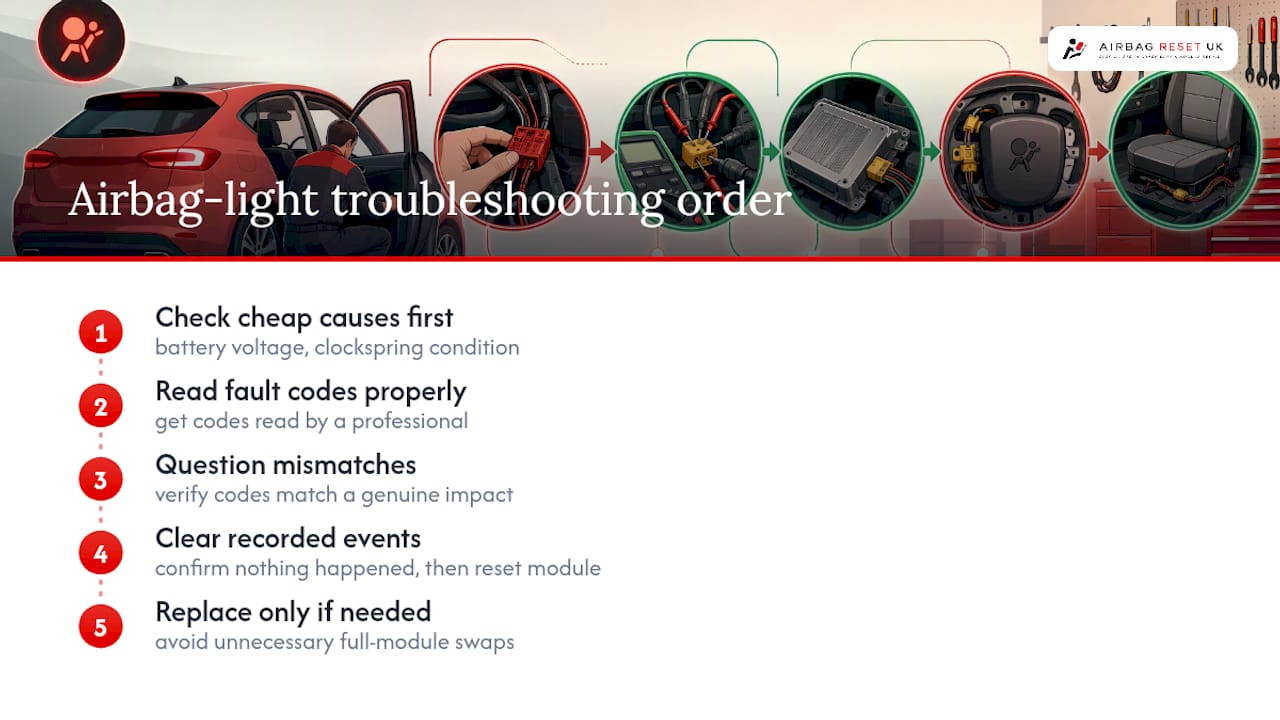
The conventional advice also underplays how often the fix is data, not hardware. A module that's recorded a phantom event doesn't always need replacing. It needs someone qualified to confirm nothing actually happened, then clear the record properly. Jumping straight to a new unit wastes money when the real fault was a £40 battery or a worn clockspring costing a fraction of a full module swap.
If there's one priority, it's sequencing: rule out the cheap, common causes before authorising expensive replacement. Get the fault codes read properly, question anything that doesn't match a genuine impact, and only then decide whether a reset or a new part is the honest answer.
— John
Sources
- Everything you need to know about airbags
- Veridian inadvertent deployment investigation (NHTSA supplemental report)