
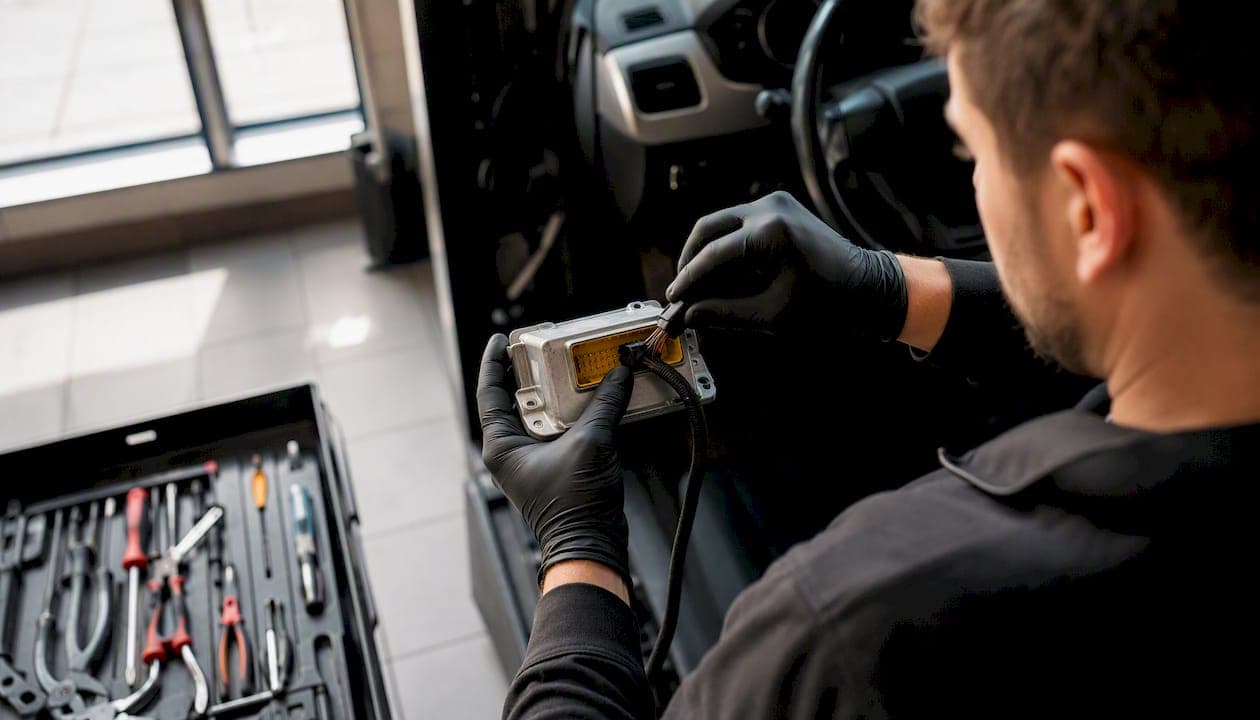
Yes, BMW crash data can usually be reset, but not always with a scanner alone. Whether it works depends on the module type and whether the crash event got locked after airbag deployment. A locked deployment event normally needs EEPROM-level work or a replacement module rather than a simple diagnostic clear.
Your first move is practical: find the module's part number, usually stamped on a 65.77 series label, then decide between a diagnostic scan, a specialist postal reset, or bench reprogramming.
- Non-deployment faults often clear with standard diagnostic tools.
- Deployment-triggered events almost always need bench-level EEPROM work.
- Identify the part number before requesting any quote.
Pro Tip: Photograph the module's label before removal. Suppliers stamp part numbers and hardware revisions in tiny print that fades or scratches off during handling.
Key Takeaways
Most BMW airbag modules can be cleared of crash data, but locked deployment events require EEPROM-level reprogramming or replacement rather than a simple diagnostic scan.
| Point | Details |
|---|---|
| Check the lock status first | A diagnostic clear that doesn't stick means the event deployed and is locked. |
| Identify the module properly | Photograph the 65.77 part number and supplier code before requesting any quote. |
| Match the method to the fault | Soft faults suit a diagnostic clear; locked events need bench EEPROM work or replacement. |
| Never skip the physical check | Confirm airbags, pretensioners and sensors are intact before resetting anything electronically. |
| Use a specialist for locked events | Airbag Reset UK offers fixed postal pricing from £35 with same-day turnaround on most modules. |
Table of Contents
- How BMW stores crash data and why some events won't clear
- Is it safe and legal to reset crash data before an MOT?
- Which methods actually work: reset options compared
- Should you DIY the reset or hire a specialist?
- How to get your BMW's airbag module reset
- Why a postal specialist is the practical choice for most owners
- Getting your module reset by post
- Frequently asked questions
- Sources
How BMW stores crash data and why some events won't clear
Crash information sits in the SRS control unit, sometimes called the airbag ECU, inside an EEPROM memory chip. That chip holds Event Data Recorder (EDR) entries covering speed, braking, and belt status in the moments before impact, alongside a simple flag marking whether the airbags fired.
That flag is the whole story. A "soft" event, logged when sensors detect a bump but airbags don't deploy, can often be overwritten by diagnostic software. A deployment event locks the module's memory as a safeguard, and dealer tools can read that data but cannot delete it. The lock exists partly for accident reconstruction and insurance purposes, which is why a standard OBD scan tool hits a wall.
Module identity matters here. BMW's 65.77-xxxxx part numbers cover units built by Bosch, Continental, and TRW, and each supplier uses different chip architectures. Continental's SPC56 and MPC5604 families need more advanced programming tools than older Bosch units, which is one reason quotes vary between module types.
- SRS control unit stores both EDR data and a deployment flag.
- Soft events are usually overwritable; locked events are not.
- Continental chips typically demand costlier, more specialised tools than Bosch or TRW equivalents.
Pro Tip: If your fault codes mention a specific supplier chip family, mention it when requesting a quote. It saves a round trip and often changes the price.
Is it safe and legal to reset crash data before an MOT?
Never drive with a disabled airbag system. If the SRS light stayed on after a collision, get the airbags, seatbelt pretensioners, and crash sensors physically inspected before anyone touches the module electronically. An unresolved SRS fault can affect an MOT outcome, and resetting the data doesn't replace damaged parts that still need fitting.
There's also an evidential angle. Crash data can matter to insurers or investigators, so clearing a locked deployment event isn't something to do casually if a claim is still open.
- Confirm physical airbag and sensor integrity before any reset.
- Keep a paper trail: fault codes, photos, and repair invoices.
- Ask your resetting specialist for written confirmation if your insurer might need it.
A reset clears the electronic record. It does nothing for a pretensioner that never fired or a sensor bracket that's still cracked, and treating the two as interchangeable is the most common mistake owners make after an accident.
Which methods actually work: reset options compared
Four realistic routes exist, and which one applies depends entirely on whether the event is locked.
Diagnostic DTC clear works only on soft faults and temporary codes. It's free or near-free through most diagnostic tools and takes minutes, but it does nothing for a deployment-locked module.
EEPROM read and write, sometimes called bench programming, is the workhorse fix. A technician removes the module, reads the chip, writes a clean reset file, then reinstalls it. This is the method postal reset file services use, following a sequence of identifying the part number, reading the EEPROM, writing the BIN file, and verifying with a compatible scanner.
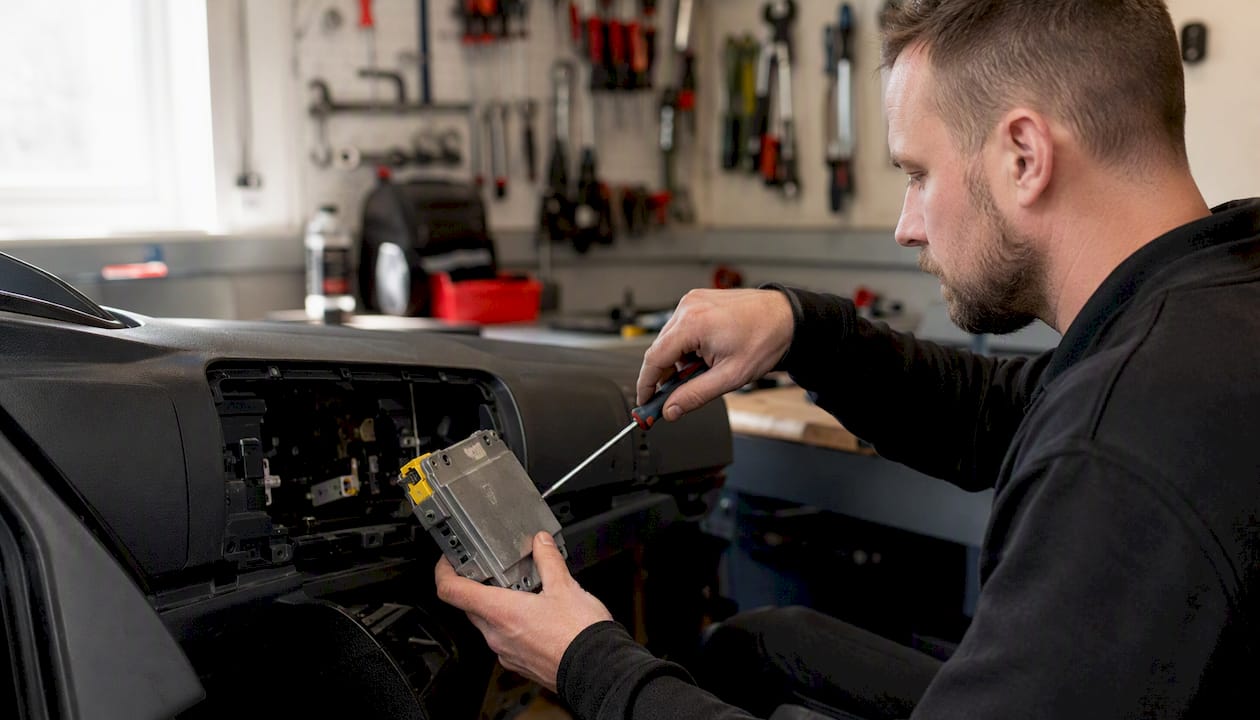
Replacement with a virgin programmed module guarantees a clean unit but usually needs VIN coding at a dealer or specialist, pushing cost and turnaround higher.
Postal reconditioning services let owners post the module, or in some cases just supply photos and a part number, and receive a reset unit or file back, often same-day for common variants.
| Method | Typical cost band | Typical turnaround | Best suited to |
|---|---|---|---|
| Diagnostic DTC clear | Low or free | Minutes | Soft faults, no deployment |
| EEPROM read/write | Moderate | Same day or next day | Locked events, Bosch/TRW/Continental modules |
| Module replacement | Higher | Days (dealer coding) | Total module failure or damage |
| Postal reset service | Typically low moderate cost | Quick turnaround | Most 65.77-series modules |
- A diagnostic clear that "doesn't stick" is the clearest sign the event is locked.
- Continental SPC56 chips generally cost more to reset than Bosch equivalents.
- Sending the original module usually preserves VIN pairing, avoiding extra dealer coding.
Pro Tip: Ask any service whether their reset preserves the original VIN data. Some replacement modules require a separate coding step that adds cost and delay you weren't quoted for.
Should you DIY the reset or hire a specialist?
DIY makes sense for non-locked crash records if you already own EEPROM programming hardware and have done this before, or when it's simply a diagnostic clear after sensor repairs.
Avoid DIY on deployed modules, complex G-series electronics, or anything involving high-voltage hybrid safety systems. Bricking a module without the right programmer is a real risk, and so is tampering with data that might still matter to an insurance claim.
Community threads consistently recommend scanning the system first, keeping the original module rather than buying a used uncoded one, and using a verified reset service instead of guessing with generic tools.
For most owners, a professional postal reset or workshop bench service is faster and safer than attempting bench work at home.
How to get your BMW's airbag module reset
Four steps take you from a lit-up SRS light to a resolved module.
- Identify the module. Locate the 65.77 part number and supplier code, then photograph the label clearly for identification.
- Scan first. Read the airbag fault codes to confirm whether the event is a soft fault or a locked deployment record.
- Choose your method. Compare postal reset, local bench service, or replacement based on your fault type and how quickly you need the car back.
- Remove and ship carefully. Disconnect the battery per your workshop manual, package the module securely, and label it with the VIN and part number.
- Have your fault codes ready when requesting a quote.
- Include clear part-number photos with any postal submission.
- After reinstallation, always rescan to confirm the airbag light stays off.
Specialists typically ask for exactly these three things: photos of the label, the fault codes, and confirmation of the part number, before quoting a fixed price.
Why a postal specialist is the practical choice for most owners
Airbag Reset UK handles postal crash data resets across various vehicles, using part-number or photo identification to quote before you commit. Most modules have quick turnaround times, with fixed, transparent pricing.
- Over 40 years of combined technician experience across the team.
- Fixed pricing from £35, with price matching against genuine competing quotes.
- Trade accounts available for garages and independent workshops.
- Sending your original module typically preserves VIN pairing, avoiding extra dealer coding.
For most owners this beats a dealer route on cost and speed, without the guesswork of sourcing a used module. Requesting a quote through the Airbag Reset UK landing page starts with a simple part-number or photo submission.
A technician's honest take
Resets succeed more often than owners expect, but sensor damage and, on newer cars, crash telegrams stored in the Body Domain Controller alongside the ACSM get missed constantly. Document everything. If a module actually deployed, replace it and run a full system test afterwards rather than trusting a reset alone.
Getting your module reset by post
There are other routes here, a local dealer, a general auto electrician, or attempting bench work yourself, but for most owners a fixed-price postal service removes the guesswork entirely.
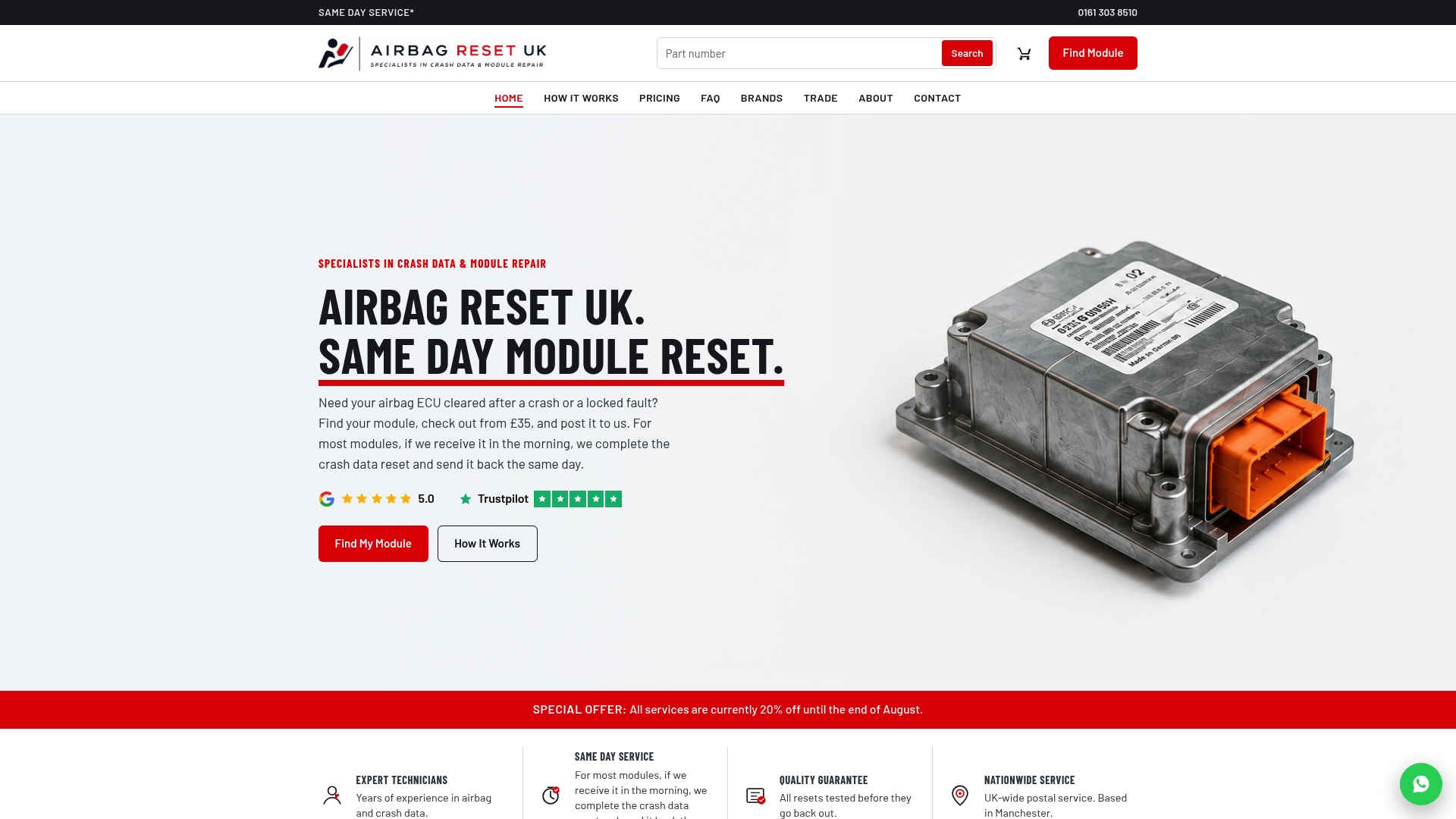
Ordering is straightforward: identify your part number or send clear photos of the module label, request a quote, then pay and post the unit using solid packaging with the VIN and part number labelled on the outside. Airbag Reset UK tests every module before it goes back out, backs the reset with a warranty, and turns most jobs around the same day rather than the week-plus wait typical of dealer coding. Fixed pricing starts at £35, with price matching if you've already got a genuine quote elsewhere. Head to the postal reset service page to get your part number checked and a price confirmed before you send anything.
Frequently asked questions
Can BMW crash data be reset without removing the module? Sometimes, if the event is a soft fault rather than a locked deployment record. Locked events generally need the module removed for bench-level EEPROM work.
Does resetting crash data fix the airbag warning light permanently? It clears the stored fault, but the light returns if damaged sensors or pretensioners weren't replaced. A reset and a repair are two separate jobs.
How much does a BMW airbag module reset typically cost? Postal reset services often start around £35 for straightforward Bosch or TRW modules, with Continental SPC56 units costing more due to specialised programming needs.
Will a reset affect my BMW's VIN coding? Sending your original module for a bench reset usually preserves its VIN pairing, avoiding the extra coding step a replacement module often requires.
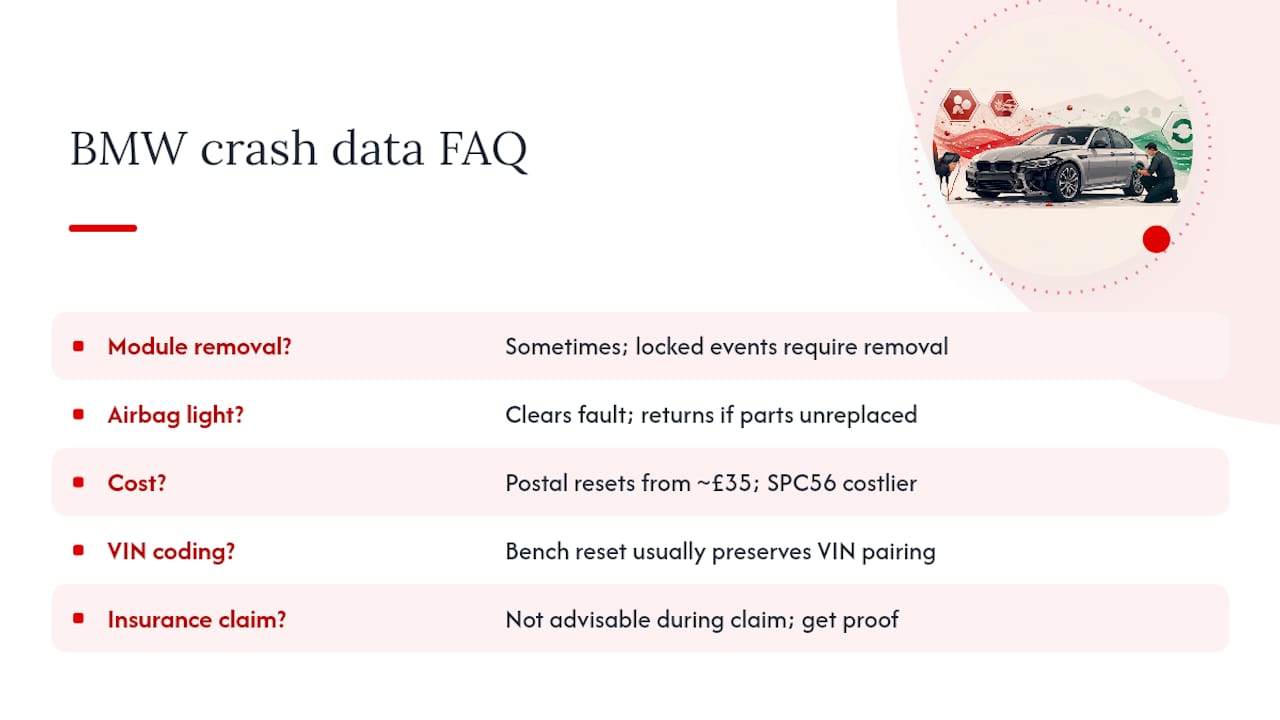
Can I legally reset crash data if an insurance claim is open? Clearing locked crash data during an active claim isn't advisable. Document repairs and get written confirmation from your reset specialist if your insurer might ask for it.
Sources
- Crash data reset | BMW Forums : BimmerForums
- JustAnswer Q&A on modern BMWs and EDR
- B7F02E BAT-HAD: Shutdown Due To Crash Detection | BinUnlock