
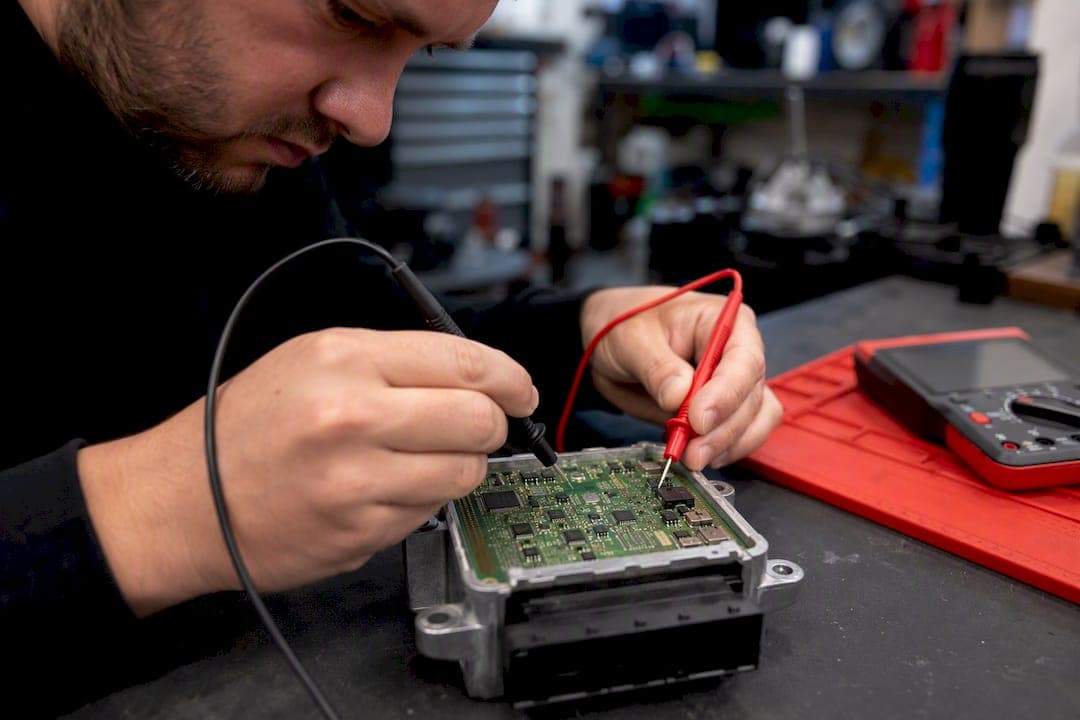
Clearing airbag codes properly means a professional crash-data reset, or "bench clear", of the airbag control module rather than a quick pass with an OBD-II scanner. If the module survived the crash intact and any deployed inflators or pretensioners have already been replaced, the correct next step is sending it to a specialist for a postal or workshop reset. Airbag Reset UK is one such specialist offering that exact service direct to owners and trade accounts.
TL;DR:
- A proper crash data reset involves a low-level EEPROM reprogramming, not a simple code erasure, and only trusted specialists can perform this process.
- Before resetting, ensure the airbag module shows no physical damage, that inflators are replaced, and that deployment happened before considering a reset.
- The process preserves the module's original VIN and calibration data, avoiding the need for dealer-level VIN relearning after the reset.
- Correct preparation includes documenting part numbers, VIN, and repair history, then packaging the module securely for postage or workshop handling.
- Post-reset, the vehicle must undergo a final system scan to confirm no active or pending SRS codes remain, ensuring safety and compliance.
Table of Contents
- When is a crash-data reset the right fix?
- What actually happens during a bench reset
- Safety and compliance come before any reset
- Preparing and sending the module for reset
- Confirming the SRS is actually ready
- What to expect on turnaround, cost, and trade terms
- A technician's view on getting it right first time
- Book a postal or trade bench reset with Airbag Reset UK
- Sources
When is a crash-data reset the right fix?
Not every triggered airbag light needs a new module, but not every module can simply be cleared either. The answer hinges on what actually happened in the crash and what state the hardware is in now.
A non-deployed event, a hard braking spike, a kerb strike, a minor low-speed shunt, usually leaves the module electronically sound but with a permanent crash flag written to protected memory. That flag has to be rewritten before the SRS light will go out for good. A deployed event is different: inflators have fired, pretensioners have fired, and those parts are now scrap regardless of what the module says.
Before authorising any reset, check for:
- Deployment codes alongside physical evidence of fired airbags or belt pretensioners
- Repeated communication faults or open-circuit codes on clock springs, side-impact sensors, or seat-occupancy sensors
- Visible module damage: cracked housing, corroded pins, water ingress
- Confirmation that inflators and pretensioners have already been replaced with OE or OEM-equivalent parts
If the housing is cracked or the connectors are corroded, replace the module. Bench clearing a physically damaged unit is a false economy.
What actually happens during a bench reset
A bench reset is not a code erase. It is direct, low-level reprogramming of the module's EEPROM, and it follows a fairly rigid sequence regardless of which specialist performs it:
- Visual inspection of the housing, pins, and connectors for damage or corrosion
- Bench power-up on a test rig to confirm the module communicates correctly
- A full EEPROM dump, capturing the module's existing data before anything changes
- Identification of the specific crash-flag bytes and deployment counters for that platform
- Rewriting those bytes to a pre-deployment state and recalculating the checksum so the module doesn't reject the change as corrupt data
- Writing the corrected data back and reading it again to verify the write took
- A bench arm test simulating the deployment circuit to confirm the module now behaves as a fresh unit
Generic OBD-II tools cannot do any of this. They read soft, erasable fault codes, but the permanent crash flags sit in non-volatile memory that only direct EEPROM access or manufacturer-level programming can touch. That's the core distinction trade customers need to understand when a scanner "can't clear SRS" no matter how many times it's tried.
One advantage of a proper bench reset over dealer reprogramming: the module keeps its original VIN and calibration data throughout. Nothing gets re-flashed from scratch, so there's no need for a dealer-level VIN relearn afterwards.
Pro Tip: Ask any bench-reset provider whether they archive the pre-clear EEPROM dump before they touch it. A reputable service keeps that record on file, which matters if an insurer or investigator ever asks for the original crash data later.
Safety and compliance come before any reset
A bench clear only rewrites a software flag. It says nothing about whether the physical parts around that flag are safe, and treating it as a repair rather than a data operation is where corners get cut.
Before a module goes anywhere near a bench:
- Deployed inflators and pretensioners must be replaced with OE or OEM-equivalent parts, not reused
- Follow the manufacturer's SRS isolation procedure: battery disconnection and the specified capacitor discharge wait time before touching connectors
- Document the pre-work fault codes before disconnecting anything
- Final verification after refitting should use an OEM tool or a J2534-capable interface, not a basic generic scanner
Airbag control units run continuous self-diagnostics and store fault memory precisely so this sequence can be checked afterwards. Skipping the hardware replacement and going straight to a reset doesn't just risk a comeback. It leaves whoever signed off the repair carrying the liability if the system fails to perform in a second collision.
Preparing and sending the module for reset
Getting a module to a bench-reset provider correctly the first time saves a round trip. Whether it's going in the post or across the counter at a workshop, the same information needs to travel with it.
- Record the full part number from the module label and photograph it clearly, along with all connectors
- Note the vehicle's VIN and a brief history of the repair, including what triggered the airbag light
- Remove the module using anti-static handling, then bag it to protect against moisture in transit
- Package it with padding sufficient to survive a courier network, not just a car boot
- Include a note or copy of the repair invoice showing inflator and pretensioner replacement, plus your contact details
Trade accounts typically streamline this: garages and bodyshops running regular volume get faster turnaround and standing paperwork templates rather than re-submitting the same details for every job.
Confirming the SRS is actually ready
Fitting the module back isn't the end of the job. The dashboard light on ignition should illuminate briefly and then extinguish, which is the module's normal self-check, not a fault.
- Use an OEM or J2534-capable tool to scan for any remaining soft codes generated during removal and refitting
- Confirm zero active and zero pending SRS codes before returning the vehicle
- If a code persists after the bench-cleared module is fitted, suspect a sensor, connector, or harness fault introduced during the repair rather than the module itself
- File both the pre-reset and post-reset verification reports with the job, since insurers, warranty providers, or an MOT query may ask for them later
What to expect on turnaround, cost, and trade terms
Most straightforward modules go through a same-day bench clear once received, with total turnaround shaped mainly by postage time rather than the reset itself. More complex or less common units, particularly some motorhome and commercial platforms, can take longer.
- Bench-clear pricing sits well below the cost of a replacement OEM module in the majority of cases
- Trade accounts generally bring discounted rates, faster processing, and simplified repeat paperwork for garages and fleet technicians
- Check whether a provider price-matches genuine like-for-like quotes before committing
- Confirm how long a provider retains the archived pre-clear data, since that record can matter months later for an insurance query
A technician's view on getting it right first time
Airbag Reset UK is built on more than 40 years of combined technician experience, and most modules that arrive through the postal workflow go back out the same day. The single biggest thing that speeds a job up: clear photos of the module and connectors, plus proof that the inflators and pretensioners were already replaced. Send that upfront and there's rarely a reason for delay.
— John
Book a postal or trade bench reset with Airbag Reset UK
Once the hardware side is sorted, inflators and pretensioners replaced, connectors checked, the actual reset is the straightforward part. Airbag Reset UK runs a UK-wide postal service built for exactly this stage of the repair, with pricing that starts at £35 and a same-day turnaround on most modules once they arrive.
Booking works the same way for a private owner or a trade account: submit the part number, a photo of the module and connectors, and the vehicle's VIN through the postal reset service, along with proof that any deployed components have been replaced. Airbag Reset UK will price-match a genuine like-for-like quote, and garages or bodyshops processing modules regularly can open a trade account for discounted rates and faster paperwork. You'll get the module back along with a verification report confirming the crash flag has been cleared and the unit has passed its bench arm test, ready to refit and scan.
Sources
For technicians wanting more depth, the Hella technical overview of car airbag systems covers control-unit function and diagnostics, while module template guidance details byte-level EEPROM scrubbing approaches for specific platforms.
- Airbag and restraint system repair after a collision
- Airbag SRS crash-data clear: the complete 2026 guide