
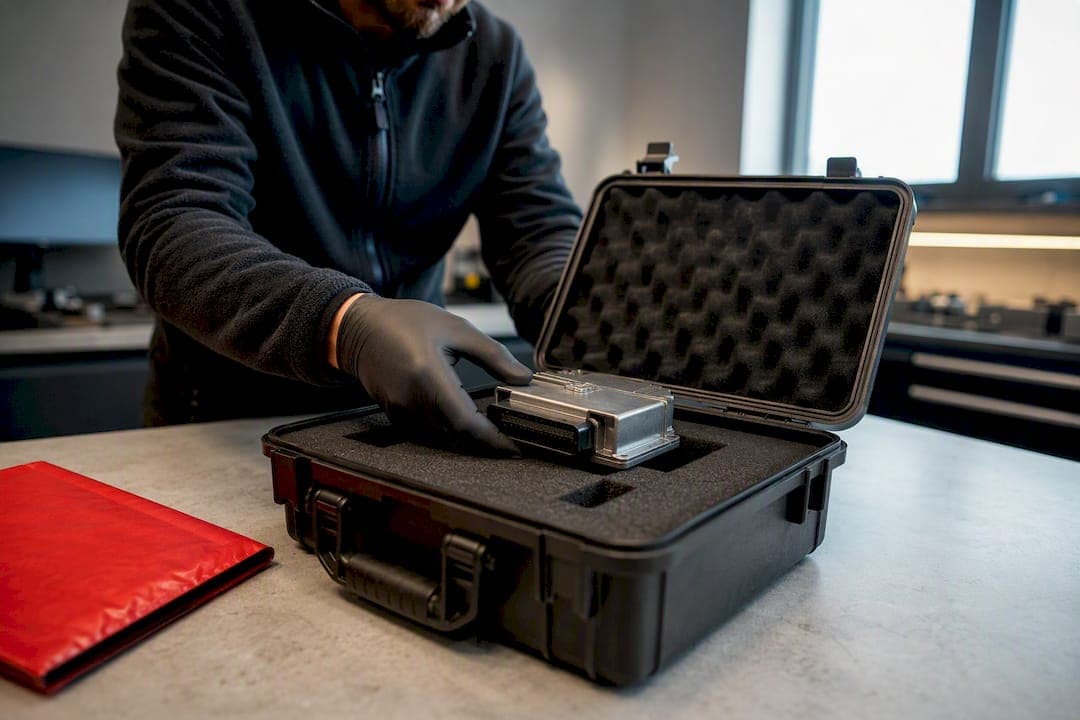
Yes, a Continental airbag control module can be reset, provided the casing is intact and the deployed inflators, pretensioners or sensors have already been replaced or are scheduled for replacement. If either condition fails, reset is the wrong path and replacement is the only safe one. Before contacting anyone, note the part number stamped on the label, photograph the module from every angle, and check whether new restraint hardware is fitted or on order. A postal bench service almost always beats dealer replacement on both price and turnaround.
TL;DR:
- A Continental airbag module can be reset only if it is physically intact and the deployed hardware has been replaced or is scheduled for replacement.
- Resetting clears the crash event record to restore the module's original behavior without replacing hardware, but hardware damage invalidates the reset.
- The process involves reading, rewriting, and checksum recalculating of the module's EEPROM, which requires specialist bench equipment outside normal diagnostic tools.
- Proper preparation, including photographing and packaging the module, reduces turnaround time to 24-48 hours and lowers costs compared to dealer replacements.
- A successful reset results in the airbag warning light functioning normally, confirmed through post-reset scans and self-tests, with most modules costing less than OEM replacements.
Table of Contents
- What does a Continental airbag module reset actually clear?
- Is your module a candidate for reset, or does it need replacing?
- How does a bench EEPROM reset actually work?
- Preparing a Continental module for postal reset
- How do you know the reset actually worked?
- Why specialist postal services handle most Continental resets
- What should a postal reset cost, and how long should it take?
- A straight answer on bench resets for Continental owners
- Ready to send your module in? Here's how Airbag Reset UK works
- Sources
- FAQ
What does a Continental airbag module reset actually clear?
A crash triggers the SRS control unit to write a permanent event flag into a protected block of EEPROM. This flag is what keeps the airbag light on and the system disarmed long after the physical damage has been repaired. It is not a cosmetic warning. The module is designed this way deliberately, so a vehicle that has been in a serious collision cannot silently return to service with a restraint system that thinks it has already fired.
A bench reset rewrites that flag back to its pre-deployment state, restoring the module to manufacturer-intended behaviour rather than bypassing any safety logic. It does three things, and no more than three:
- Clears the crash-event record stored in protected memory
- Returns the module's internal state machine to "armed and ready"
- Leaves every other calibration, VIN pairing and sensor threshold untouched
What it never does is replace hardware. If an inflator has fired, a reset does not gunfire it. Technicians generally treat the SRS module as the brain of the restraint system rather than the trigger. The brain can be restored to health, but the parts it controls still need to be physically sound.
Is your module a candidate for reset, or does it need replacing?
Not every airbag module that survives a crash is worth resetting. The decision comes down to a handful of physical checks, and skipping them is how people end up paying for a reset that was never going to work.
- Inspect the casing for cracks, deformation or scorch marks around the connector pins.
- Check for corrosion or moisture ingress, particularly if the vehicle was flooded or left outside after an accident.
- Confirm whether the deployed inflators, pretensioners and crash sensors have been replaced, or are booked in for replacement.
- Pull any stored diagnostic trouble codes and note whether they point to sensor faults rather than internal module failure.
Physical PCB damage, burnt deployment-driver ICs, or visible water damage all mean the module goes in the scrap bin, not the post. Reputable technical guides are consistent on this point: a bench clear only makes sense on a module that is otherwise electronically sound.
Pro Tip: Run a full scan before you touch anything and save the report as a PDF. A reset provider can often tell you within minutes whether your module is a straightforward clear or a lost cause, just from the code list.
How does a bench EEPROM reset actually work?
Once a module reaches a specialist bench, the process looks nothing like plugging a code reader into the OBD port. In-vehicle diagnostic tools generally cannot touch the crash-data block at all, because it sits in a write-protected memory region guarded by bootloader checks and checksum validation. That protection is deliberate. It stops a stray software glitch, or a bad-faith reset attempt, from quietly wiping crash history through a standard scan tool.
On the bench, a technician typically works through a defined sequence:
- Reads the raw EEPROM contents directly from the chip
- Locates the specific bytes that store the crash-event flag
- Rewrites those bytes to their factory pre-deployment values
- Recalculates the checksum or CRC so the module's own bootloader will accept the change
- Writes the corrected data back and runs a self-test to confirm the module powers up clean
The bench-level rewrite is required precisely because that memory block sits outside normal OBD-II reach. It is also why the method has hard limits. If the module's firmware is corrupted, or the deployment-driver chips themselves are damaged, the write will fail or the module will refuse to pass its own checksum check afterwards. No amount of retrying fixes a fault that started in the hardware.
Preparing a Continental module for postal reset
Getting the module ready properly saves a week of back-and-forth emails with whoever is doing the reset. The identification and packaging steps matter more than most people expect.
- Locate the label on the module body and record the full part number, along with the vehicle's VIN.
- Photograph the label clearly enough to read every character, then photograph the underside and connector for any hidden damage.
- Disconnect the vehicle's battery negative terminal and wait at least 10 minutes before removing the module, to let any residual charge in the airbag circuit dissipate.
- Handle the connector pins with ESD-safe gloves where you have them, since static discharge can damage sensitive components.
- Package the module with a printed copy of your scan report, note any visible damage in writing, and include your contact details and return address.
Turnaround on a correctly identified, well-packaged module is often measured in 24 to 48 hours rather than the week or more a dealer replacement order can take once a new unit is sourced and programmed.
Pro Tip: Take the photos before you disconnect anything. Once the module is out of the car, you lose the visual context of how it was mounted, which matters if the provider needs to query the fitment later.
How do you know the reset actually worked?
At ignition, the SRS light should follow the normal bulb-check pattern: illuminate briefly, then go out within a few seconds. If it stays lit after that self-test window, something is still unresolved, either in the module, the wiring, or a sensor that has not been reconnected properly.
- Run a full OBD scan after refitting to confirm no crash-event hard codes remain in memory.
- Trigger the module's built-in self-test routine where the scanner supports it, checking sensor circuits and squib resistance readings.
- Cross-reference any stored codes against known Continental reference numbers, such as the side airbag crash sensor code G180, to rule out a wiring fault masquerading as a module issue.
- If the light persists, recheck every connector and the harness route before assuming the module itself needs rework.
A clean scan with zero stored crash flags, paired with a light that behaves normally on start-up, is the confirmation you are looking for.
Why specialist postal services handle most Continental resets
Dealership diagnostic tools rarely carry crash-clear permissions, which is exactly why dealers so often default to recommending a full replacement module rather than a reset. Specialist postal services exist to fill that gap, and Airbag Reset UK runs one covering cars, vans and motorhomes.
The offering is straightforward: send the module in, get it reset, get it back. Pricing for a standard car module reset runs from £35, with motorhome-specific resets available for larger, specialist modules. Most units that arrive in the morning go back out the same day. Technicians identify modules by part number or a clear photo before any work starts, and pricing is typically lower than dealer replacement quotes. That combination, backed by experienced technicians, covers most Continental cases where the module itself is physically sound.
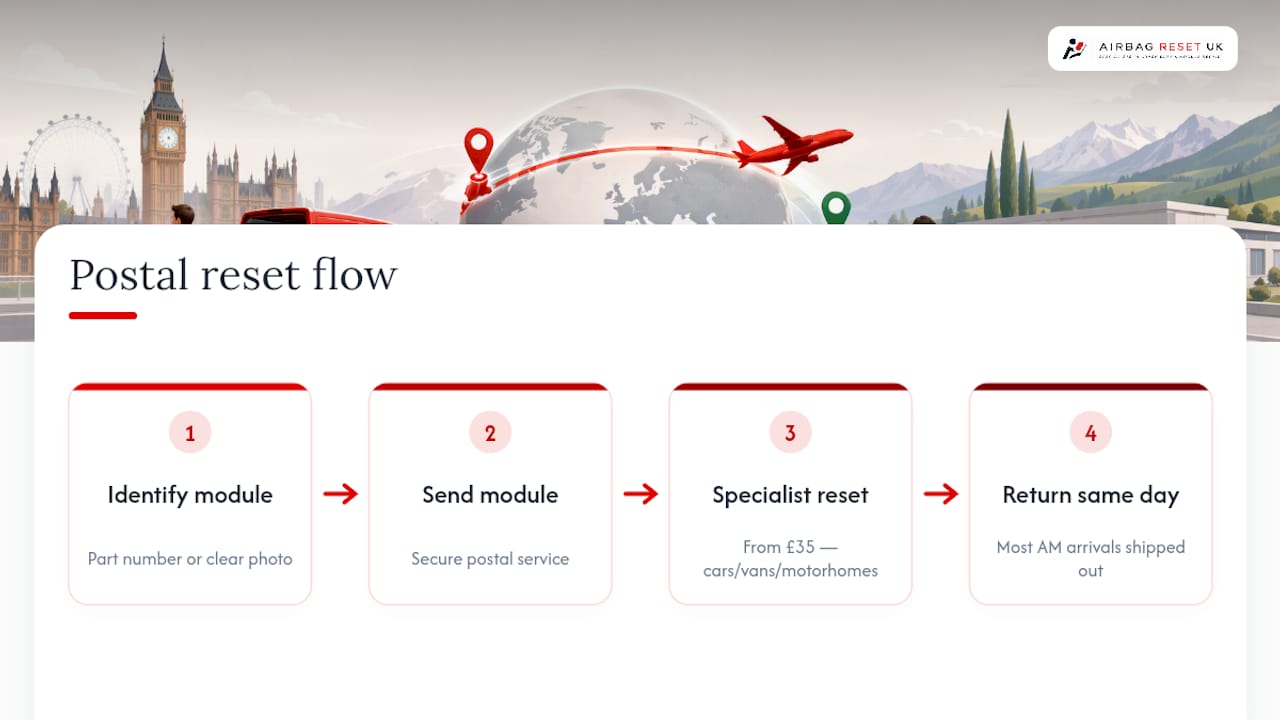
Before booking, confirm your module's part number against the provider's identification process. It takes minutes and avoids sending the wrong unit.
What should a postal reset cost, and how long should it take?
Expect a working range rather than a single fixed number, since pricing depends on the module's complexity and whether it needs additional diagnostic work. Standard resets for Continental modules typically fall well below the cost of a new OEM replacement unit, and turnaround for postal bench services is commonly 24 to 48 hours once the module arrives correctly identified.
- Ask what happens if the reset fails: a function test and a clear return policy should be standard.
- Confirm whether VIN retention is included, so the module stays paired to your vehicle without extra programming.
- Use insured, tracked postage and pack the module in a rigid box with anti-static wrapping.
Pro Tip: Label the parcel clearly with "fragile electronic component" and keep your proof of postage until the module is confirmed received. It is the one-step people skip and later regret.
A straight answer on bench resets for Continental owners
For most Continental owners who have already had the deployed hardware replaced, a bench reset is the sensible route: it costs a fraction of a new module and returns the car to normal function in days rather than weeks. That said, a reset is not a way to make an accident disappear on paper. If you are selling the vehicle, disclose the history honestly rather than treating a clean airbag light as cover. When the inflators and sensors are properly replaced and the module itself is undamaged, a bench reset restores exactly what it should, and nothing more.
— John
Ready to send your module in? Here's how Airbag Reset UK works
Airbag Reset UK is the practical alternative to ordering a new Continental module through a dealer: same fixed process, a fraction of the cost, and no waiting on OEM stock. If your module is physically sound and the deployed restraint hardware has already been dealt with, sending it for a bench reset from £35 is usually the faster and cheaper route back to a clean SRS light.
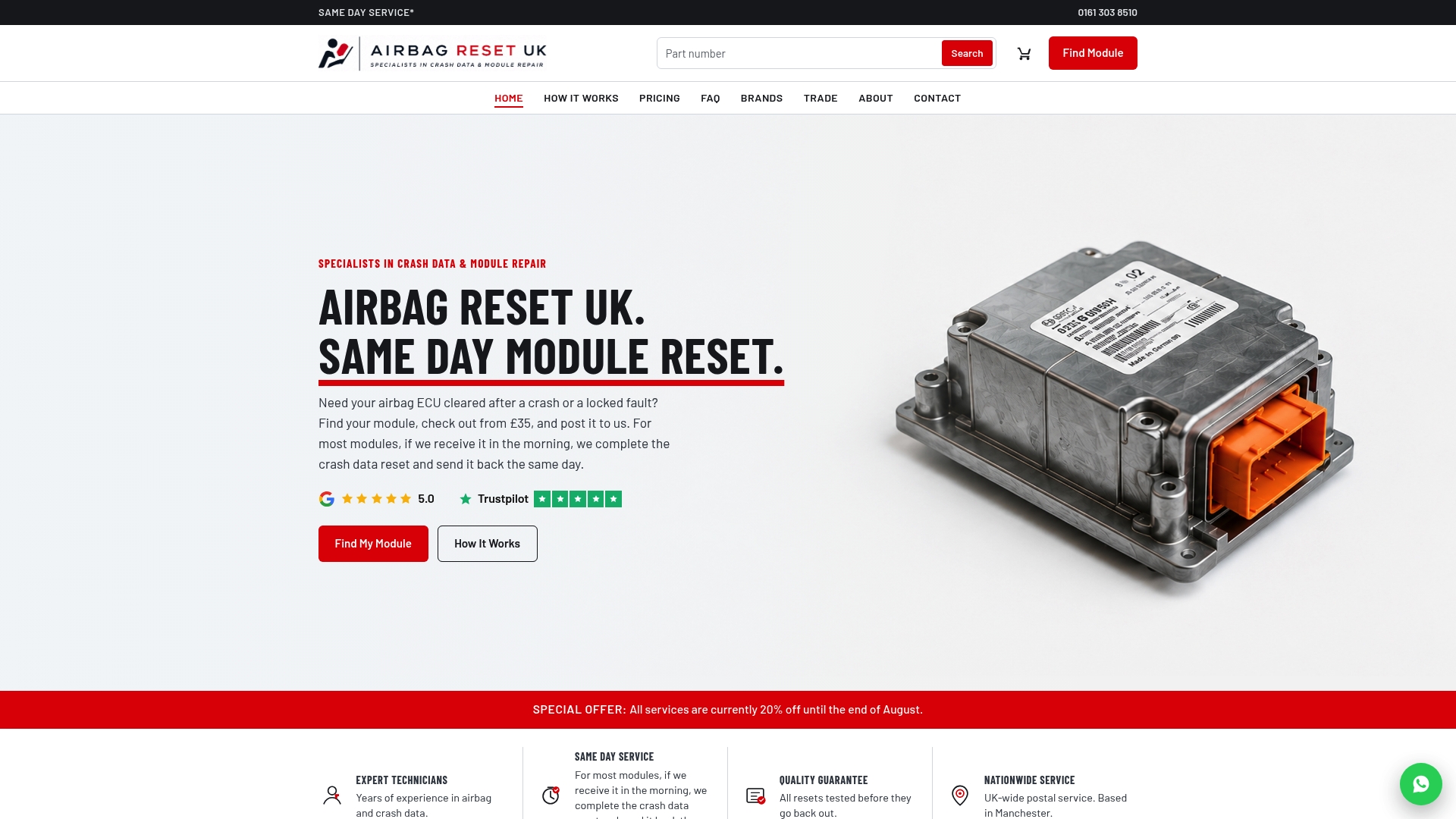
Start by photographing the part number label and the module's underside, and note your vehicle's VIN and model. Then head to the pricing and booking page to confirm your module qualifies, or get in touch by phone or WhatsApp if you are not sure which unit you have. Most modules arriving in the morning go back out the same day, pricing is matched against genuine like-for-like quotes, and garages or fleet workshops can ask about a trade account for ongoing work. Motorhome owners with larger or specialist modules should check the motorhome airbag reset service instead, and trade or mobile technicians can find details on the mobile reset option for on-site jobs.
Sources
- Airbag SRS Crash-Data Clear: The Complete 2026 Guide
- How to Repair SRS Airbag Module Complete Reset Guide
- Step-by-step guide: How to reset your SRS module
FAQ
Can I reset my own airbag module at home?
No. The crash-event flag sits in write-protected EEPROM that standard OBD-II tools cannot access, so a proper reset requires specialist bench equipment and a technician who can recalculate the checksum correctly.
How do I reset an airbag control module?
A qualified technician removes the module, reads its EEPROM directly, rewrites the crash-flag bytes to their factory state, recalculates the checksum, and verifies the module passes its own self-test before it is sent back and refitted.
Can I reset the airbag light without a specialist tool?
Not reliably. The light comes back on because the underlying crash record is still stored in protected memory, so clearing the dashboard warning without addressing that record only masks the fault temporarily.
What tool can I use to reset the airbag module myself?
There is no consumer-grade tool that can safely clear the crash-data block inside a Continental module, since the memory is bootloader-protected; this is why postal bench services exist, offering resets from an affordable starting price with quick turnaround options.