
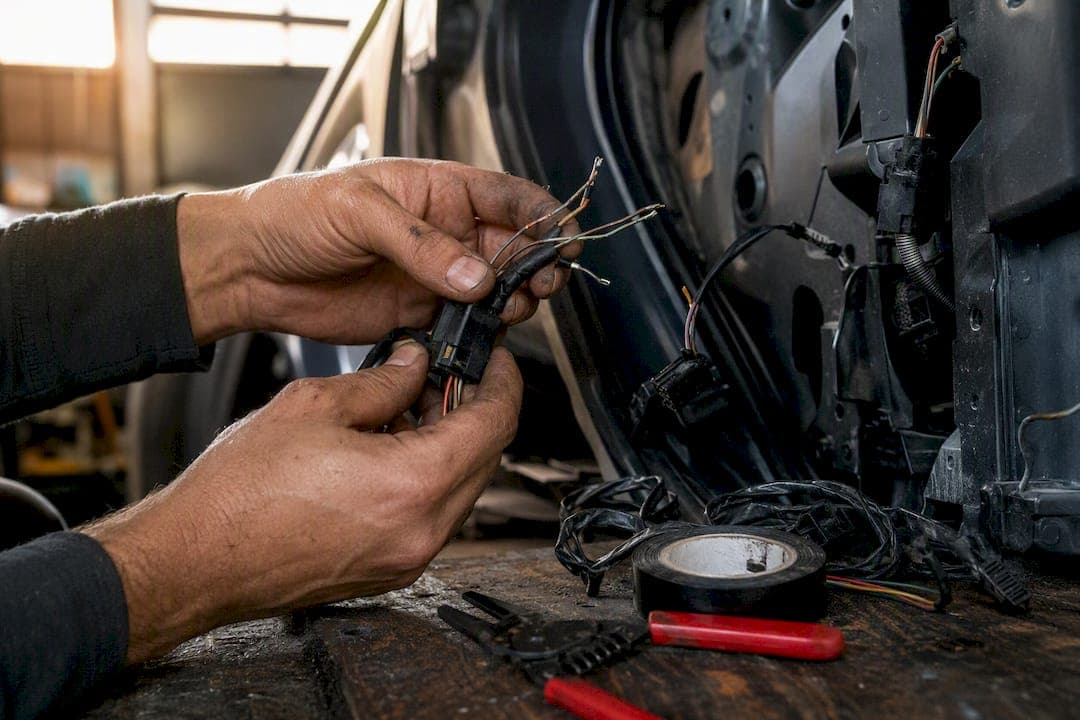
An illuminated airbag or SRS light on a Mercedes Sprinter means the restraint system has detected a genuine fault, and the airbags or seatbelt pretensioners may not fire in a crash. The usual culprits are damaged wiring, corroded connectors, or stored crash data from a prior event. Pull the fault codes, photograph the wiring, then either check the obvious spots yourself or book a diagnostic. Never just clear the codes and hope.
TL;DR:
- Most SRS faults in a Mercedes Sprinter stem from damaged wiring, corroded connectors, or issues caused by abuse in seatbelt and swivel seat wiring.
- Proper diagnosis requires a Mercedes-specific scan tool to read fault codes, with resistance measurements on squib circuits helping identify specific wiring problems.
- Before seeking professional repair, owners should check fuses, inspect connectors, verify recent battery work, and document wiring conditions to avoid unnecessary costs.
- Resetting crash data without repairing physical faults is ineffective and can leave safety features disabled even if the warning light temporarily turns off.
- Repairing wiring issues should be followed by a proper module reset, which can be outsourced to specialist services for quick and cost-effective clearance of crash data.
Table of Contents
- What causes the Mercedes Sprinter airbag issue?
- How do you read SRS fault codes on a Sprinter?
- Owner checks before booking a garage visit
- Why a reset alone often doesn't fix the light
- Understanding the Sprinter's airbag system components
- Can you manually reset the airbag light after a repair?
- Do software updates affect the airbag light?
- Do older and newer Sprinters behave differently?
- What does it typically cost to fix an SRS light?
- Author perspective: fix the wiring, then worry about the reset
- Getting your module reset once the repair is done
- Sources
What causes the Mercedes Sprinter airbag issue?
Sprinter SRS faults follow a pattern once you've seen a few. The seatbelt buckle assembly sits low, gets kicked, soaked, and flexed every time someone climbs in, and it's wired through a connector that's rarely designed with abuse in mind. That's why buckle failures top the list of causes on this model.
Seat swivel bases make things worse. Many Sprinters run as campervans or mobile workshops with swivel seats, and the wiring loom that feeds the seatbelt tensioner and buckle switch has to flex every time the seat turns. Aftermarket seat modifications often route this harness incorrectly, and repeated twisting eventually cracks the insulation or snaps a conductor inside. One forum case documented on iRV2 traced a persistent SRS light straight back to a snapped seat-buckle wire, and the light went out the moment the wire was repaired.
Beyond the seatbelt circuit, expect these common causes:
- Corroded or loose connector pins under the seats, particularly where moisture collects on van conversions.
- Poor ground connections, which read as intermittent faults rather than a solid failure.
- High resistance or open circuits in the squib or pretensioner wiring, usually flagged by a specific fault code rather than a vague warning.
- Voltage interruptions after battery work, jump starts, or a flat battery, which can trip a stored fault even when nothing is physically broken.
- Stored crash data from a previous deployment or near-deployment event, which keeps the light on until the module is properly addressed.
Forum discussions on Sprinter-Source repeatedly point to the same handful of fixable faults: a buckle connector, a chafed harness, or a squib circuit sitting at the wrong resistance. That repetition is useful. It means most Sprinter SRS problems aren't mysterious module failures, they're specific, findable, and often cheap to fix once you know where to look.
How do you read SRS fault codes on a Sprinter?
A basic OBD-II reader from a motor factor will tell you almost nothing useful here. Generic scanners read powertrain codes and sometimes ABS, but the SRS module runs on its own bus and needs a scan tool built to talk to it, ideally something with proper Mercedes coverage or the manufacturer's own Xentry diagnostic system. Without that, you're guessing.
Here's the practical sequence for pulling codes properly:
- Connect an SRS-capable scan tool to the diagnostic port and select the restraint systems module rather than the generic engine menu.
- Pull both stored and pending codes. Pending codes matter because they show a fault building before it triggers the light permanently.
- Record any freeze-frame data attached to the code. This captures the conditions when the fault occurred, which helps distinguish a one-off voltage spike from a genuine wiring break.
- Note the exact code format, not just a summary description, since two similar-sounding faults can point to very different repairs.
Sprinter owners typically see codes referencing high or low resistance on a squib circuit, an open circuit on a seatbelt tensioner line, or a short in the sensor wiring. A resistance-high fault usually points to a loose or corroded connector; a resistance-low fault often means chafed insulation letting two wires touch. An open circuit reading is the classic snapped-wire scenario. None of these necessarily mean a deployed airbag or a written-off module.
Pro Tip: Write down the exact code and its freeze-frame mileage before you touch anything. A workshop or a postal reset service can identify the fault far faster with that detail than with a vague "the light's on" description.
Owner checks before booking a garage visit
Before you pay anyone, there's a short list of checks most owners can do safely without opening up the restraint system itself.
- Check the fuse box for the SRS circuit fuse; a blown fuse is cheap, obvious, and easy to rule out first.
- Visually inspect the seatbelt buckle connectors on both front seats, looking for corrosion, a loose plug, or a wire pulled partway out of its terminal.
- If you run swivel seats or a van conversion, check the harness where it crosses the swivel base for chafing or a kink.
- Confirm whether the battery has been disconnected, jump-started, or replaced recently, since that alone can trigger a transient SRS warning.
- Test battery voltage with the engine off and running; unstable voltage on an ageing battery is a surprisingly common trigger.
- Photograph every connector you inspect and note the module part number if it's visible, so a technician doesn't have to repeat your work.
Stop there. Anything involving the airbag units themselves, the pretensioner cartridges, or the squib wiring at the seatbelt anchor is not a DIY job. These components can injure you if mishandled, and a professional needs to confirm whether the module has stored crash data before doing anything further.
Pro Tip: If your seats swivel, check that harness every service. It's the single most common physical failure point on a Sprinter's SRS wiring, and it's completely invisible until the light comes on.
Why a reset alone often doesn't fix the light
Clearing crash data from the SRS module without repairing the underlying fault is not a genuine fix, and it isn't safe. If a seatbelt pretensioner has deployed, a squib circuit is genuinely open, or wiring is still damaged, resetting the module just switches the warning light off while the actual protection remains compromised. The safety guidance from Nitro Bilişim is blunt about this: repair comes first, reset comes second, never the other way round.
Where a reset genuinely works is on transient or resolved faults. If the light came on because of a voltage dip during a battery swap, or because a connector was loose and has since been reseated properly, clearing the stored data will keep the light off permanently. If the underlying wiring is still broken or a component has actually deployed, the light returns, sometimes within days.
A crash-data reset without hardware repair is often only temporary. Experienced technicians confirm a permanent fix by re-running diagnostics and checking resistance values on the squib circuits after the reset, not just watching the dashboard light go off.
That verification step is what separates a proper repair from a quick workaround.
Understanding the Sprinter's airbag system components
The SRS control module sits at the centre of the system, constantly monitoring inputs from crash sensors mounted around the vehicle, the seatbelt buckle switches, and the squib circuits that fire the airbags and pretensioners on demand. When any of these report a value outside the expected range, resistance too high, a circuit that's open when it should be closed, the module logs a fault and lights the dashboard warning.
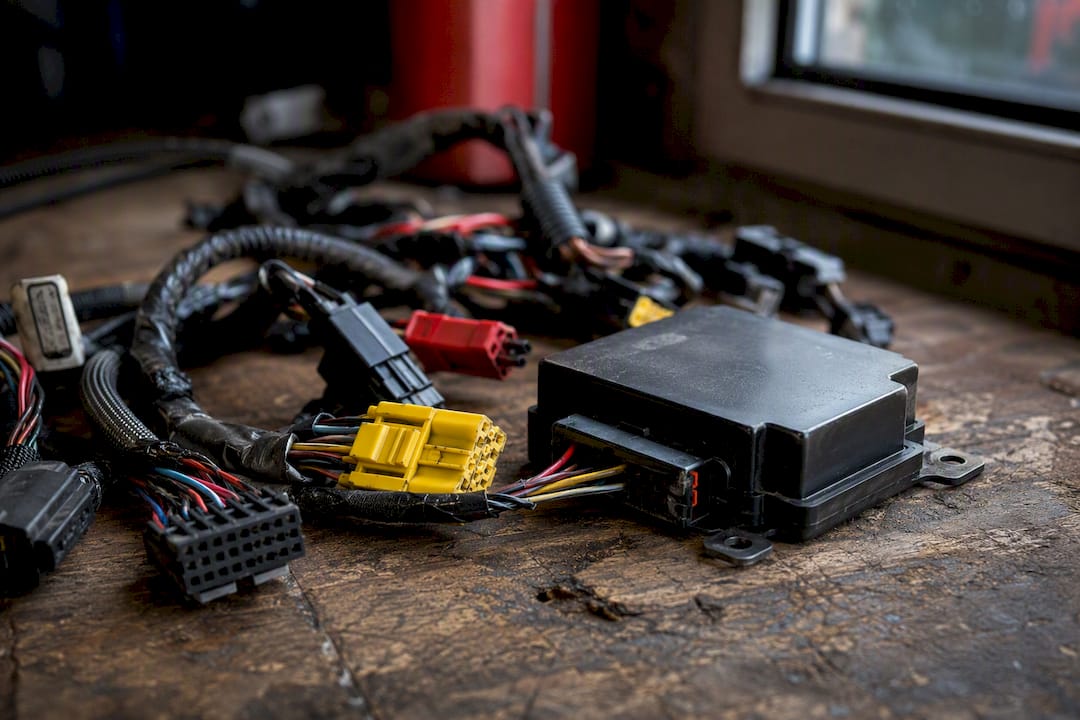
Squibs are the small electrical initiators inside each airbag and pretensioner that trigger deployment. They're designed to have a very specific resistance value, and the module tests this constantly while the ignition is on. A squib circuit reading outside spec doesn't necessarily mean the airbag itself has fired, it often means a wire feeding that circuit has degraded.
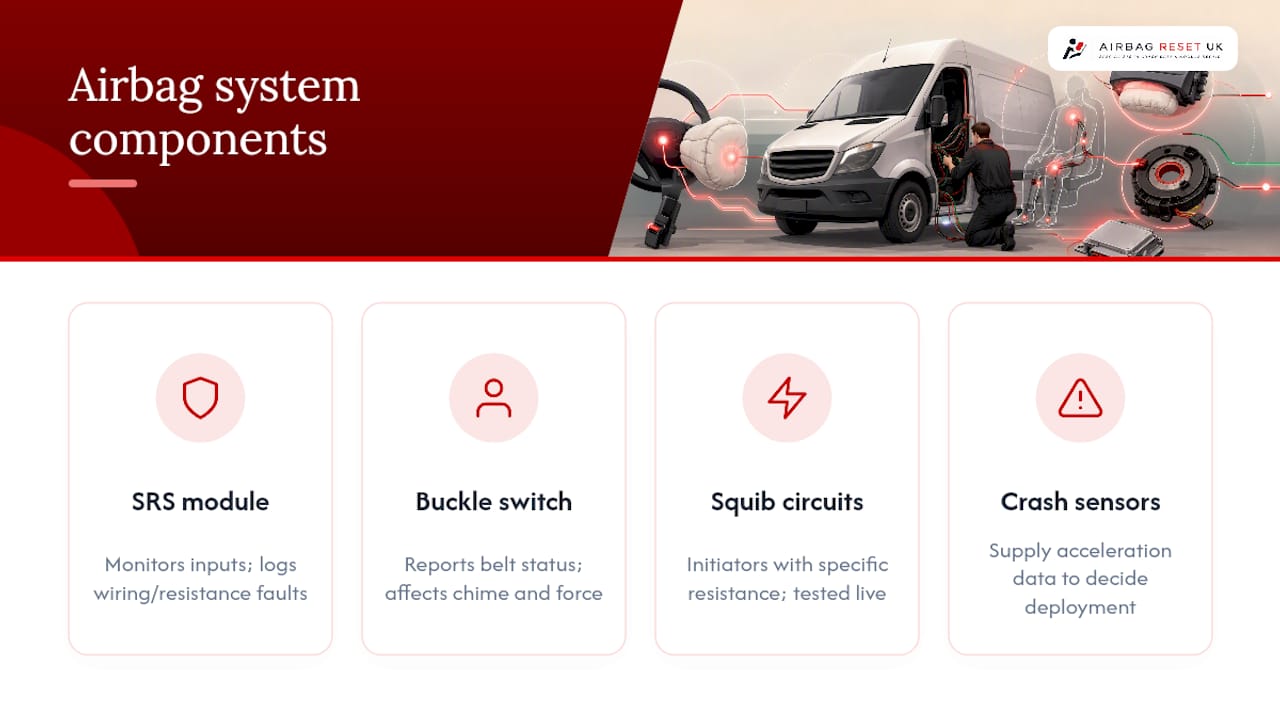
Seatbelt buckle switches tell the module whether the belt is fastened, which affects both warning chimes and how the system calculates deployment force. Crash sensors, typically mounted in the front of the vehicle and sometimes in the doors, feed acceleration data that the module uses to decide whether and how forcefully to deploy. As the Sprinter City explainer sets out, any break in this chain, sensor, wiring, or module, can leave the whole system unable to respond correctly in a real collision. That's why an illuminated light is never something to dismiss as cosmetic.
Can you manually reset the airbag light after a repair?
Once a physical fault has been properly repaired, whether that's a reseated connector, a replaced buckle switch, or restored wiring, the SRS module usually needs its stored fault codes and any crash data cleared before the light goes out on its own. On many faults, simply fixing the wiring and cycling the ignition clears a pending code automatically, which is exactly what happened in the iRV2 forum repair where a fixed seatbelt wire made the light disappear immediately.
Stored crash data is different. If the module has logged an actual crash event or deployment, that data typically persists until it's cleared with a proper diagnostic tool or a specialist crash-data reset service. This isn't something you switch off with a fuse pull, disconnecting the battery rarely clears genuine crash data, and repeatedly power-cycling the module can mask a fault rather than fix it.
The sequence that actually works: repair the hardware fault completely, verify the fix with a scan tool by checking that resistance readings on the affected circuit are back within spec, then clear the stored codes and crash data through the module. Services built around this exact process, such as MyAirbags' Sprinter 2500 module reset, exist specifically because clearing crash data requires equipment and access that a home mechanic usually doesn't have. Skipping the repair step and going straight to a reset is the single most common reason owners find the light returns within a week or two.
Do software updates affect the airbag light?
Software plays a bigger role in the SRS system than most owners realise. Mercedes occasionally issues module firmware updates that change how the control unit interprets sensor data or handles certain fault thresholds, and a Sprinter that's overdue on a software update can sometimes throw an SRS warning that a reprogrammed module would never flag.
This cuts both ways. A firmware update can resolve a warning that was really a software quirk rather than a hardware fault, something worth asking about if a dealer or workshop has ruled out wiring and connectors but the light persists. Equally, a botched reprogramming job, an interrupted update, or a mismatch between the module's software version and the vehicle's actual configuration can trigger new SRS faults that didn't exist before.
Replacing a module also brings software into play. A replacement SRS control unit typically needs to be coded to the specific vehicle, VIN, seat configuration, and belt-tensioner type, before it will function correctly. Fit a generic or incorrectly coded module and you can end up with a permanent warning light even though the hardware itself is fine. This is one of the few genuine cases where a Mercedes-specific diagnostic system, rather than a generic scan tool, earns its keep, since coding a replacement module correctly usually isn't possible without manufacturer-level access.
Do older and newer Sprinters behave differently?
The Sprinter has been through several generations, and the SRS system's behaviour has shifted with each one. Older models, particularly earlier NCV3-generation vans, tend to run simpler restraint architectures with fewer sensors and a more basic control module, which in practice means fault codes are often more clear-cut: a wiring break shows as a wiring break, without much ambiguity.
Newer Sprinters, especially those built as camper conversions with additional seating, swivel bases, and aftermarket electrics, carry more complexity in the restraint wiring simply because there's more hardware to integrate. This is precisely why seat-swivel wiring faults show up so often in current forum discussions. It's a side effect of popular conversions, not a manufacturing defect in the van itself.
Model year also affects how forgiving the system is about intermittent faults. Some earlier variants will illuminate the light and keep it on permanently after even a brief fault, requiring a full clear before it resets. Later variants are sometimes better at distinguishing a genuine persistent fault from a one-off glitch, though this varies enough between model years that you shouldn't assume your particular van behaves a certain way without checking the actual fault codes stored in your module.
What does it typically cost to fix an SRS light?
Costs split fairly cleanly into two categories: physical repair and crash-data clearing. A straightforward seatbelt buckle connector repair or a chafed harness fix is largely labour, since the parts themselves are inexpensive. Where costs escalate is diagnostic time, particularly if a workshop has to trace an intermittent fault across a long harness run under swivel seats.
Replacing a seatbelt buckle assembly outright costs more than a connector repair but is still a relatively contained job. Squib circuit repairs or a full harness replacement sit at the higher end, since that wiring often runs through trim panels that need to come apart carefully.
Crash-data clearing and module resets are priced quite differently from mechanical labour, since they're a diagnostic service rather than a parts-and-fitting job. Postal reset services built specifically around this task, rather than a general vehicle workshop billing hourly, tend to offer more predictable, fixed pricing precisely because the job itself doesn't vary by vehicle condition the way a wiring repair does.
Author perspective: fix the wiring, then worry about the reset
Most Sprinter SRS lights come down to something you can find with a torch and a screwdriver: a buckle connector, a chafed harness under a swivel seat. Check those first. If you're planning a postal reset, do the physical repair before you post the module, and send the fault codes and photos with it. Save the full Mercedes-specific diagnostic for cases involving replacement modules or genuine crash history; a third-party reset handles the rest.
— John
Getting your module reset once the repair is done
Once you've fixed the wiring, replaced a buckle connector, or confirmed the fault was down to a battery event rather than damaged hardware, you still need the module's stored crash data cleared properly, and that's the exact gap Airbagresetuk fills. Rather than booking a dealer slot and waiting days for a diagnostic bay, you post the module and get most jobs turned around the same day it arrives.
Pricing starts at £35, with a price-match policy against genuine like-for-like quotes, and the process is built around the same repair-first logic covered throughout this guide: fix the hardware, then clear the data. Send your module once wiring and connectors are confirmed sound, and include the fault codes you pulled, clear photos of the affected connectors, the module's part number, and your contact details. That information lets the technicians identify the exact module variant and turn the job around faster instead of guessing from a bare part number. Garages and mobile technicians handling this regularly can also set up a trade account for discounted rates across multiple jobs. If your module has stored crash data and the physical repair is done, book it in through Airbagresetuk's site and get the reset underway.
Sources
For deeper diagnostic detail, the Sprinter City breakdown of common SRS issues covers system architecture, while Sprinter-Source forum threads and the iRV2 community case study offer real-world troubleshooting from other owners. Always cross-check any vehicle-specific repair against Mercedes-Benz service information before starting work.