
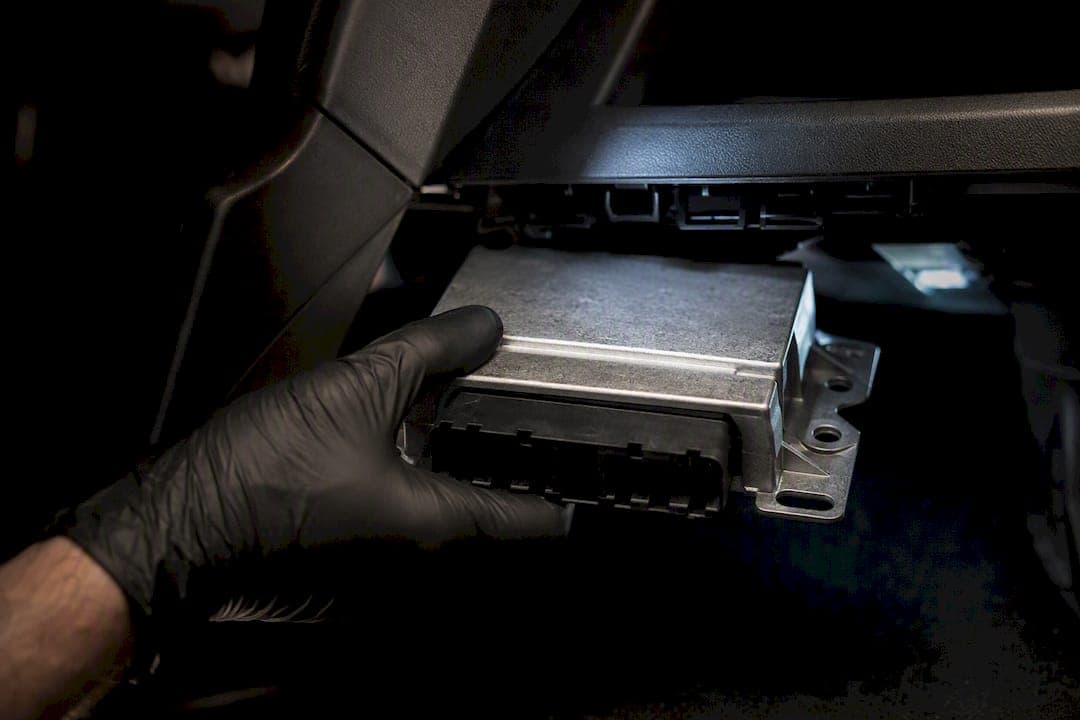
A professional bench-level reset clears the stored deployment records and SRS fault codes in a Peugeot airbag ECU, letting the warning light go out for good, but only once any deployed airbags, pretensioners, or damaged sensors have been repaired or replaced. If you've been in a collision, the first move isn't booking a reset. It's photographing the module's part number or arranging a diagnostic scan to confirm what actually happened inside the system.
TL;DR:
- A Peugeot crash data reset only clears stored impact records if all damaged hardware, including airbags and sensors, has been replaced or repaired beforehand.
- Proper identification of the airbag module's part number and supplier is essential for a successful reset, with photos and documentation being critical.
- The reset process involves bench testing the module, wiping crash flags from EEPROM, and returning it with a detailed report, typically within one to three days.
- If the airbag warning light persists after reinstalling a reset module, a hardware fault or wiring issue is likely, requiring further diagnosis before another reset.
- Postal reset services offer a quick, cost-effective option for intact modules, but complex repairs involving wiring damage are better handled by local garages with full diagnostic tools.
Table of Contents
- What is a crash data reset and what does it actually clear?
- How to tell whether your car needs a crash data reset or a repair
- Finding the Peugeot airbag module and reading its part number
- Postal reset workflow: what actually happens step by step
- What does a Peugeot crash data reset cost and how long does it take?
- Safety prerequisites: what must be fixed before the module goes back in
- How do you verify the reset actually worked?
- Why choose a specialist postal reset service?
- What's the fastest, safest route for Peugeot owners after an accident?
- Book a Peugeot airbag ECU reset by post
- Sources
What is a crash data reset and what does it actually clear?
Every Peugeot fitted with an SRS system stores what's known as non-volatile crash data. This isn't a fault code you can clear by unplugging the battery. It's a permanent record written into the airbag ECU the moment a collision triggers the sensors, and it stays there until someone physically intervenes at the memory level.
That record typically includes three things: deployment flags for the airbags and seatbelt pretensioners, a frozen snapshot of the impact severity picked up by the crash sensors, and a block of hard-coded fault memory that standard diagnostics can read but not erase.
Standard OBD-II scanners can pull live fault codes off almost any modern car, but they hit a wall with permanent crash data. The information sits in the EEPROM, a small memory chip on the circuit board, and clearing it means reading that chip directly, wiping the crash flags, and writing a verified clean file back before the module goes anywhere near a car again. That's the bench-level part of the process, and it's the reason a garage with an ordinary code reader can't finish the job on its own.
Peugeot and Citroën share the same PSA electronics architecture, so the modules you'll encounter tend to fall into a fairly narrow band of suppliers:
- Bosch airbag control units, the most common across Peugeot's 208, 308, 3008, and Boxer ranges
- Siemens/Continental modules on some older Peugeot models
- Autoliv units, occasionally found on specific PSA platforms
Knowing the supplier matters because the reset file, and the software used to write it, has to match the exact module revision. Get that wrong and the module simply won't accept the file.
How to tell whether your car needs a crash data reset or a repair
Not every airbag light is a crash-data problem, and paying for a reset when the real fault is a loose connector wastes money and delays the actual fix. Work through this before you do anything else:
- Check for an obvious trigger. If the light appeared immediately after an accident, especially one where airbags visibly deployed or the vehicle was reported to insurers, you're almost certainly dealing with stored crash data.
- Look for physical evidence. Deployed airbags, a fired seatbelt pretensioner, or a collapsed steering column are unmistakable signs the SRS system has actually fired.
- Rule out non-crash causes first. Corroded connectors under the seats, a disturbed seat occupancy sensor, or chafed wiring in the door sills can all trigger an SRS light with zero collision involved.
- Get a proper scan before assuming anything. A technician using PSA-specific diagnostic software, such as PP2000 or Diagbox, can distinguish a genuine crash record from a wiring fault in minutes.
The distinction matters because a reset only clears data. It does nothing for a broken connector or a chafed harness, and a garage that skips this check is guessing, not diagnosing.
Pro Tip: If your car hasn't been in any kind of impact and the light came on out of nowhere, ask for a fault code readout before you send anything anywhere. A recurring intermittent code (rather than a permanent crash flag) usually points to wiring, not deployment history.
For readers dealing with an electrical fault rather than confirmed crash data, this guide to diagnosing electrical faults versus stored crash records is a useful reference for telling the two apart before committing to any repair path.
Finding the Peugeot airbag module and reading its part number
On most Peugeot models, the airbag ECU sits under the centre console, roughly beneath the handbrake or gear selector, though some models tuck it under the front passenger or driver seat instead. Boxer vans and larger PSA-based models sometimes place it further back, so if you're not certain, a five-minute check with the parts diagram beats guessing.
Before touching anything, disconnect the battery and leave the car for a short period. This cautious step helps prevent accidental deployment of any airbags still primed and avoids introducing new electrical faults while you're working near live circuits.
Once the module is accessible, the label on its casing is what matters most:
- A 10-digit PSA part number, usually the primary reference
- A secondary Bosch ECU number printed alongside it on most Peugeot/Citroën modules
- A date stamp and sometimes a hardware revision code
Photograph this label clearly, in good light, with both numbers legible. Sending a blurry photo, or relying on memory, is the single most common reason a reset lab applies the wrong file or has to send the module straight back. Correct identification up front is what keeps the whole job moving quickly instead of stalling on a second round of emails.
Postal reset workflow: what actually happens step by step
Sending a module in the post sounds like it should be complicated. In practice, it's a fairly linear process once you know the order of operations.
- Disconnect the battery and remove the module. Wait the recommended period first, then unbolt the unit and unclip its connectors without forcing anything.
- Photograph the part number and Bosch reference. Do this before packaging, while the label is still easy to access and read.
- Package the module securely. Bubble wrap or a padded box works fine. Airbag ECUs are solid-state electronics, not fragile in the way a phone screen is, but connectors and pins can bend if it's thrown around in transit.
- Include your documentation. Attach the part number photos, your vehicle's VIN, a note of what happened (collision date, which airbags deployed), and contact details so the lab can reach you if anything's unclear.
- The lab reads the EEPROM. A technician connects the module to bench equipment, pulls the raw memory, and confirms exactly what crash data and fault codes are stored.
- The reset file is applied and verified. Crash flags, pretensioner deployment records, and hard-coded SRS faults are cleared, then the module is tested on a bench rig to confirm it behaves as a factory-fresh unit would.
- The module is returned with a test report. A reputable lab documents what was found and what was cleared, so you have a paper trail if anything's questioned later.
- You reinstall and run the ignition check. More on that shortly, but this final step confirms the fix actually held.
Pro Tip: Keep a photo of the module before you box it up, showing any connector damage or corrosion. If the light returns after reinstall, that photo helps a technician work out whether the fault is new or was already there.
If the light comes back after reinstalling a correctly reset module, that's almost always a hardware issue rather than a failed reset, which is exactly why the safety checks in a later section matter as much as the reset itself.
What does a Peugeot crash data reset cost and how long does it take?
Pricing for a standard Peugeot airbag ECU reset generally sits in a modest bracket, with more complex modules, multiple stored fault codes, or unusual PSA variants pushing costs higher. Motorhome-based Peugeot chassis modules, given their lower volume and less common electronics, tend to sit at the upper end of that range.
Turnaround varies by service model:
- Same-day bench turnaround for straightforward Bosch modules once the parcel arrives and is logged in
- One to three working days where a module needs extra diagnostic work or a less common file
- Postal transit time on top, which is outside any lab's control but worth building into your own timeline
Before booking, it's worth asking a provider directly about a few things: what happens if the reset doesn't take, whether the price includes a written test report, and whether they'll price-match a like-for-like quote from elsewhere. A service that hesitates on any of those questions is telling you something.
Safety prerequisites: what must be fixed before the module goes back in
A crash data reset is a data-correction service. It does not repair anything physical, and reinstalling a reset module into a car that still has damaged hardware is close to guaranteed to bring the light straight back on.
Before reinstalling, confirm the following have been addressed:
- Deployed airbags are replaced with new units matched to the correct part number, never reused
- Fired seatbelt pretensioners are replaced, since a spent pretensioner cannot be reset or reused
- Impact sensors in the bumpers, doors, or B-pillars are inspected and replaced if damaged
- Wiring and connectors near the impact zone are checked for chafing, corrosion, or breaks
This is the point where physical components such as airbags, pretensioners, sensors and wiring must be repaired or replaced before reinstalling a reset module; otherwise the system detects the hardware fault and the airbag light can return almost immediately. Document each repair with photos or invoices and pass that information to whichever provider carries out the reset. A lab working from an honest picture of what's actually been fixed will give you a far more reliable outcome than one guessing at the state of the car.
How do you verify the reset actually worked?
Once the module is back in the car, the verification sequence is short but shouldn't be skipped.
- Reconnect the battery and switch on the ignition from outside the vehicle. This is the recommended approach, since it lets the SRS system run its self-check without anyone sitting in the seats where airbags are mounted.
- Watch the dashboard light. It's normal for the SRS warning light to illuminate briefly during the self-check before extinguishing if every component is functioning correctly.
- Run a full diagnostic scan. A PSA-compatible tool such as Diagbox reads stored codes and confirms there's nothing lingering that a visual check alone would miss, a two-step confirmation that catches both boot errors and buried fault codes.
- If the light stays on or returns later, stop and investigate. That almost always points to an unresolved hardware issue rather than a failed reset, and it's worth going back to the repair checklist before assuming the module itself is at fault.
Skipping the scan and relying purely on "the light's gone off" is how intermittent faults get missed until they resurface weeks later.
Why choose a specialist postal reset service?
There are specialized services offering postal crash-data resets for cars, vans, and motorhomes, which matters because motorhome-based PSA chassis modules are exactly the kind of low-volume unit that a generalist auto electrician rarely handles enough to be fast at.
Many services offer quick turnaround times, often the same day they're received, and provide clear pricing before you commit to anything. There's no vague "we'll quote you once we've seen it" approach that leaves customers guessing.
Experienced technicians with many years of combined practice in SRS and airbag ECU work operate such services, which sometimes include a price-match policy against genuine like-for-like quotes, helping customers get quality work at competitive prices. Discounted account pricing is often available for trade customers such as garages, bodyshops, and mobile technicians who process multiple modules across different makes and models.
What's the fastest, safest route for Peugeot owners after an accident?
The honest answer depends on what's actually broken, not just what's lit up on the dashboard.
If the airbags and pretensioners fired but the surrounding hardware, wiring, and sensors are otherwise intact, a postal reset is the quicker and cheaper route almost every time. There's no need to book a diagnostic bay slot and wait days for an appointment when the job is really a memory-level fix.
Where I'd push back on the postal-only approach is anything involving suspected wiring damage, a car that's had significant structural repair, or a fault that keeps recurring despite a clean reset. That's a job for a local garage with full diagnostic access, not a postal service, however good it is.
For trade customers juggling several modules a week, batching jobs and using a discounted trade account tends to save more time than chasing individual retail quotes module by module.
— John
Book a Peugeot airbag ECU reset by post
If your Peugeot's airbag light has been on since a collision, Airbagresetuk gives you a straightforward way to sort it without booking a garage slot and waiting around: send the module, get it reset on the bench, and have it back reinstalled within days rather than weeks.
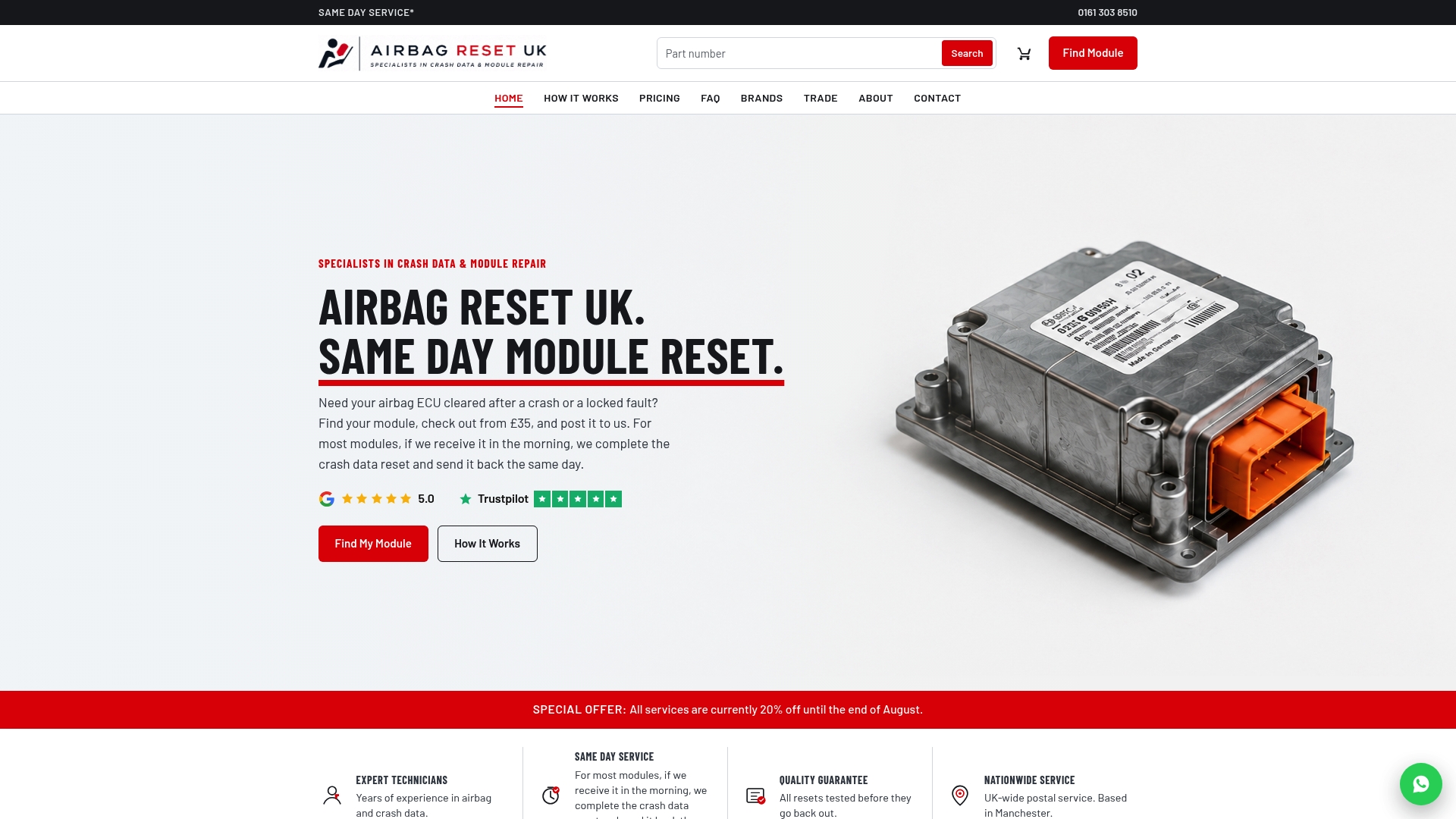
Pricing details vary and are typically provided on service websites, with many offering quick turnaround on standard modules and sometimes price-match policies against genuine quotes elsewhere. All you need to send is a clear photo of the part number label on your module, your vehicle's VIN, and a contact number so the lab can flag anything unusual before it goes back in the post. Trade accounts may be available, often with discounted rates for garages and mobile technicians handling multiple resets. Head to the Airbag Reset UK booking page to check current pricing for your specific module and get the process started.