
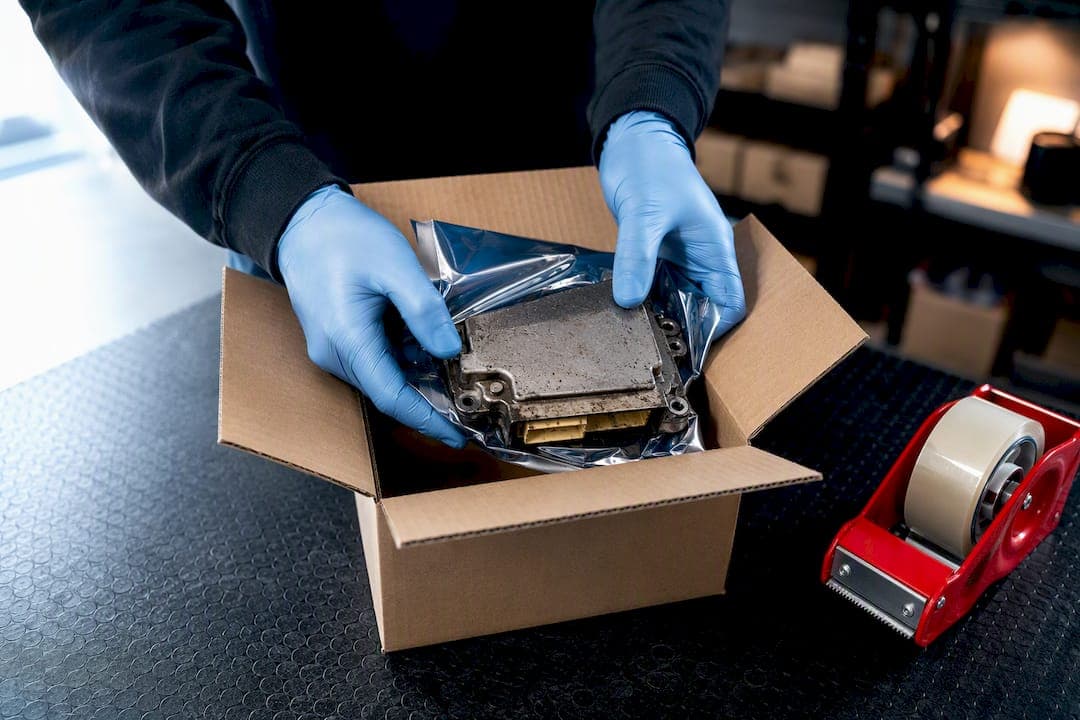
A postal reset is the right move when the airbag control unit is undamaged, removable, and simply storing crash data from an accident. If the module has no impact or water damage and still communicates on a scan tool, stop trying to clear codes yourself, photograph the part number, and send it to a specialist postal reset service such as Airbag Reset UK, rather than guessing at a fix.
TL;DR:
- Postal reset services are suitable when the airbag module is undamaged, communicates normally, and holds only crash data, not deployed hardware or water damage.
- A reset is only effective for preserving crash data if the module has not been deployed or physically compromised, and hardware faults require repair or replacement.
- Proper packaging with moisture protection and cushioning is essential to prevent postal damage, especially avoiding shipping deployed airbags or water-infected modules.
- The MOT considers a warning lamp as a major defect, meaning the system must be fully functional and hardware restored before passing inspection.
- Costs for postal resets generally start in the low tens of pounds for simple modules, with turnaround times typically within a few working days, depending on complexity.
Table of Contents
- What happens to an airbag module in a crash?
- Repair, reset or replace: choosing the right option
- How does a postal airbag-module reset service actually work?
- Preparing and packaging the module for safe postal transit
- What are the safety and MOT rules on airbag faults?
- What do postal airbag resets typically cost and take?
- When is a postal reset not suitable?
- An editorial view on postal resets versus DIY fixes
- How Airbag Reset UK gets your airbag light sorted
- Sources
- FAQ
What happens to an airbag module in a crash?
Every airbag control unit, sometimes called the SRS module or restraint control module, records what happened at the moment of impact. Sensor readings, deceleration data, and any diagnostic trouble codes get written to non-volatile memory inside the unit. That memory does not clear itself. It sits there, permanently flagging the crash event, which is why the SRS warning lamp often stays lit long after the vehicle has been repaired cosmetically.
This creates confusion for a lot of owners. They assume a warning light means something is broken. Usually it means something happened, and the module is doing exactly what it is designed to do: remembering.
There is a hard line worth understanding here:
- Crash data and stored fault codes are an electronic memory issue, correctable by a proper module reset.
- A deployed airbag, a fired seatbelt pretensioner, or a physically damaged sensor is a mechanical repair, and no software reset brings a spent airbag back to working order.
- Clearing codes without replacing deployed hardware or restoring damaged wiring leaves the restraint system genuinely unsafe, whatever the dashboard says.
That last point matters more than most guides admit. A cleared light with unresolved hardware faults is not a repair. It is a cosmetic cover for a system that will not deploy properly in a second collision, and it will not survive a proper MOT check either.
Repair, reset or replace: choosing the right option
Three routes exist once you know what you are dealing with, and picking the wrong one either wastes money or leaves a genuine safety gap.
- Reset suits a module that is physically intact, communicates normally on diagnostics, and is only holding historical crash data. This is the cheapest and quickest path, and it is what a postal reset service like Airbag Reset UK is built around.
- Repair applies when the electronics inside the unit have a fault unrelated to crash storage, such as a connector fault or a corroded pin, but the housing itself is undamaged. This needs bench-level diagnosis rather than a straight data clear.
- Replace becomes necessary once the airbag has deployed, the housing is cracked, water has got inside, or burning is visible. No specialist can reset a unit back into a safe state once the hardware itself has fired or corroded.
The trade-off is straightforward. Reset and repair cost far less than replacement, but only work when the module's core electronics survived the crash. Sending in a water-damaged or physically split unit wastes postage and delays the real fix. Any credible provider will tell you this on inspection rather than push through a reset that will not hold, which is exactly the kind of check worth asking for before you send anything.
How does a postal airbag-module reset service actually work?
The process is more structured than most owners expect, and knowing the steps in advance saves time on both ends.
- Run pre-checks before removal. Scan the vehicle for diagnostic trouble codes and note them down, then photograph the module's part number label and its connector layout while it is still fitted.
- Contact the provider with the right information. Send clear photos of the label, the vehicle's make, model and year, and a short description of what happened in the crash. Good photos of the part number in decent light are the single biggest factor in a fast turnaround.
- The module gets read and bench tested. A technician reads the stored crash codes, interprets which are historical and which might indicate a live fault, then clears the crash data using dedicated bench equipment rather than a generic code reader.
- You receive a report and the reset unit back. A reputable service documents what was found and what was cleared, and backs the work with some form of warranty on the reset itself.
- Refit and verify. On reinstallation, run the vehicle's on-demand self-test where the manufacturer provides one, and confirm the SRS lamp behaves normally through a full ignition cycle. Service manuals for models like the Ford Mustang set out exactly this kind of self-test verification process after restraint work.
Pro Tip: Keep the original diagnostic trouble codes written down before you remove the module. If the same codes reappear after refitting a reset unit, that points to a wiring or sensor fault elsewhere in the car, not a failed reset.
Preparing and packaging the module for safe postal transit
Getting the packaging wrong is the most common way a perfectly good reset job gets ruined in transit, and it is entirely avoidable.
First, confirm you are sending the electronic control module, not a deployed airbag bag or a live inflator. HSE guidance is explicit that undeployed airbags and pretensioners still contain explosive charges and should never be treated as ordinary electronic scrap, as set out in its guidance on storing and handling airbags and seat belt pretensioners.
For the module itself:
- Wrap it in a sealed moisture barrier bag before anything else touches it; following safe cleaning and protection practices as detailed in clean engine bay: safe steps and ceramic protection helps ensure the module stays pristine.
- Add generous cushioning around a rigid inner box so the unit cannot shift or take a knock in transit.
- Never pack it trim-side face-down, and follow supplier packaging where you still have it, or contact the supplier for guidance if you do not, per the detailed handling steps in HSG261 on motor vehicle repair safety.
- Include a note inside the parcel with your contact details, return address, and a short description of the fault.
- Use a tracked and insured courier, and check the carrier's own restrictions on vehicle electronic parts before you book.
Multilayer packing around a sealed inner box is the single biggest factor in avoiding postal damage, according to HSE's own repair-industry guidance. Skip that step and you risk a working reset arriving as a broken connector.
What are the safety and MOT rules on airbag faults?
The MOT test does not treat a lit SRS lamp as a minor cosmetic issue. It is checked directly, and the consequences of ignoring it are more serious than most owners realise.
The MOT inspection manual sets out that an SRS malfunction indicator lamp showing a system fault is recorded as a Major defect. A tester checks restraint-system warning lamps specifically, so clearing a light without properly restoring the SRS system does not count as a genuine repair, and the vehicle will not pass on that basis.
That distinction is worth sitting with. A garage or a DIY code clear that switches the light off without addressing the underlying crash data or hardware fault has not fixed anything the MOT tester cares about. The current MOT inspection manual was updated for vehicle classes from December 2024, so it is worth checking the live guidance rather than older forum advice.
On the handling side, HSE is equally direct: airbags and pretensioners are explosive devices, and DIY dismantling carries real accidental-discharge risk. Bench testing on a secure jig, done by someone trained in it, is the standard the HSE guidance sets out.
Before booking an MOT after crash repairs, confirm three things: the SRS lamp behaves normally through a full ignition cycle, any deployed hardware has been physically replaced, and the reset provider has documented what was cleared.

What do postal airbag resets typically cost and take?
Prices vary by module complexity, but they follow a predictable pattern across UK providers.
- Standard postal crash-data resets typically start in the low tens of pounds range for straightforward modules.
- More complex ECU repairs, or units needing extra diagnostic work, sit higher, sometimes running into the low hundreds depending on the fault.
- Turnaround for standard jobs is usually a few working days once the module arrives, though peak periods and part sourcing for less common vehicles can add delays.
Whatever quote you get, ask for three things upfront: a fixed fee with no surprise add ons, the return shipping cost included or clearly separate, and a stated warranty period on the reset itself. A provider unwilling to commit to any of the three is worth being cautious about.
When is a postal reset not suitable?
Some situations genuinely cannot be solved by post, and pushing ahead anyway just delays the real fix.
- No communication at all when the module is plugged in and scanned.
- Visible impact damage, water ingress, or scorch and burn marks on the housing.
- A deployed inflator or airbag that has actually fired.
- Damaged wiring looms or connectors leading to the module.
Any of these point to on-vehicle diagnostics first, not a postal job. Wiring faults, failed crash sensors, or a damaged clock spring in the steering column often need physical repair before a reset unit can even be reinstalled safely.
Pro Tip: If in doubt, get a local workshop to confirm the wiring and connectors are sound before you remove and post the module. Sending a good unit back to a car with a bad wiring fault just brings the warning light straight back.
Secure the vehicle, get any physical restraint damage stabilised locally, and only then send the module if a specialist confirms by photo that it is a genuine reset candidate.
An editorial view on postal resets versus DIY fixes

The temptation with a lit SRS lamp is always to find the fastest way to make it go away. That instinct is understandable and usually wrong. What actually matters is what happens on the bench: whether a technician can distinguish historical crash data from a live fault, and whether they document what they found before and after clearing it. A reset without that verification step is barely better than the DIY code clear it is supposed to replace.
Some specialist providers claim a same-day turnaround for most modules received in the morning and have extensive technician experience, with postal resets starting from an affordable fee. Trade accounts may offer discounted rates, and the fastest jobs tend to be those where the customer provides a clear part number photo and a short fault description upfront. That single habit, more than anything else, is what separates a one-day turnaround from a week of back-and-forth emails.
— John
How Airbag Reset UK gets your airbag light sorted
If your module qualifies for a postal reset, this is the direct route: no waiting for a garage slot, no guesswork on pricing.
Airbag Reset UK covers three practical routes depending on your situation. Standard cars and vans go through the postal airbag module reset service, with fixed pricing and price matching against genuine like-for-like quotes. Motorhomes get their own dedicated motorhome airbag reset process, built around the specific modules those vehicles use. If removing the module yourself is not realistic, the mobile airbag reset option brings a technician to you instead.
Getting started is simple: photograph the part number and connector, send it over with your vehicle details, and ask for confirmation of turnaround time, warranty cover, and proof that crash data has actually been cleared before you book. If your workshop handles crash repairs regularly, ask about a trade account for discounted rates across multiple jobs.
Sources
- MOT inspection manual for private passenger and light commercial vehicles - 7 Other equipment
- Storing and handling airbags and seat belt pretensioners safely - HSE
FAQ
Can I drive with an airbag module removed?
Driving with the module disconnected or removed leaves the restraint system inoperative in a collision, and the SRS warning lamp will stay lit. It is not advisable beyond the short trip needed to post the unit for reset, and it will fail an MOT if the vehicle is presented in that state.
How do I reset an airbag module after an accident?
Do not attempt to clear codes yourself with a generic reader. Record the diagnostic codes and part number, then send the module to a specialist bench-reset service such as Airbag Reset UK, which reads and clears the stored crash data properly and reports what it found.
Can I pass an MOT with an airbag warning light on?
No. The MOT inspection manual treats a lit SRS malfunction lamp as a Major defect, which means an automatic fail until the underlying fault is properly resolved rather than just switched off.
What are the symptoms of a faulty airbag control module?
The most common sign is a permanently lit or flashing SRS warning lamp, sometimes alongside a passenger airbag indicator that behaves oddly. A scan tool reading stored crash-data codes, rather than live sensor faults, usually points to a module that only needs a reset rather than a repair.
Is a postal airbag reset covered by any warranty?
Reputable providers back their postal reset work with a warranty period on the reset itself, though the exact terms should be confirmed at the point of booking. Current pricing and warranty details for Airbag Reset UK's services are available on its website.