
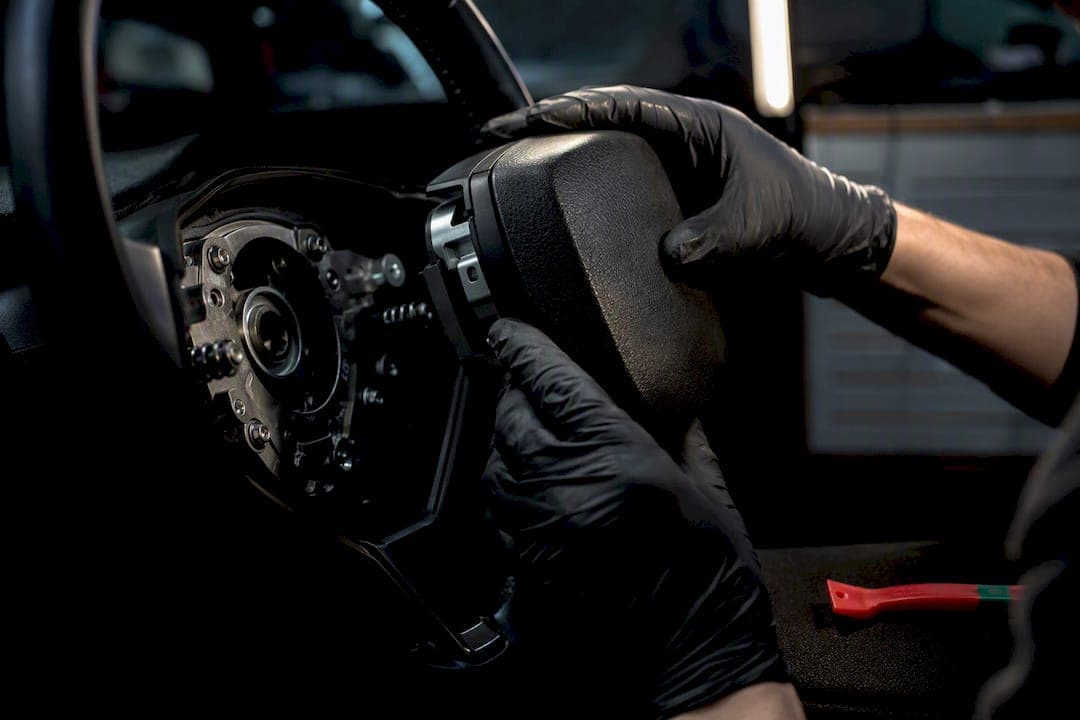
A bench crash-data clear is the correct fix only when every deployed inflator, pretensioner and damaged sensor has already been replaced and the module itself is physically sound. The reset restores the software record, not the hardware. If any pyrotechnic part is still unreplaced or the case shows damage, resetting the module first is the wrong order of operations, and no reputable technician should attempt it.
TL;DR:
- A crash-data clear is only effective if all damaged sensors, inflators, and the module’s casing are fully replaced and free of physical damage beforehand.
- Standard OBD resets only clear soft codes; they do not erase the crash flags stored in EEPROM, which require direct memory rewriting at the bench level.
- Proper bench reset involves removing the module, reading and rewriting specific crash data bytes, and verifying the system with tests like inflator-arm checks and simulated load testing.
- Hardware damage, wiring faults, or unresolved sensor issues must be fixed before attempting a crash-data reset; otherwise, the safety system will still refuse to arm.
- A trustworthy reset process includes full documentation, post-reset verification, and a short road test to ensure the module arms correctly and the warning light stays off.
Table of Contents
- Why the SRS light stays on after a steering wheel swap or airbag job
- How a bench crash-data clear actually works
- What to check before you send a module for reset
- Postal bench reset: a step-by-step workflow for owners and garages
- When resetting a module is the wrong call
- What technicians actually check before they trust a bench clear
- Getting a module reset done properly, without the guesswork
- Primary sources and further reading
- Sources
- FAQ
Why the SRS light stays on after a steering wheel swap or airbag job
Swap a steering wheel, replace an airbag, or repair crash damage, and the warning lamp often refuses to go out no matter how many times you clear the codes. That's because the module isn't storing a fault. It's storing a memory.
Crash and deployment data live in EEPROM or Flash memory inside the airbag control unit, and that kind of storage survives a battery disconnect, a fuse pull, or even weeks sat on a shelf. Most people assume yanking the battery wipes the slate. It doesn't. The module remembers the crash event at chip level, which is precisely why a generic scan tool clearing "soft" trouble codes leaves the underlying crash flag untouched.
The practical result:
- Soft codes (sensor faults, wiring glitches, low resistance readings) usually clear with a standard OBD reset.
- Hard crash-event flags do not clear that way. They need direct memory access.
- Until that flag is cleared, the module will refuse to arm the inflators again, even if every physical part has been correctly replaced.
That refusal to arm isn't a bug. It's the module doing exactly what a safety-critical device is designed to do after detecting a prior deployment.
How a bench crash-data clear actually works
This is where a genuine bench-level EEPROM rewrite differs from anything a driveway mechanic can do with a code reader. The module comes off the vehicle and goes onto a bench rig with direct chip access, and a technician reads the raw EEPROM contents rather than talking to the module through its usual diagnostic protocol.
The bench-level rewrite generally follows this sequence:
- Read the full EEPROM contents from the module using bench programming equipment.
- Locate the specific crash-flag data block, not the entire memory map.
- Rewrite only the relevant bytes, leaving calibration and VIN-locked data intact.
- Recompute the checksum or CRC so the module's bootloader accepts the modified block as valid.
- Write the corrected data back and confirm the module boots without triggering an internal fault.
Verification doesn't stop at "it boots." A properly run bench job includes a DTC scan, an inflator-arm or impedance test, and often a simulated load check before the module ever goes back in a vehicle. Some technicians use a ballistic resistor, essentially an airbag simulator, to run safe impedance tests on the circuit without any risk of accidental deployment.
Pro Tip: Ask any provider whether they run a post-reset road test with the module reinstalled, not just a bench check. A module that passes on the bench but throws a fault the moment it sees live vehicle wiring usually means an unresolved connector or sensor issue, not a reset failure.
Consumer-grade tools rarely have the write permissions needed for this. Generic scan tools typically read and clear surface-level codes, but they can't touch the protected memory block where crash data actually sits, which is exactly why a battery pull or a £20 reader never fixes this properly.
What to check before you send a module for reset
Sending a module off for a crash-data clear before the physical repair is finished wastes time, and in the worst cases it produces a system that looks fixed but isn't. Work through these checks first:
- Confirm every deployed airbag, seat belt pretensioner and any impact sensor damaged in the collision has been physically replaced, not just inspected.
- Run a full SRS diagnostic scan and write down every code, distinguishing genuine crash-event codes from squib, sensor or wiring faults.
- Inspect the wiring harness, connectors and clock spring for chafing, corrosion or breaks, since a resistance fault here will stop the module arming even after a clean reset.
- Check the module casing itself for cracks, scorch marks or signs of water ingress.
According to Gov, a module will refuse to arm if it detects circuit resistance faults or open loops, regardless of whether the crash-data flag has been cleared. That single fact explains most "reset didn't work" complaints: the reset itself was fine, but a wiring or sensor fault downstream stopped the module arming anyway. If your scan turns up any hardware-level fault code, fix that first. Sending the module for a clear before then just means paying for the job twice.
Postal bench reset: a step-by-step workflow for owners and garages
Once the hardware side is genuinely sorted, sending a module away for a bench clear is straightforward, provided you follow a sensible sequence.
- Isolate the battery and wait. Disconnect the battery and leave it for the manufacturer-specified time (commonly 10 to 15 minutes) so any capacitor in the airbag circuit fully discharges before you touch a connector.
- Tag and photograph everything. Label each connector as you disconnect it, and photograph the wiring harness and the module's part number sticker before removal. Garages processing multiple vehicles a week will thank themselves for this later.
- Package with documentation, not just bubble wrap. Include the vehicle's VIN, a photo of the module in situ, and a printout of the DTC scan results. This lets the provider identify the correct part number and see exactly which faults were logged before removal.
- Ship securely and trackable. Use tamper-evident packaging and a tracked courier service. A module that arrives with a snapped connector pin is a delay nobody needs.
- Review the verification report on return. A proper provider sends back bench-test photos and a written post-reset verification report, not just the module in a box.
- Reinstall, scan, and test. Refit the module, run a full SRS scan to confirm no codes remain, carry out an inflator-arm test where the equipment allows, and take the vehicle on a short drive before calling the job finished.
Skipping step six is the single most common reason a lamp comes back within days. A reset without a post-install scan is only half a job.
When resetting a module is the wrong call
Not every airbag light with a crash history behind it should be cleared. Some situations call for replacement, not a reset, and pretending otherwise is where things get genuinely dangerous.
- A cracked case, visible burn marks, or any sign of water ingress inside the module means internal component damage that a memory rewrite cannot fix.
- Persistent wiring faults, open squib circuits, or unresolved sensor errors after physical repair mean the module still isn't ready to arm safely, whatever the crash flag says.
- Clearing a module purely to hide a vehicle's accident history from a future buyer or insurer isn't a grey area. It's a misuse of a safety system, and no legitimate provider should do it.
A crash-data clear exists to restore a properly repaired safety system to working order, not to paper over unresolved damage. Following official gov.uk guidance on airbag safety and running full verification tests before and after the reset is the only responsible way to handle it, whether you're a private owner or a workshop processing several a week.
What technicians actually check before they trust a bench clear
Most failed resets trace back to the same handful of mistakes, and after enough of them cross a bench, patterns become obvious. A module that powers up cleanly and communicates on the bench, with an intact harness and no internal board damage, is a straightforward job. One with corrosion tracking across the PCB or a case that's flexed under impact usually isn't, no matter how tidy the crash-flag data looks.
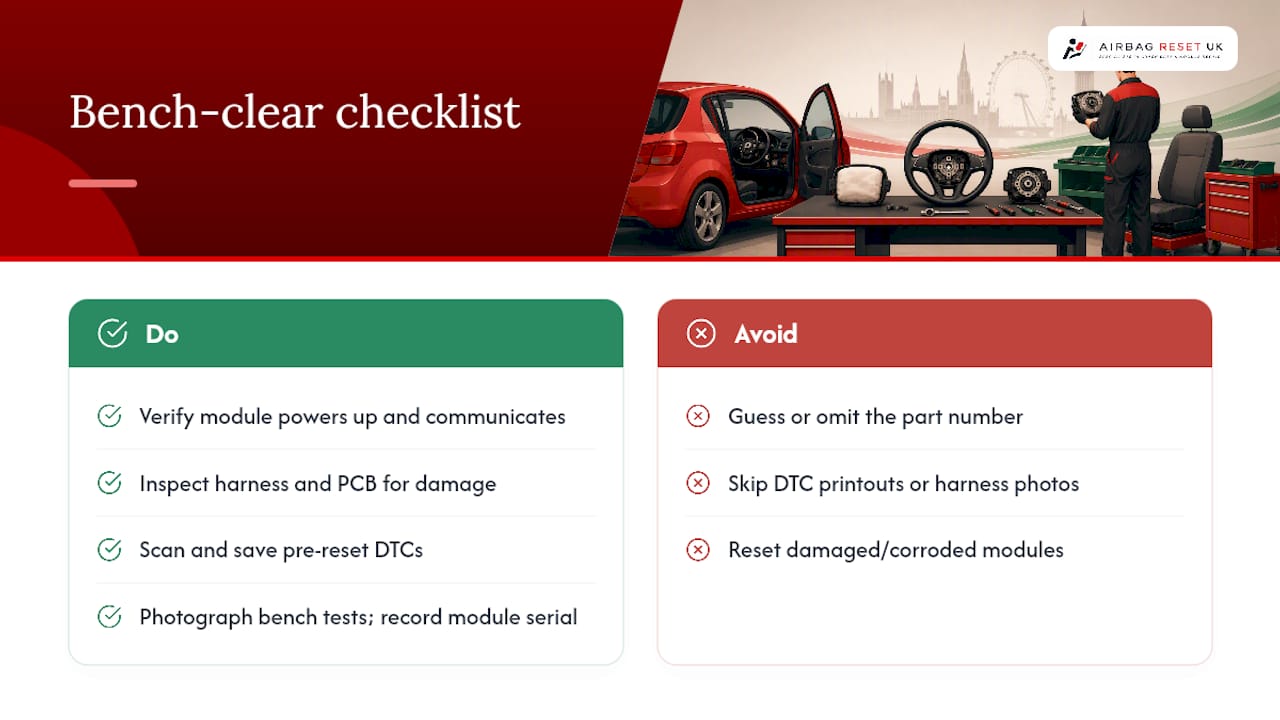
The most common customer error isn't technical, it's paperwork. A module arrives with no DTC printout, no photo of the harness, and a part number that's been guessed rather than read off the sticker. That forces a provider to work backwards, which slows everything down and occasionally produces the wrong programming for the vehicle.
A trustworthy bench job leaves a paper trail: pre-reset scan results, bench-test photos, and a written verification report tying the specific module serial number to the work done. Without that, there's nothing to point to if a question comes up later, whether from an insurer, a buyer, or the next mechanic who opens the bonnet.
— John
Getting a module reset done properly, without the guesswork
A postal service is built around exactly the workflow above: send the module, get it back working, with the paperwork to prove it. Once you've confirmed the hardware side is sorted using the checklist above, the actual reset is the easy part, provided it's done by someone with the tools to do it properly.
Fixed pricing starts competitively with fast turnaround on most modules and price matching against like-for-like quotes, so there's no need to ring round half a dozen garages for comparison. Modules typically come back with bench-test photos and a verification report, giving owners and workshops a documented trail rather than just a lamp that's gone out. Independent garages and bodyshops processing several a month may be able to set up trade accounts for discounted rates, which matters if this is a regular part of your workload rather than a one-off. For jobs where the hardware damage is too extensive to justify a reset, the postal airbag module reset service team will tell you plainly if replacement makes more sense instead of taking the job anyway. If your module has cleared the hardware checklist, it is common to get a quote through the service site and post it off.
Primary sources and further reading
For the technical detail behind this guide, see GOV.UK's airbag safety guidance, the bench-level EEPROM clearing process, and a breakdown of reset tools and options. Specialist calibration work following a swap may also need ADAS recalibration.
Sources
FAQ
Does a battery disconnect clear airbag crash data?
No. Crash and deployment flags sit in non-volatile memory (EEPROM or Flash) that survives a battery disconnect, a fuse pull, or extended storage.
Can I use a generic OBD tool to reset an airbag module after a steering wheel swap or airbag job?
Generic tools usually clear soft diagnostic codes but lack the write permissions to touch the protected crash-flag memory block, so the deployment record and the persistent warning light typically remain.
What has to happen before a module can be reset?
Every deployed inflator, pretensioner, and damaged sensor needs replacing, and the module casing must show no cracks, burn marks, or water damage, before a bench clear is appropriate.
How is a bench crash-data clear verified?
A proper job includes a DTC scan, an inflator-arm or impedance test, and a short road test after reinstallation, alongside bench-test photos and a written report from the provider.
Why does the SRS light come back after a reset?
A returning lamp almost always points to an unresolved hardware fault, wiring damage, a bad connector, or a sensor issue that wasn't fixed before the reset was carried out.