
An airbag light that comes on after subframe work is usually down to disturbed wiring, a knocked connector, or a crash sensor that moved during the job, not a worn-out module. Isolate the battery and leave the system untouched for 30 minutes before you inspect anything near the SRS harness. From there, run targeted visual and electrical checks, and if the light stays on once the physical fault is fixed, a professional module reset is the next step.
TL;DR:
- Most airbag warning lights after subframe work are caused by disturbed wiring, incorrect sensor mounting, or disconnected connectors, not module failure.
- Proper diagnosis involves disconnecting the battery for at least 30 minutes, inspecting wiring and sensors, and reading fault codes with specialized tools before attempting repairs.
- Fixing wiring issues and correctly remounting sensors usually resolves the fault, while persistent issues often require a module reset rather than replacement.
- A locked crash fault stored in the module cannot be cleared with a basic OBD scan tool, so a professional reset service should be used after fixing physical faults.
- An illuminated airbag light causes an MOT failure and must be fixed before inspection, with repairs followed by proper resetting to ensure safety and compliance.
Table of Contents
- Common causes of an airbag light after subframe removal or replacement
- How to diagnose the fault safely and efficiently
- Repair options: fixing wiring, sensors and the role of a reset service
- Why a casual OBD clear often fails and what that means in practice
- Safety and MOT implications: what the law and industry guidance require
- Workshop perspective: when technicians choose reset, remanufacture or replacement
- A practical next step when the light persists after repair
- FAQ
- Sources
Common causes of an airbag light after subframe removal or replacement
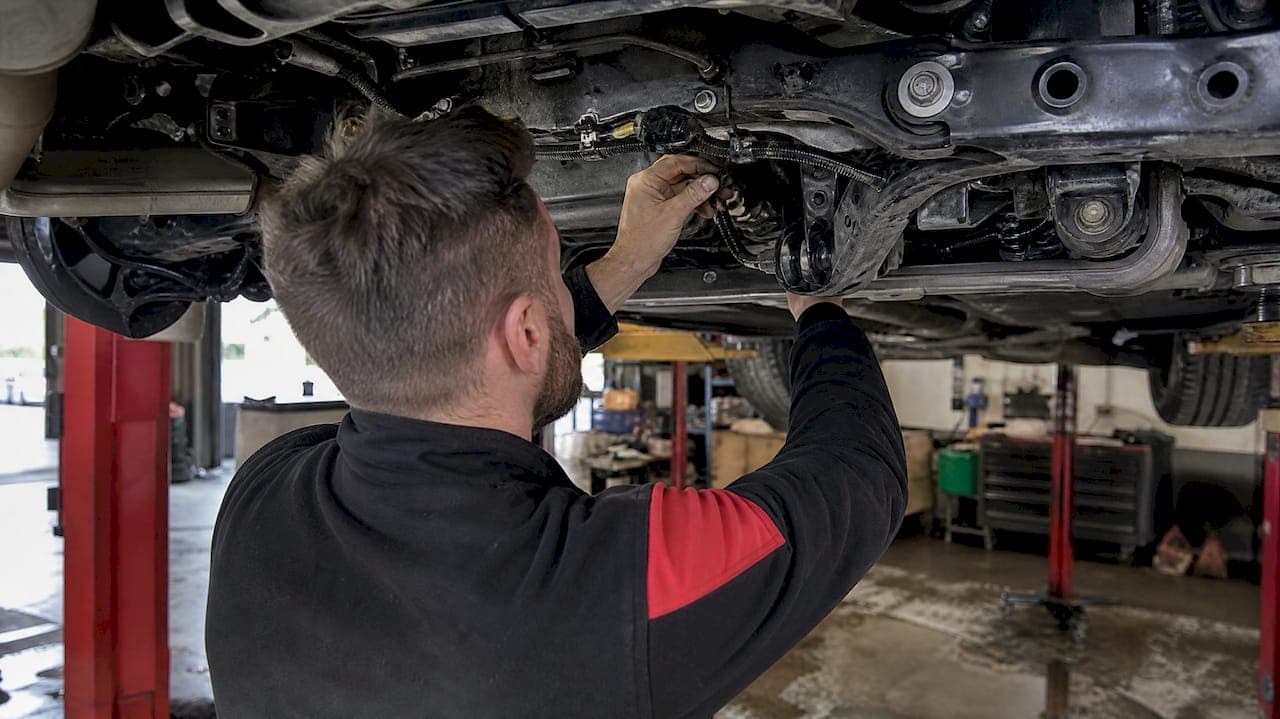
Subframe work puts mechanics' hands and tools right next to SRS wiring and sensors, so faults showing up straight after the job are rarely a coincidence. The most frequent culprits fall into a short list of mechanical and electrical disturbances rather than a failing module.
- Pinched or chafed SRS wiring where the harness runs close to subframe mounting points or bolts.
- Connectors left unseated, corroded, or accidentally swapped, particularly around front impact sensors and under-seat looms.
- A crash sensor that was unbolted for access and remounted slightly out of position or at the wrong torque.
- Clock spring or steering-angle sensor faults introduced during steering-rack or track-rod work carried out alongside the subframe.
- Battery isolation skipped during the repair, which can leave the module holding a locked fault code even once the physical issue is resolved.
Workshop experience with front suspension and subframe jobs points to pinched wiring and disturbed crash sensors as the two most common triggers, with clock spring damage a close third whenever steering components were disconnected. None of these require a new module. They require a careful look at what was moved, unbolted, or routed differently during the repair, which is exactly what the next section walks through.
How to diagnose the fault safely and efficiently
A methodical check beats guesswork, and it also protects you from working on a live pyrotechnic system. Follow this sequence before deciding whether the fix is wiring, a sensor, or the module itself.
- Disconnect the battery and wait at least 30 minutes before touching any SRS component, since HSE guidance on airbags and pretensioners treats these as pyrotechnic devices that must not be handled by untrained hands while live.
- Check for any back-up capacitor or supplementary power source in the SRS circuit, which can keep components charged briefly even after the battery is disconnected.
- Inspect the harness visually along its full run near the subframe: look for chafe points, pinch marks at mounting bolts, and loose cable ties or missing grommets.
- Check every connector near the repair area is fully clipped home, free of corrosion, and matched to the correct plug, especially at impact sensors and seat connectors.
- Confirm crash sensors are bolted to the correct torque and sitting flush against their mounting point, since a sensor sitting even slightly proud can throw a fault.
- Read the fault codes with an SRS-capable scan tool rather than a generic OBD reader, and note whether the fault is logged as current or historic.
- Check freeze-frame data where available, and clear the code once to see whether it returns immediately (hard fault) or stays clear (soft fault).
- Test voltage and continuity at the suspect connector against the wiring diagram's expected values, looking for an open circuit, a short to earth, or unexpected resistance.
Pro Tip: Log whether a fault code returns the instant you reconnect the battery or only after a drive. An instant return usually points to wiring or a connector; a fault that reappears after road vibration often points to a loose sensor mount.
When the code and your inspection both point to a specific wire or sensor, you are dealing with a repairable fault. When the scan tool flags the module itself, or codes persist despite a clean harness and correctly mounted sensors, that is your signal to move toward a reset rather than more wiring work.
Repair options: fixing wiring, sensors and the role of a reset service
Most airbag lights that appear after subframe work resolve once the physical fault is corrected, not once the module is replaced. The fix depends on what your diagnostic checks found.
- Wiring faults are usually solved with a proper pin repair at the connector, re-routing the harness away from pinch points, and securing it with the correct clips and grommets rather than cable ties alone.
- Crash sensors need remounting at the correct position and torque, with alignment checked against the vehicle's service data so the sensor reads accurately after subframe realignment.
- Clock spring or steering-angle faults, if steering components were touched, typically need a clock spring replacement or a steering-angle recalibration rather than a software fix.
- Once wiring and sensors are confirmed sound but the warning light persists, a module reset clears the stored crash data or unlocks a hard fault that a simple code clear cannot touch.
- Full module replacement is only necessary when the unit itself has failed internally, which is far less common than a wiring or sensor cause after subframe repairs.
Workshop labour for wiring and sensor repairs varies with access and the vehicle, while a postal reset service typically turns a module around within a day of receipt once the physical repair is already done. That combination, local repair followed by a reset, tends to be quicker and cheaper than defaulting straight to a replacement ECU.
Why a casual OBD clear often fails and what that means in practice
SRS modules are built to store serious faults in non-volatile memory, by design, so a generic OBD clear usually cannot remove them. The distinction matters: a soft or temporary fault, caused by a momentary loose connection, may clear and stay clear on its own. A hard fault, one the module has locked because it detected a genuine crash-data event or a persistent circuit fault, is a different matter entirely.
Clearing a hard fault with a basic scan tool often looks successful for a few seconds, then the light returns, because the underlying flag in the module's memory is untouched. Attempting to mask that light without addressing the stored fault risks leaving a genuinely unsafe SRS system on the road while the dashboard shows nothing wrong.
The reliable sequence is repair first, reset second: fix the wiring, sensor, or steering component that triggered the fault, then use a qualified reset tool or a specialist module reset service to clear the locked crash data. Reversing that order, or skipping the repair altogether, is why so many owners find the light simply comes back.

Safety and MOT implications: what the law and industry guidance require
Airbags and seat belt pretensioners are pyrotechnic devices, and HSE guidance on storing and handling airbags sets out specific rules on storage, orientation, bench mounting, and training before anyone handles them. That guidance exists because an unqualified attempt to repair or modify a live module carries a real injury risk, not just a warranty concern.
An illuminated SRS warning light is treated as a major defect under the official MOT inspection manual, which causes an automatic test failure. The lamp has to extinguish after the vehicle's self-check, typically within 3 to 7 seconds of startup, for the car to pass.
In practice, this means a masked or temporarily cleared fault will not get you through an MOT, because the lamp behaviour during that self-check is exactly what the tester is watching for. You need the root cause fixed, whether that is a wire, a sensor, or a locked module fault, before the test, not just the light turned off moments before you drive in. If a check or repair takes you beyond straightforward wiring work, that is the point to bring in a trained technician rather than continuing DIY, both to stay safe around pyrotechnic components and to avoid an MOT fail on the day.

Workshop perspective: when technicians choose reset, remanufacture or replacement
In a typical trade workflow, a technician repairs wiring and sensors locally first, then pulls the module only if codes remain stubbornly logged. From there, the choice between a reset and a full replacement usually comes down to module availability and cost rather than age alone: a reset or remanufacture is almost always the cheaper route when the hardware itself is sound.
Postal reset services fit neatly into that workflow because they let a workshop send off a confirmed-faulty module and get it back working within a day, rather than sourcing and coding a new ECU. For owners dealing with an older or less common vehicle, that often means avoiding an unnecessary replacement altogether.
— John
A practical next step when the light persists after repair
If you have fixed the wiring, remounted the sensor correctly, and the airbag light still will not clear, that is the point to send the module off rather than keep chasing it with a scan tool. We run a postal airbag module reset service for cars, vans, and motorhomes, with pricing from £35 to £46 for a standard module and a same-day turnaround for most units received in the morning.
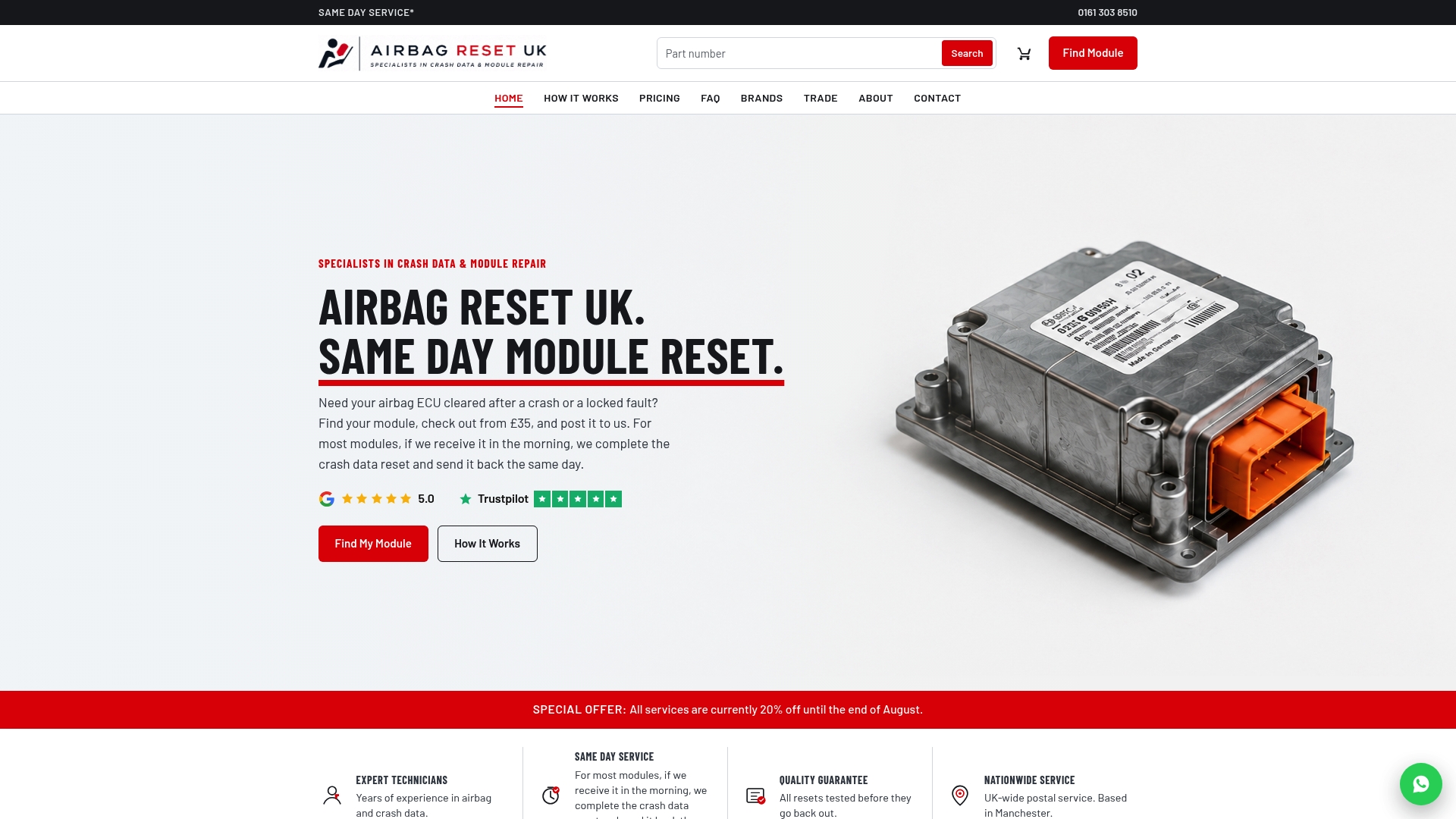
Before you post anything, identify your module's part number or send us a photo so we can confirm the right process for your vehicle. We also offer a dedicated motorhome airbag reset at £65 for the specialist handling those modules need, and a mobile airbag reset from £75 where an on-site visit suits you better than posting.
- Confirm the part number from the module casing or send a clear photo if you are unsure.
- Follow basic packing guidance: secure the connector, avoid pressure on the casing, and use adequate padding for transit.
- Expect same-day turnaround for most modules received early in the day.
- Remember a reset only addresses locked crash data, so it is a step after the wiring or sensor fault is actually repaired, not a substitute for it.
We offer price matching on genuine like-for-like quotes to provide competitive service options.
FAQ
How much does it cost to repair an airbag light?
Cost depends on the cause: a wiring or connector repair is typically a workshop labour charge, while a stored crash-data fault needing a reset starts at £35 to £46 for a standard module. Motorhome modules carry a specialist rate of £65 given their different mounting and wiring setups.
Can I pass MOT with an airbag light on?
No. An illuminated SRS warning light is classed as a major defect under the official MOT inspection manual and causes an automatic failure. The lamp must extinguish during the vehicle's self-check for the car to pass.
How do I fix the airbag warning light?
Start by diagnosing the cause with an SRS-capable scan tool and a visual check of wiring, connectors, and sensor mounting, since these are the most common triggers after subframe or suspension work. Repair any physical fault first, then use a qualified reset tool or a specialist module reset service if the light persists once the repair is confirmed sound.
How much does it cost to fix an airbag light in the UK?
Pricing varies by cause and vehicle, but a postal crash data reset for a standard module starts at £35 to £46, with motorhome modules at £65 and mobile on-site resets from £75. Wiring or sensor repairs are priced separately by the workshop carrying out the physical fix.
Why does clearing the code with a scan tool not fix the light permanently?
SRS modules store serious faults in non-volatile memory for safety reasons, so a generic OBD clear often cannot remove a genuinely locked crash-data fault. The light typically returns within seconds or after the next drive unless the underlying wiring, sensor, or module issue is properly repaired or reset.