
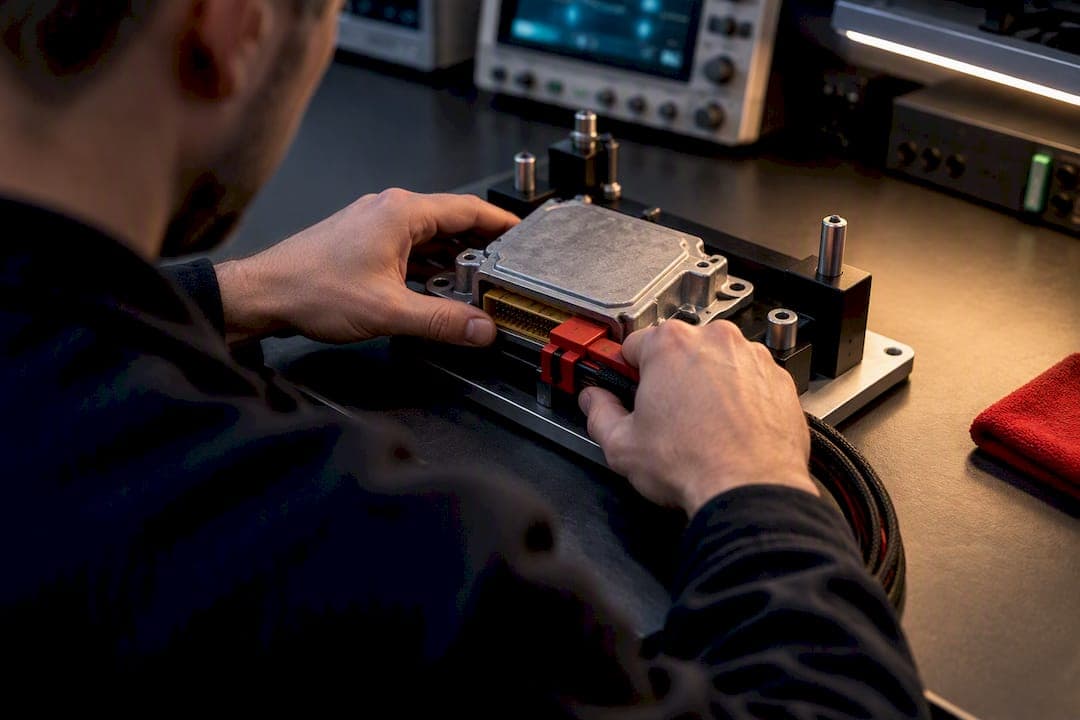
Most TRW airbag modules can be reset, but only if the crash data locked in the module's memory is properly cleared, not just masked. A standard OBD-II scan will switch the warning light off temporarily for soft faults, but genuine crash data needs EEPROM-level work or a purpose-built SRS tool. If your module has recorded a deployment, the safest route is a professional bench reset rather than a DIY attempt.
TL;DR:
- Hard crash data stored in TRW airbag modules cannot be cleared with standard OBD-II scanners because it resides in protected EEPROM memory.
- Safe removal of the module requires disconnecting the battery, waiting 15 minutes, and handling connectors carefully to avoid accidental deployment or damage.
- Professional bench EEPROM programming is the only reliable method to reset the crash flags when in-vehicle tools lack the necessary support.
- A successful reset should result in the SRS warning light turning off quickly and a full diagnostic scan showing no remaining fault codes.
- Sending the module to a specialist offers higher success rates, especially if the module shows multiple deployments, physical damage, or encryption that precludes in-vehicle reset.
Table of Contents
- What is crash data (hard codes) and why does it lock a TRW module?
- How do you safely remove a TRW airbag module?
- Why do OBD tools fail where bench programming succeeds?
- What are the steps in a TRW airbag module reset?
- When should you use a professional TRW airbag reset service?
- How do you know if a TRW airbag reset actually worked?
- Why safety-first practice beats a quick fix
- Getting your module reset through Airbag Reset UK
- Where to check the technical detail yourself
- Sources
- FAQ
What is crash data (hard codes) and why does it lock a TRW module?
Airbag control units log two kinds of fault. A soft code is a transient electrical fault, a loose connector, a low-voltage warning, a sensor glitch, that clears once the underlying issue is fixed. A hard code is different. It's a permanent record written to the module's EEPROM the instant a crash sensor triggers deployment, and it's designed never to clear itself.
That permanence is the point. Airbag systems are built so a module that has fired once can't quietly reset itself and pretend nothing happened. Once the crash flag is written, the TRW unit locks itself into a fault state.
- Soft codes: caused by wiring, connector corrosion, or low battery voltage, and often clear with a standard scan.
- Hard codes: written at the moment of deployment, stored in non-volatile memory, and untouched by generic reset tools.
- Result: an SRS light that stays on regardless of how many times you disconnect the battery or wave a code reader at it.
This is exactly why ordinary OBD-II scanners usually cannot clear hard codes after a deployment. The data lives in a protected memory area that consumer tools were never built to reach.
How do you safely remove a TRW airbag module?
Airbag work carries genuine risk if you skip the basics, and rushing this stage is where most avoidable injuries happen, as explained in the Air freshener and airbags – Voidescent blog.
- Disconnect the negative battery terminal first and wait at least 15 minutes before touching any SRS wiring, giving residual capacitor charge time to discharge.
- Wear an anti-static wrist strap and earth yourself before handling the module or connectors, since static discharge can behave like a trigger signal.
- Never use an air-powered or electric impact driver on module retaining bolts; a sudden jolt near a live squib connector is not worth the two minutes it saves.
- Photograph or label every connector before disconnecting, and note bolt torque values and sensor orientation so reinstallation matches the original fit exactly.
Pro Tip: Keep a written note of which connector went where before you start. Airbag connectors often look interchangeable but aren't, and a swapped connector after reassembly can trigger a whole new set of fault codes.
Why do OBD tools fail where bench programming succeeds?
A generic OBD-II reader talks to the module through its diagnostic port and can read soft fault codes, sometimes clear them, and give you a general health check. What it usually can't do is reach the protected EEPROM region where crash flags live, because that area is deliberately fenced off from casual write access.
Dedicated SRS diagnostic tools go further. Some can read manufacturer-specific crash flags and, on supported vehicle lists, run a genuine reset routine. TRW's own service documentation refers to this as a build mode, alongside crash-reset routines used in maintenance. But coverage is patchy. Many mid-range SRS scanners simply aren't licensed or programmed to touch TRW's protected memory, which is where bench work takes over.
- OBD-II readers: cheap, widely available, limited to soft codes and general diagnostics.
- SRS-capable scan tools: can access more, but crash-reset support varies enormously by model and vehicle coverage.
- Bench EEPROM programming: the module is removed and connected to a dedicated programmer that reads the raw memory, identifies the crash bytes, and overwrites them with clean data.
One repair guide notes that technicians often compare a "dirty" memory dump against a known clean one to isolate exactly which bytes hold the crash flag before zeroing them out. That level of precision is why write-protection on many TRW units makes in-vehicle correction impossible, and bench removal becomes the only reliable path.
What are the steps in a TRW airbag module reset?
The process follows a consistent order whether it's done by a workshop technician or a specialist reset service.
- Record the SRS fault codes, vehicle registration, and module part number before touching anything, since this identifies which reset method applies.
- Follow the safe removal sequence: battery disconnected, discharge time observed, connectors labelled, module unbolted without impact tools.
- Decide the method. If an SRS tool supports a genuine crash-reset function for that model, attempt it in-vehicle first; if the module is write-protected or the tool lacks support, it needs bench EEPROM programming instead.
- On the bench, the technician reads the memory, identifies and clears the crash bytes, then writes the corrected data back.
- Reinstall the module, torque the bolts to the noted spec, reconnect the battery positive terminal first then negative, and run a full SRS scan to confirm no codes remain.
Skipping the final scan is the most common shortcut that comes back to bite people weeks later.
When should you use a professional TRW airbag reset service?
Some jobs are straightforward enough for a competent workshop with the right SRS tool. Others aren't, and pushing on regardless risks leaving a safety system half-fixed.
Send the module to a specialist bench service if you see any of these:
- The module reports multiple deployments rather than a single crash event.
- The unit is encrypted or on a manufacturer's protected-memory list that ordinary SRS tools can't touch.
- There's visible physical damage to the circuit board, connectors, or housing.
- Your in-vehicle SRS tool simply doesn't list crash-reset support for that TRW part number.
A reputable service should offer part-number or photo-based identification, genuine bench EEPROM programming rather than a masked reset, a test and verification stage, and a warranty on the work. Professional reset providers typically combine bench equipment with trained technicians, which is why success rates and verification quality tend to be higher than a DIY attempt with a borrowed scanner. Expect a same-day turnaround for most standard modules and a price bracket in the tens of pounds rather than the cost of a replacement ECU, plus discounted rates if you're a trade account sending modules regularly.
How do you know if a TRW airbag reset actually worked?
The proof is in the ignition self-test. On a properly reset module, the SRS light should illuminate briefly as a bulb check and then switch off within a few seconds. A full diagnostic scan should then show zero stored codes, not just a light that's gone dark.
If the light stays on or returns after a short drive, the usual suspects are:
- A faulty seat or seatbelt pretensioner sensor still reporting a fault.
- Clock-spring damage in the steering column, common after any impact involving heavy steering input.
- A loose or corroded connector that wasn't reseated correctly during reassembly.
- Battery or charging faults, since low-voltage events can log their own SRS codes independent of the original crash data. Reconnecting the battery alone rarely fixes this.
Pro Tip: If the light returns within a day of reinstallation, check connectors before assuming the module reset failed, loose pins cause more false alarms than bad EEPROM writes.
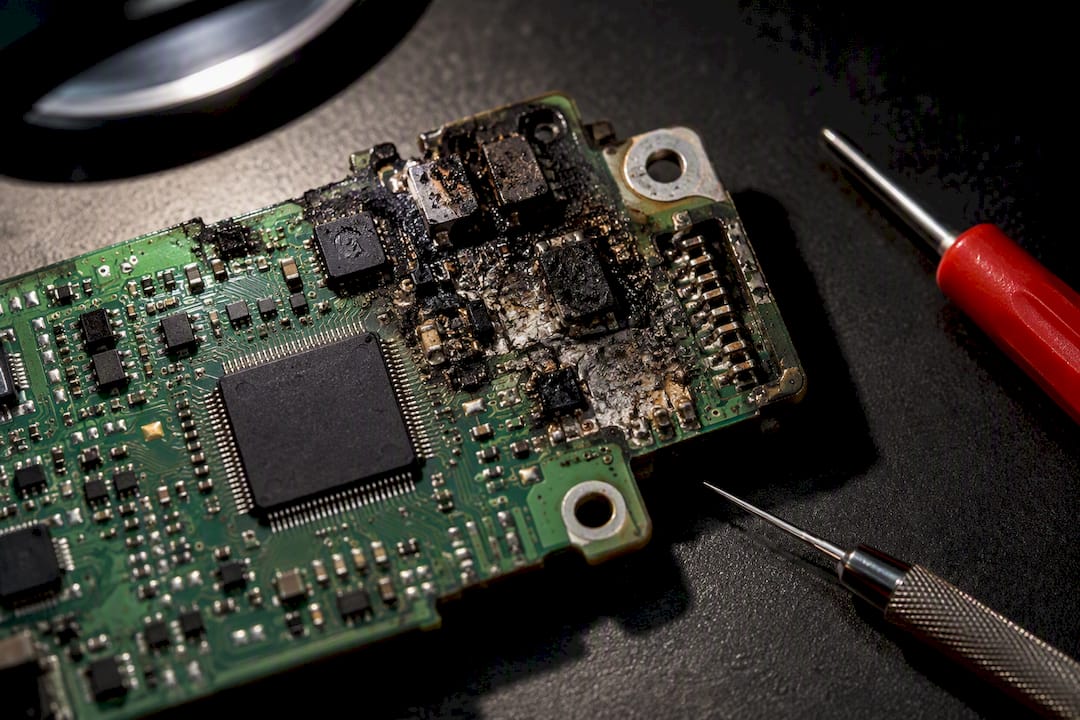
Some units, particularly those with fried circuitry from a severe impact, simply can't be recovered and need replacing rather than reset.
Why safety-first practice beats a quick fix
Trained technicians and proper bench tools exist because occupant safety, not convenience, is the real stake here. A partial DIY fix that silences the light without genuinely clearing hard codes can leave the restraint system unable to fire correctly in a future collision. Prioritise a verified reset with a final SRS scan over anything that just makes the dashboard look tidy.
— John
Getting your module reset through Airbag Reset UK
Airbagresetuk gives you a fixed-cost route to a genuine bench reset instead of guessing with a borrowed OBD scanner or paying for a replacement ECU you probably don't need. The Airbag module reset service starts at £35, with pricing shown upfront and price matching against genuine like-for-like quotes.
You post the module in after identifying it by part number or a simple photo sent over WhatsApp or phone, and most standard jobs get a same-day turnaround once received. Motorhome owners aren't left out either. There's a dedicated motorhome airbag reset option at £65 for the specific quirks those SRS systems bring. If posting isn't practical, a mobile airbag reset visit is available from £75. Trade rates are available for garages and mobile technicians who send modules regularly. Check your module's part number against the pricing page and get it booked in.
Where to check the technical detail yourself
For safety compliance, see the HSE's electrical safety guidance; for TRW's own service procedures, see its operating instructions.
Sources
- How to Repair SRS Airbag Module Complete Reset Guide
- How to turn off airbag warning light
- Operating instructions TRW automotive aftermarket
FAQ
How do I reset an airbag control module?
Diagnose the fault codes first, then either run a genuine crash-reset routine through an SRS-capable scan tool if your module supports it, or send the unit for bench EEPROM programming if it doesn't. A full SRS scan after reinstallation confirms whether the reset actually cleared the stored crash data.
What tool can I use to reset the airbag module?
Standard OBD-II readers clear soft codes but usually can't touch the hard codes written after a deployment. Reaching that protected memory needs either a dedicated SRS scanner with crash-reset support for your specific model or a bench EEPROM programmer.
Can I reset the airbag light without a tool?
Disconnecting the battery might briefly turn the light off, but it won't clear genuine crash data stored in the module's memory, and the light typically returns once the system re-checks its stored codes. Voltage-related faults can even log their own codes during the disconnection, adding a second problem to the original one.
Can OBD2 reset airbag light?
A basic OBD2 scanner can clear transient soft codes, such as a loose connector fault, but most consumer-grade tools cannot perform the reset needed after an actual deployment. Any hardware fault also needs repairing before the light will stay off for good.
What does a TRW airbag module reset cost through a professional service?
Airbagresetuk's standard airbag module reset is priced from £35, shown in full on the pricing page, with price matching offered against genuine competing quotes. Motorhome-specific resets and mobile visits are priced separately due to the extra work involved.