
If your airbag ECU is electrically sound with no hardware faults, resetting it almost always beats buying a used replacement on safety, cost, and turnaround. Replacement only becomes necessary when the module has physical damage, water ingress, a burnt board, or simply refuses to communicate. Get that distinction wrong and you're either wasting money on a replacement you didn't need, or worse, trusting your airbag deployment to a module with an unknown crash history. The checklist further down tells you exactly what to check before deciding.
TL;DR:
- Resetting an airbag ECU is the most cost-effective and fastest option when the module is physically undamaged and communicates normally.
- Used modules from salvage yards carry risks of hidden crash data, firmware mismatches, and alignment issues that can prevent proper deployment or cause unintended activation.
- Physical damage, corrosion, or water ingress in the module always necessitate replacement rather than reset to ensure safety.
- Proper verification after reset or installation includes comprehensive scans, sensor tests, static and road testing, and thorough documentation.
- Prioritize verification and documentation over cost alone, as a professionally reset original module with a clear service record generally offers safer and more reliable results than used parts without verified history.
Table of Contents
- Reset vs used module vs new replacement: a quick comparison
- How a professional airbag module reset actually works
- Why used (salvaged) airbag modules can be unsafe
- When to reset, when to replace: a practical decision guide
- Costs, turnaround and warranties to expect
- What to send and ask: a checklist for sending a module or buying a used one
- Verifying the repair: tests and checks after any reset or module swap
- Our perspective and proven capability
- Editorial take: the safety-first case for resetting before replacing
- How Airbagresetuk can help you get back on the road
- Sources
- FAQ
Reset vs used module vs new replacement: a quick comparison
Before diving into the mechanics, it helps to see the three routes side by side. Each one solves the airbag warning light differently, and each carries a different risk profile.
A reset (also called a bench-level crash-data clear) rewrites the crash-event memory inside your original airbag module. It's the cheapest, fastest option, and because it's your own module, there's no compatibility guesswork involved. A used module replaces your ECU with one pulled from another vehicle, usually a write-off or breaker's yard find. It can look like a bargain until you consider that its history is often a mystery. A new OEM replacement is the most expensive and slowest route, but it comes with zero crash history and manufacturer-backed reliability.
Here's how the three stack up on the factors that actually matter:
- Safety and compatibility: Reset keeps your vehicle's original wiring, sensor pairings, and calibration intact. New replacement matches perfectly but needs full VIN programming. Used modules are the wildcard, since fit doesn't guarantee function.
- Crash-data risk: Reset clears your own module's event memory once inflators and sensors have been correctly replaced. Used modules may already carry a donor vehicle's crash flag, which can quietly stop the airbags from arming at all, according to research on used airbag module risks. New units carry no crash data whatsoever.
- VIN and programming needs: Reset typically needs no reprogramming since the module never left your car. Used and new modules both usually need VIN-matching and sensor pairing before they'll function correctly.
- Cost range: Reset is the cheapest by a wide margin. Used modules sit in the middle. New OEM units sit at the top.
- Turnaround: Reset services often work in hours. Used modules depend on stock and courier speed. New parts can mean a wait on backorder from the dealer.
- Documentation and insurance impact: A reset leaves a clean paper trail showing your original module was tested and cleared. Used modules rarely come with verifiable service history, which insurers and future buyers tend to notice.
If your module communicates normally and shows no hardware-fault codes, reset is the sensible default. If it's physically damaged or unresponsive, you're choosing between used and new, and that choice comes with real trade-offs worth understanding properly.
How a professional airbag module reset actually works
An airbag ECU stores two very different kinds of information, and mixing them up is where a lot of confusion starts. Routine diagnostic trouble codes are just status flags, the kind that might pop up from a loose connector or a low battery. Crash-event memory is different. It's a permanent record, stored in EEPROM (electrically erasable programmable read-only memory), that locks the module out of service once it registers a deployment or near-deployment event. That lockout is a safety feature, not a fault, but it's also why the warning light stays on even after everything else has been fixed.
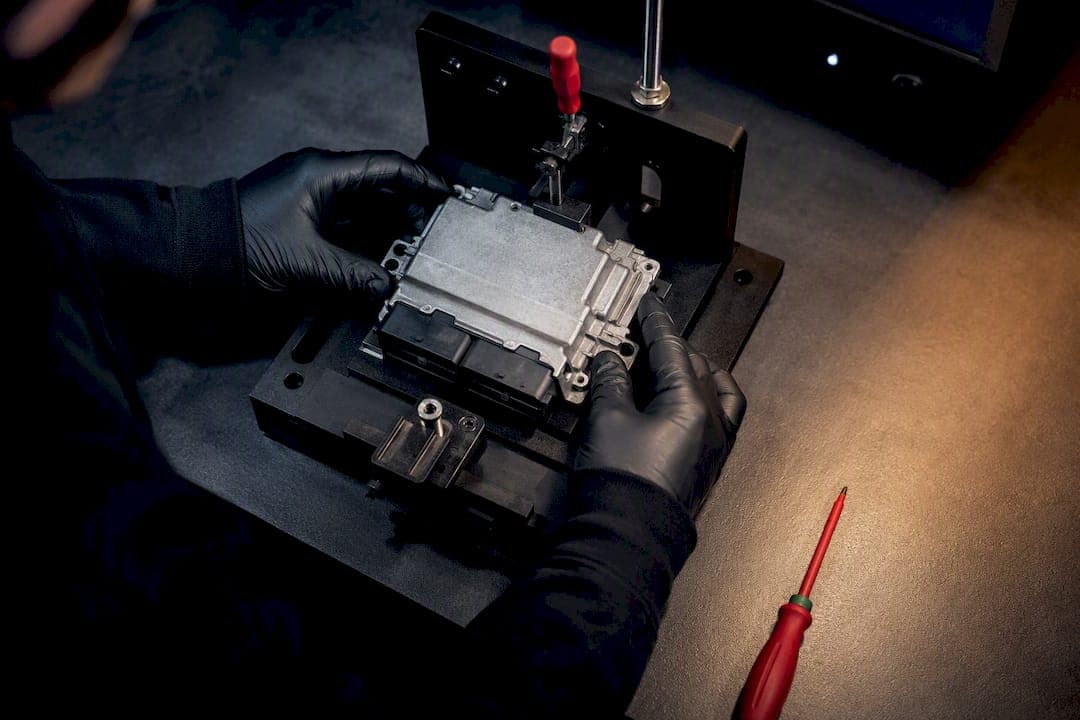
A bench-level reset clears that crash-event register and can restore the module to a pre-deployment state when the module itself is physically intact and the inflators and sensors around it have already been correctly replaced. Technicians connect the module to specialist bench equipment, read the stored crash log, verify the module's hardware is undamaged, then rewrite the EEPROM to clear the fault flag while preserving the module's original calibration data and VIN relationship.
That last part matters. A reset doesn't touch the parts of the module that were never damaged in the first place, it just clears the specific memory block that triggered the shutdown. This is worth understanding because it explains why a reset is honest rather than a workaround: the process doesn't falsify the physical condition of your inflators, and the system will still test the squib loops itself the next time you turn the key. If a sensor or inflator is genuinely faulty, the light comes straight back on.
Where things get more involved is VIN and programming. Some vehicles tie the airbag module's firmware to the VIN and to specific sensor serial numbers, particularly on newer platforms with more sophisticated occupant classification systems. If your original module never leaves the car, none of that pairing is disturbed, which is one reason resets tend to be simpler than swaps. Programming only becomes necessary when a module changes vehicles, which brings its own layer of complexity.
A reset does not fix:
- Physically damaged inflators, clockspring faults, or torn wiring harnesses
- Water-damaged circuit boards or corroded connector pins
- Faulty seat occupancy sensors or seatbelt pretensioner mechanisms
- A module that's already had a genuine hardware failure rather than just a crash-flag lockout
Pro Tip: If your warning light returns within days of a reset, don't assume the reset failed. It usually means a connected component, a sensor, a seatbelt buckle switch, a clockspring, still has a fault the reset never touched. Get a full scan before sending the module back.
Why used (salvaged) airbag modules can be unsafe
The core problem with a used module isn't the part itself, it's what you can't see about where it came from. Salvage yards pull airbag ECUs from written-off vehicles, and unless that module went through a proper diagnostic wipe and verification process, it may still be carrying the donor car's crash-event data locked inside its memory.
That's not a small technicality. A module flagged with prior crash data can refuse to arm correctly when installed in a different vehicle, because the safety lockout that protects against reusing a deployed unit doesn't always distinguish "this specific module deployed" from "this module's memory says a deployment happened." Sellers rarely disclose this, and in plenty of cases, they genuinely don't know it themselves.
Firmware and variant mismatches compound the risk. Airbag modules aren't universal even within the same model line. A module family can change suffixes or memory structures between production runs, meaning two modules that look visually identical, same part number sticker, same connector shape, may need completely different reset or programming procedures. Install the wrong variant and you can end up with a module that communicates on the bus but interprets sensor data incorrectly.
The real-world consequences split into two equally bad outcomes. Either the system fails to deploy when it should, because a hidden crash flag or mismatched calibration blocks arming, or components fire when they shouldn't, an unintended deployment triggered by corrupted or misread sensor input. Both are catastrophic failure modes for a system whose entire job is split-second reliability.
Common hidden hazards with salvaged modules:
- Donor crash-event data that silently prevents correct arming
- Mismatched firmware suffixes causing incorrect sensor interpretation
- Sensor serial pairing conflicts that generate persistent, hard-to-diagnose faults
- No verifiable service history, meaning insurers may query the repair later
- Resale complications when a buyer's inspection turns up an unverifiable airbag component
Documented post-service diagnostics and clear service records reduce insurance and resale risk considerably compared with installing a salvaged module with no evidence of testing or verification, according to industry guidance on used airbag module risks.
None of this means every used module is a ticking time bomb. Plenty function perfectly well. But without a full event-memory read and proper verification, you're trusting a stranger's write-off history to a system that has one job and no room for error.
When to reset, when to replace: a practical decision guide
Most owners can work through this decision with four checks, in order:
- Does the module still communicate? Plug in a diagnostic scanner. If the module responds and reports a crash-data fault rather than a hardware or communication error, reset is almost always your first option.
- Is there visible physical damage? Cracked housings, scorched circuit boards, or bent connector pins mean the module itself is compromised. No reset fixes physical damage.
- Has water reached the module? Water ingress corrodes contacts and circuit traces in ways that aren't always obvious immediately but tend to cause intermittent faults later. Treat any water exposure as a replacement case.
- What was the collision severity, and were inflators or pretensioners deployed? If seat inflators, side curtain airbags, or seatbelt pretensioners actually fired, those physical components need replacing regardless of what happens with the module. The module reset only makes sense once that hardware is back to spec, since resetting is typically the faster, cheaper route specifically when the ECU itself communicates normally with no fault codes.
Cases that mandate replacement, no exceptions:
- The module doesn't respond to diagnostic communication at all
- Visible corrosion, cracking, or heat damage to the housing or board
- The vehicle has a manufacturer bulletin specifically requiring module replacement after certain deployment types
- Repeated resets fail to clear the fault, indicating a genuine internal hardware failure
Two quick scenarios to make this concrete:
A low-speed rear-end shunt triggers the seatbelt pretensioners but no airbags actually deploy. The module logs the event and locks itself out. The module itself is undamaged, sitting dry and intact under the centre console. This is a textbook reset case: swap the pretensioners, verify no other damage, then clear the crash data.
A moderate frontal collision deploys the driver and passenger airbags, and the module was mounted low enough to get splashed by coolant from a cracked reservoir. Even if the module still powers up, the water exposure alone should push you towards replacement, because corrosion damage doesn't always show up on day one.
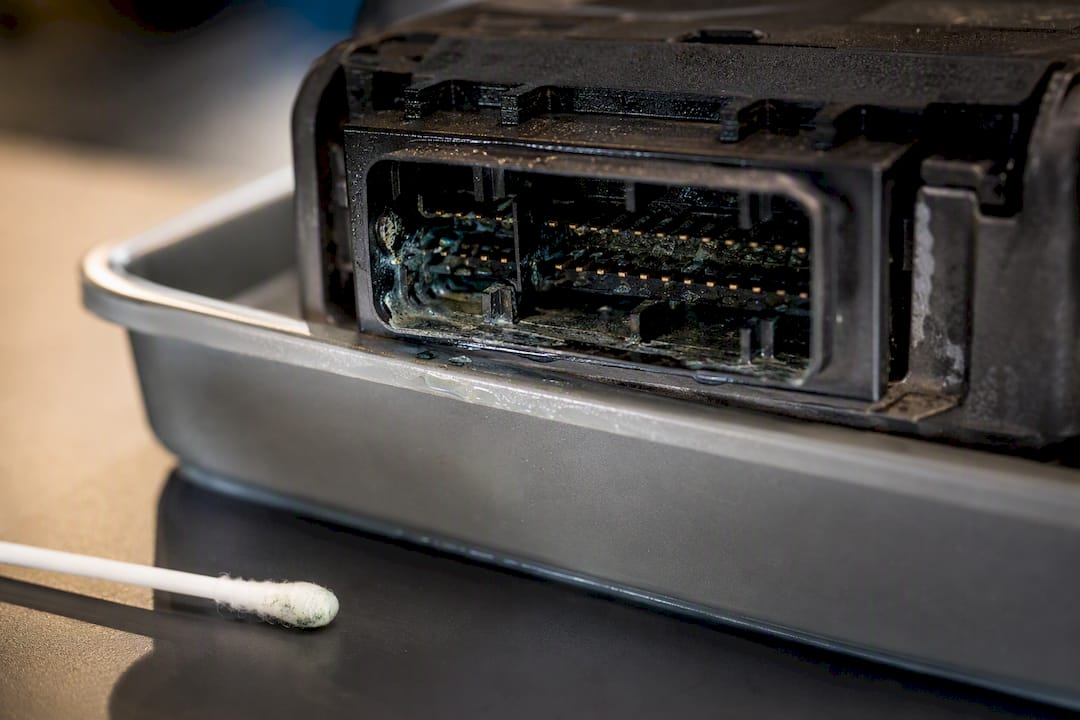
Pro Tip: Take photos of the module's mounting location before removing anything. If there's any staining, corrosion residue, or moisture around the connector, that photo evidence matters when you're deciding between reset and replace, and it's useful if you ever need to show an insurer why you made that call.
Costs, turnaround and warranties to expect
Price is where the reset-versus-used debate often gets decided, so it's worth being realistic about the ranges involved rather than chasing the absolute cheapest number you find.
A bench-level crash-data clear on your existing module typically sits at the lowest end of the cost scale, and turnaround is usually measured in hours rather than days, with many specialist services offering same-day clears when the module is intact. Dealer-performed crash clears, where offered, tend to cost considerably more than an independent bench service, partly because dealer labour rates run higher and partly because the process often gets bundled with a full diagnostic visit.
A used module purchase sits in a wide and unpredictable range depending on the vehicle, the seller, and whether the module comes with any testing documentation at all. Genuinely, this is the category where price tells you almost nothing about safety, a cheap used module and an expensive one can carry identical hidden risks if neither has been properly verified. New OEM replacement modules sit at the top of the cost scale and usually mean the longest wait, since dealer parts networks don't always keep airbag ECUs in stock and often order them per vehicle.
Realistic turnaround expectations:
- Bench reset of your original module: same day to 48 hours in most cases
- Used module sourcing and fitting: several days, dependent on stock and courier timing
- New OEM replacement: anywhere from several days to a few weeks, depending on dealer stock
Whichever route you take, ask for a warranty or guarantee on the work, and keep the paperwork. A documented, verified reset with a service record carries far less insurance and resale friction than a salvaged part with no history attached. That paper trail is genuinely one of the more overlooked parts of this whole decision, buyers checking a vehicle's history a year later will ask what was done to the airbag system, and "reset with a service record" answers that question a lot better than "replaced with a used part, no documentation."
What to send and ask: a checklist for sending a module or buying a used one
Getting this stage right avoids most of the delays and misidentification issues that slow down a reset or lead to a mismatched used part.
- Send your VIN. The vehicle identification number lets a reset service confirm the exact module variant and firmware version, which matters because module families can change memory structures between production runs even within the same model.
- Photograph the module before removal. Clear shots of the part number sticker, the connector, and the mounting bracket help avoid the wrong procedure being applied to the wrong variant.
- Note the part number directly, if legible. This is the single fastest way to confirm compatibility, faster than a VIN lookup in most cases.
- Include a scan report if you have one. A printout or screenshot from a diagnostic scan showing the specific fault codes helps a technician anticipate what they're dealing with before the module even arrives.
- Describe the collision, briefly. Low-speed shunt, moderate frontal impact, side collision, whatever applies. This context helps flag if physical component replacement should have happened first.
If you're buying used instead, ask the seller these questions before you commit:
- Has this module been through a full event-memory read and verification?
- Can you confirm the donor vehicle's VIN and provide any documentation about the crash it came from?
- What warranty do you offer if the module fails to arm correctly once fitted?
- Has this exact part number and suffix been confirmed against my vehicle?
A specialist workshop offering SRS diagnostics and module handling as part of its general repair services can usually run a pre-fit check on a used module before you commit to installing it, which is worth the small extra step.
Red flag: if a seller can't answer basic questions about donor history or refuses a pre-fit verification, walk away. And if your original module is genuinely missing, not damaged, just gone, a professional reset service can often still confirm what variant your vehicle needs from the VIN alone, narrowing your options before you buy anything.
Pro Tip: Keep every piece of paperwork from this process, the scan report, the part number, any correspondence with the reset service or seller. It costs nothing to keep and becomes genuinely valuable if you ever need to prove to an insurer exactly what was done and when.
Verifying the repair: tests and checks after any reset or module swap
Whichever route you took, the job isn't finished until the system has been properly verified. This isn't optional paperwork, it's the step that actually confirms your airbags will work when they need to.
The standard professional sequence runs: diagnose the fault, replace any damaged inflators or sensors, perform the bench clear or module replacement, then verify with a full SRS scan followed by road and static tests. Skipping the final verification is one of the most common corners cut by rushed repairs, and it's the step most likely to catch a problem before it matters.
What a proper verification should include:
- A full SRS (Supplemental Restraint System) scan checking every connected sensor and component, not just the module itself
- Sensor loop continuity tests confirming the squib circuits for each airbag and pretensioner report correctly
- A static test with the ignition cycled, checking the warning light clears and stays off
- A short road test, since some faults only surface under vibration or load
- ADAS (Advanced Driver Assistance Systems) checks where the vehicle's crash sensors interact with camera or radar systems, since calibration can drift after collision repair work and airbag sensor faults sometimes overlap with ADAS fault codes on newer vehicles
If the warning light returns after any of this, don't assume the reset or replacement failed outright. It's expected that additional fault codes can surface if related sensors or wiring were already damaged, separate from the module itself. Get a fresh scan rather than guessing.
Finally, keep the documentation. A dated service record showing the scan results, the parts replaced, and the verification steps completed is exactly what insurers and future buyers want to see, and exactly what a used module with no history usually can't provide.
Our perspective and proven capability
We built Airbagresetuk around a straightforward observation: most airbag warning lights aren't caused by a broken module, they're caused by a crash-data lockout on a module that's otherwise perfectly fine. That's why our postal reset service focuses on doing one thing properly rather than offering a bit of everything.
Send your module to a specialist reset service, and in many cases you may get it back with a same-day turnaround once it arrives, tested and cleared rather than swapped for an unknown part. Pricing starts from a low cost, and some services offer price matching against genuine like-for-like quotes. That combination, speed plus straightforward pricing, tends to matter more to owners than they expect once they've priced out dealer alternatives.
Behind that service sits over 40 years of combined technician experience across cars, vans, and motorhomes, including the more specialised motorhome module resets that fewer services handle confidently. We also run discounted trade accounts for garages and workshops that process modules regularly on behalf of their own customers.
None of this replaces the decision work covered above. If your module has physical damage or water ingress, reset isn't the answer, and we'd tell you that directly rather than take the job anyway.
Editorial take: the safety-first case for resetting before replacing
Most advice on this topic treats reset and replacement as roughly interchangeable options separated mainly by price. That's the wrong frame. The real question is whether your module's hardware is intact, and once you answer that honestly, the rest of the decision mostly makes itself.
What gets underplayed is how much hidden risk sits inside a used module's unknown history. A salvaged part that fits perfectly and communicates fine can still carry a donor crash flag that quietly stops it arming when it matters most. That's not a defect you'll spot by looking at it.
My honest read: prioritise verification over price. A £35 reset on your own intact module, backed by proper diagnostics afterwards, beats a cheaper used part with no documented history almost every time. Where conventional advice goes wrong is treating cost as the deciding factor. It should be the last thing you weigh, after safety, compatibility, and paperwork are settled.
— John
How Airbagresetuk can help you get back on the road
If you've worked through the checks above and landed on reset rather than replace, that's exactly the job we do all day, every day, and it's a far more straightforward decision than sourcing a used module of unverified history.
Our postal airbag module reset service covers cars, vans, and motorhomes, with identification help if you're not sure of your exact part number, just send a photo and we'll confirm compatibility before you post anything. Pricing starts at £35, most jobs turn around the same day the module arrives, and we'll match any genuine like-for-like quote you've found elsewhere. If you run a garage or workshop processing these regularly, our trade accounts offer discounted rates worth setting up. Check your module's eligibility and get a fixed quote through our booking page before you commit to anything else.
Sources
- Airbag SRS crash-data clear: the complete 2026 guide
- Airbag ECU reset or replace? Best option for repairs
- Used airbag module risks: why reset or replace matters
FAQ
Does a used airbag module need to be programmed?
In most cases, yes. A used module usually needs VIN programming and sensor serial pairing before it will communicate correctly with your vehicle's systems.
Can you replace an airbag module with a used one?
Physically, often yes, but it carries real risk since salvaged modules can retain donor crash data or mismatched firmware that prevents correct deployment. A verified reset of your original module is usually the safer route when the hardware is intact.
Will my new airbags deploy without module reset?
If your original module is still locked out from a prior crash-data flag, new airbags and inflators won't fire correctly until that module has been reset or replaced, since the lockout is separate from the physical components.
Can an airbag control module be reset?
Yes. A bench-level crash-data clear can restore an intact module to a pre-deployment state once any damaged inflators or sensors have been properly replaced first. Services like Airbagresetuk handle this through a postal process with same-day turnaround in most cases.