
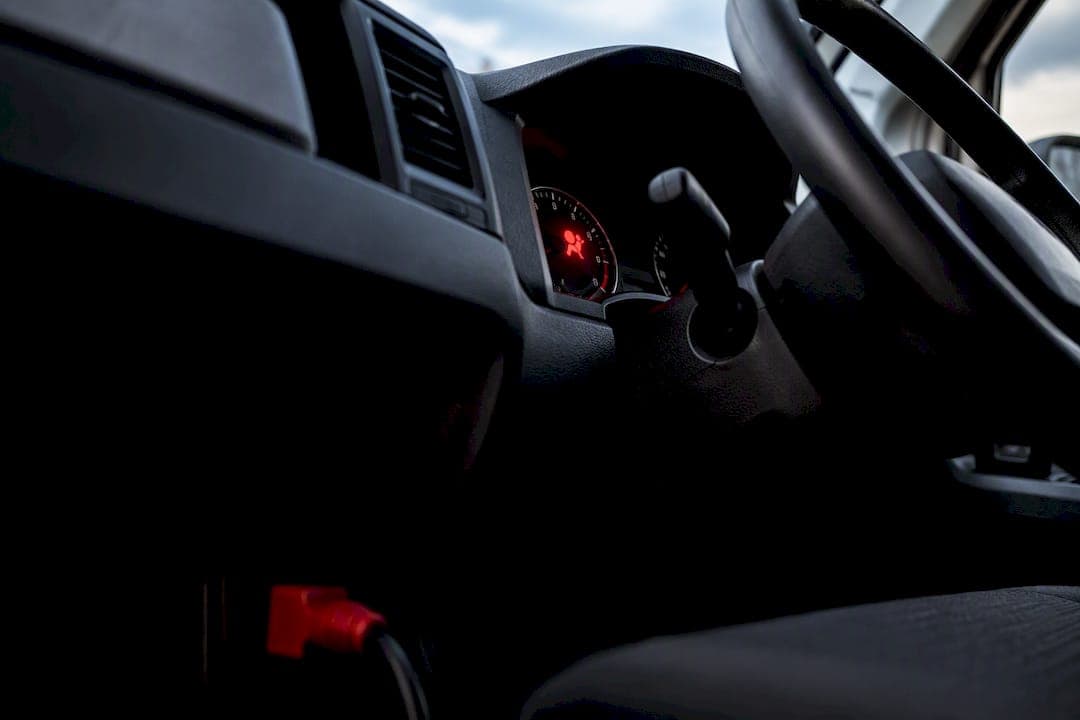
If your van's airbag light stays on, the SRS has found a fault and the airbags or seatbelt pretensioners may not work in a crash. Book a diagnostic scan with a qualified technician as soon as it's safe to do so. Stop driving straight away if the light appeared after an impact or if it's flashing rather than steady.
TL;DR:
- The airbag warning light indicates a fault that can disable the SRS system, risking airbags' failure in an accident, especially if flashing or after a collision.
- Common causes include damaged seat sensors, a faulty clock spring, water ingress, old crash data, or sensor and circuit resistance issues, often worsened by van-specific conditions.
- Proper diagnosis relies on reading stored fault codes from the control unit with OEM tools, not guessing from symptoms or using basic multimeters, to prevent accidental deployment.
- Resetting the module can restore full functionality when no internal hardware failure exists, avoiding costly replacements, but only if the fault is related to stored crash data.
- Any illuminated airbag light results in a failed MOT test, so owners should get a correct diagnosis, itemized quote, and an appropriate repair or reset before the vehicle's next inspection.
Table of Contents
- What the van airbag light actually indicates
- Is it safe to drive with the airbag light on?
- Common causes of the airbag light on vans
- How technicians diagnose the fault
- Typical fixes, costs and likely turnaround times
- When an airbag module can be safely reset (and when it must be replaced)
- Choosing a workshop or service: what to check first
- Author perspective: safety first, then sensible spending
- Postal and mobile module reset: what to expect
- Sources
- FAQ
What the van airbag light actually indicates
Every time you turn the key, the airbag module runs a quick self-check on the sensors, wiring circuits, and the control unit itself. The light flashes for a few seconds and should go out. If it stays on, or comes on while you're driving, the system has detected something it can't resolve on its own and has logged a fault code.
An illuminated airbag light means the SRS has failed its self-diagnostic check, and when that happens the system is often disabled as a safety default. That's deliberate. A control unit that can't verify its own sensors and igniters won't risk firing an airbag incorrectly, so it locks the system out rather than gambling on a bad reading.
A few things you'll typically see on a van dashboard:
- A steady amber or red airbag symbol (a seated figure with a circle in front, sometimes with radiating lines)
- A flashing version of the same symbol, usually more urgent than a steady light
- A separate passenger airbag indicator, which on some models like Volkswagen vans should switch off within around 60 seconds if the system is functioning correctly
- Combined warnings alongside the airbag light, such as a seatbelt reminder staying lit
Any of these staying on past the initial self-test means the module has stored a diagnostic trouble code, and that code needs reading before anyone can say what's actually wrong.
Is it safe to drive with the airbag light on?
Short answer: not really, and definitely not for long. When the SRS is disabled, your airbags and seatbelt pretensioners may not deploy in a collision, which puts far more weight on the seatbelt doing its job unassisted.
Stop immediately, rather than driving on, if any of the following apply:
- The light came on straight after a knock, bump, or full collision
- The light is flashing rather than steady
- Other warning messages have appeared alongside it
If the light is steady, hasn't followed a recent impact, and nothing else on the dashboard is complaining, it's generally reasonable to drive carefully to a workshop rather than call for recovery. Keep the trip short, avoid putting passengers in any seat you suspect is linked to the fault (particularly if it's a seat occupancy sensor issue), and don't delay booking the scan. This isn't a fault that improves by waiting.
Common causes of the airbag light on vans
Vans see harder use than most cars: heavier seats, more wiring runs under the floor, and a cab environment that takes a beating from mud, water, and vibration. That shows up in the fault patterns.
- Seat occupancy or buckle sensors. Wiring under driver and passenger seats gets pinched, chafed, or corroded from repeated seat adjustment and water ingress, which is one of the most common causes on high-mileage vans.
- Clock spring failure. This coiled connector sits behind the steering wheel and carries power to the driver's airbag. It fatigues with use and eventually breaks the circuit, particularly on vans that see heavy daily driving.
- Stored crash data. After any impact, even a minor one, the module can log crash data and lock the system out until that data is cleared or the module is repaired or replaced.
- Igniter or circuit resistance faults. Connector corrosion, loose plugs, and general wear can push resistance readings outside the range the module expects.
- Water ingress. Vans that ford floods, sit with leaking seals, or get pressure washed too enthusiastically around the sills often develop SRS faults that seem to appear from nowhere.
- Sensor failure. Crash and impact sensors mounted around the body can fail electrically without any physical damage at all.
If you've bought a used van and the airbag light won't clear, it's worth asking whether the vehicle has a prior accident history. A previous impact that was repaired cosmetically but never had its crash data reset will often show the fault indefinitely, and flood-damaged vans behave the same way, throwing persistent SRS faults that no amount of connector cleaning will fix.
How technicians diagnose the fault
Diagnosing an airbag fault properly means reading what the module actually recorded, not guessing from the symptom. A technician will connect an OEM or SRS-capable diagnostic tool to the data link connector and pull the stored fault codes straight from the airbag control unit. That single step tells them far more than any visual inspection could.
The general process runs something like this:
- Read the stored fault codes from the airbag control unit using the correct diagnostic equipment.
- Cross-reference the code against the manufacturer's fault list to identify the likely component.
- Carry out visual and connector checks on the relevant harness, particularly under-seat plugs and steering column connectors.
- Where needed, perform targeted resistance checks using proper safety procedures, never a standard multimeter probed directly onto an igniter.
- Clear or repair as appropriate, then re-scan to confirm the fault has actually gone rather than just the light.
That fourth step matters more than it sounds. Measuring igniter resistance with a simple multimeter is a genuine hazard, because the small current the meter passes through the circuit can be enough to trigger deployment. Reputable garages use dedicated tools designed to avoid that risk, and any workshop reaching for a bog-standard multimeter on an airbag circuit is cutting a corner that shouldn't be cut.
Pro Tip: Ask the workshop to show you the actual fault code before they quote for parts. A code reading "seat belt pretensioner circuit, driver side" is a very different job to "airbag control unit internal fault," and the price difference between the two is substantial.
Most diagnostic sessions take under an hour once the van is on the ramp. What happens next depends entirely on what the code says.
Typical fixes, costs and likely turnaround times
Costs vary hugely depending on what's actually wrong, which is exactly why a proper code read comes before any quote.
- Connector cleaning or reseating. Often same day, and one of the cheaper fixes available if corrosion or a loose plug is the culprit.
- Clock spring replacement. A mid-range job, usually a day or so with parts ordered, since the component sits behind the steering wheel and airbag.
- Seatbelt pretensioner replacement. Similar mid-range cost and timeframe, though pretensioners are one-shot devices and can't be reset once fired.
- Module replacement. The most expensive route, reserved for cases where the control unit itself has internal, unrepairable damage. Lead times depend on parts availability for your van's specific model.
One detail catches a lot of owners out: the airbag warning light itself is an MOT test item, so a van with the SRS light illuminated will fail its test regardless of how well the van otherwise runs. Get a proper diagnosis before booking an MOT, and always ask for an itemised quote rather than a single lump figure. That way you know whether you're paying for a five-minute connector fix or a full module swap.
When an airbag module can be safely reset (and when it must be replaced)
A module reset clears the stored crash data that's keeping the SRS locked out. It doesn't repair anything physically. It works because, in a lot of cases, the module itself is undamaged and the fault is purely the presence of old crash data rather than a hardware fault, so clearing it restores full function.
Reset is the wrong fix when the fault codes point to internal, physical failure inside the module rather than stored data. When a control unit has an internal fault code that can't be cleared by software, it needs replacing rather than resetting, and no reset service, ours included, can safely change that.
In practice, the process for owners looking at a reset is straightforward:
- Identify the module by part number or a clear photo, since the same van model can carry several different part numbers across model years
- Remove the module from the van, which usually takes a technician a few minutes once the seat or dash trim is off
- Send it by post for a reset, or arrange a mobile technician to visit and reset it on site
- Refit once the reset is confirmed, then re-scan to check the fault has genuinely cleared
A specialist postal reset service works on cars, vans, and motorhomes, with most standard modules turned around the same day they're received.
Choosing a workshop or service: what to check first
Not every garage that says it can "sort your airbag light" is set up to do it properly. A short checklist saves a lot of grief.
- Confirm they can actually read SRS-specific fault codes, not just generic engine codes. A basic OBD-II scanner often can't touch airbag data at all.
- Ask whether they follow proper battery-isolation and airbag handling procedures before starting any work.
- Find out whether a reset or a replacement is the recommended fix, and get that in writing along with any warranty offered.
- Watch for red flags: vague pricing with no itemised breakdown, reluctance to show you the actual fault code, or anyone suggesting they'll check igniter resistance with a standard multimeter.
If a workshop can't answer the second and third questions clearly, keep looking.
Author perspective: safety first, then sensible spending
The instinct to just live with an amber light is understandable but wrong here. Seatbelts alone aren't designed to carry the full load an airbag and pretensioner system was built to share.
Where I disagree with the "always replace the module" reflex some garages fall back on is when the fault is genuinely stored crash data rather than hardware damage. A correctly diagnosed, correctly applied reset restores full SRS function without the cost of a new control unit, and it does so without cutting any safety corner, provided the diagnosis was done properly first.
— John
Postal and mobile module reset: what to expect
Alternatives to a reset service exist. You can go through a franchise dealer, wait on parts, and pay dealer labour rates for a full module swap even when your original unit isn't actually damaged. A specialist reset service offers a faster, cheaper route when a reset is the right technical fix rather than a replacement.
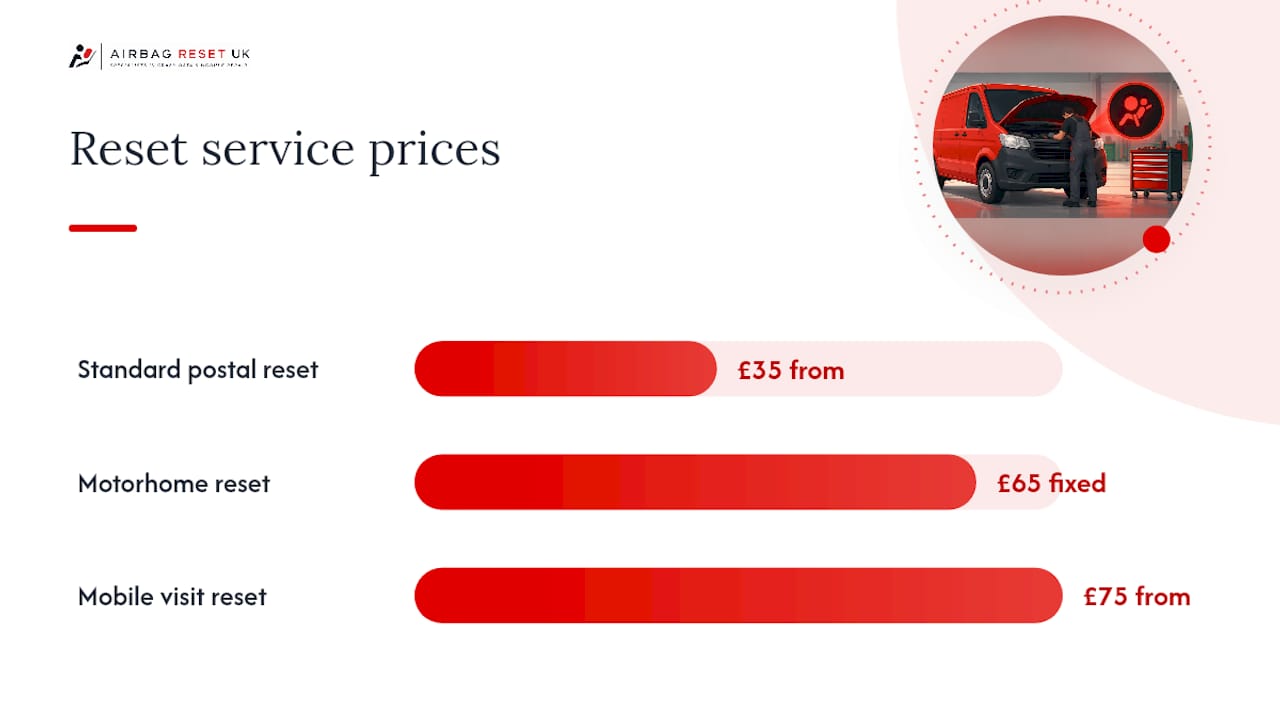
Send your module by post and Airbagresetuk will clear the stored crash data with same-day turnaround for most modules received in the morning. Prices for a standard airbag module reset start from £35, and quotes are price matched against any genuine like-for-like competitor quote you've received. Motorhome owners get a dedicated motorhome airbag reset service priced at £65, built around the specific modules those vehicles use. If removing the module yourself isn't practical, a mobile airbag reset visit starts from £75 and brings a technician to you.
Not sure which part number you've got? Send a photo through and Airbagresetuk's team will confirm identification before you book anything.
Sources
For primary guidance, check your manufacturer's own warning light explanations, the IMI's technician safety training, and diagnostic-first advice from trusted automotive care specialists before booking any repair.
- IMI course reference on airbag safety and technician practice
- Airbag Light: Is It Safe To Keep Driving? (Stoneacre)
FAQ
Can I still drive with the airbag light on?
You can usually drive short distances to a workshop if the light is steady and there's been no recent collision, but avoid it where possible. Stop immediately if the light is flashing or appeared right after an impact, since the SRS may be fully disabled in either case.
Is it illegal to drive with an airbag light on in the UK?
There's no specific offence purely for the light being on, but driving with a known safety defect can leave you at fault if it's found to have contributed to an incident. It will also fail your MOT outright, so get it checked before your test date rather than after.
How much does it cost to fix an airbag light?
It depends entirely on the fault. A connector clean might cost very little, a clock spring or pretensioner replacement sits in the mid-range, and a genuinely damaged module needing replacement costs the most. Where a reset is the correct fix rather than a replacement, Airbagresetuk's standard service starts at £35.
Can I pass an MOT with the airbag light on?
No. The airbag warning light is a specific MOT test item, so a van showing it illuminated will fail regardless of anything else being in good order. Get the fault diagnosed and cleared before booking your test.
How do I reset a van airbag light myself?
Disconnecting the battery won't clear a genuine SRS fault code, only the warning light might briefly go out before returning once the module re-checks itself. Stored crash data specifically needs a proper diagnostic reset tool or a specialist reset service, not a DIY battery trick.