
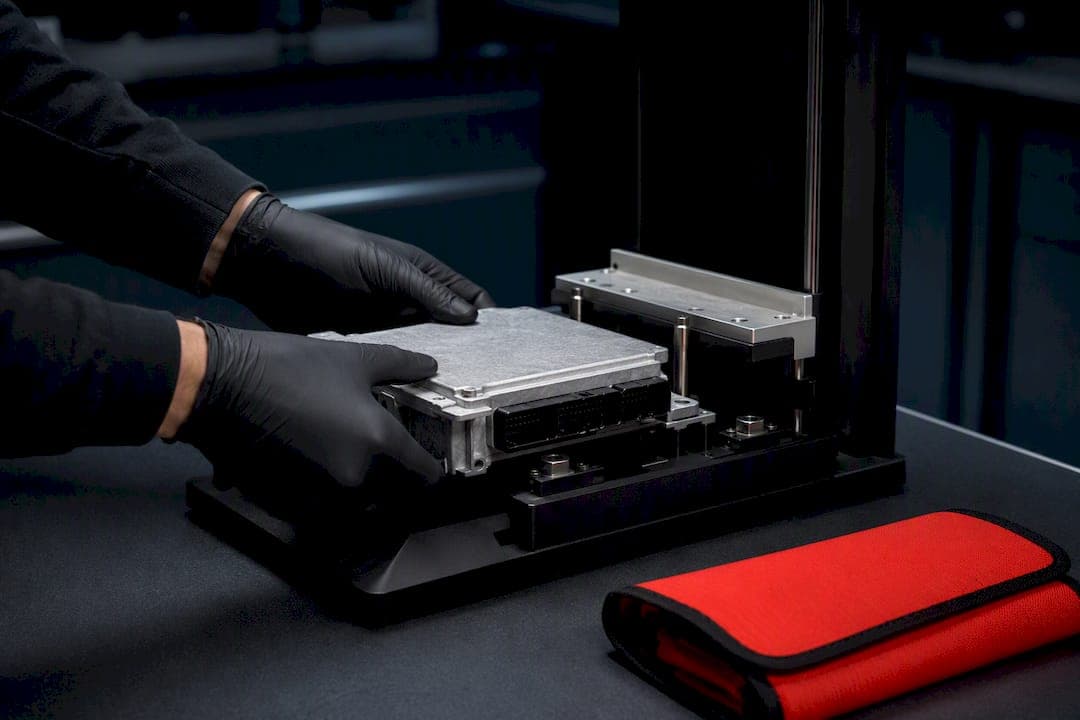
A Vauxhall airbag module reset is the right next step only after every physical repair is done and the module itself is undamaged. A bench reset clears the crash flag stored in the unit's memory; it cannot replace a deployed airbag, a fired seatbelt pretensioner, or a cracked housing. If your SRS light is still on after a repair, get a workshop to confirm the hardware is sound first, then send the module to a reputable bench-reset service.
TL;DR:
- A Vauxhall airbag module reset only clears crash flags after all physical repairs are completed and the module is confirmed undamaged.
- Resetting the EEPROM removes stored crash data and restores self-tests but does not fix wiring, replace inflators, or repair damage from a crash.
- Only modules with intact cases, no heat or water damage, repaired wiring, and properly replaced pretensioners qualify for a reset; physical damage necessitates replacement.
- The reset process rewrites EEPROM data outside the vehicle, requiring specialized bench equipment that verifies successful clearance of crash codes.
- Reputable services charge from £35, offer quick turnaround, and require clear part identification, proper packaging, and supporting documentation to avoid delays.
Table of Contents
- What does a Vauxhall airbag module reset actually fix?
- When should you send a module for a bench reset, or replace it instead?
- How does a bench EEPROM reset actually work?
- Preparing, removing and posting your Vauxhall module safely
- What does a bench reset cost, and what should come back with it?
- Safety, MOT and legal points worth knowing
- Where can you get a reputable airbag module reset done?
- From the workshop bench: what good documentation actually looks like
- Book a postal reset with Airbag Reset UK
- Sources
- FAQ
What does a Vauxhall airbag module reset actually fix?
The crash flag that triggers your persistent SRS light lives in the module's EEPROM, a type of non-volatile memory that survives power loss. That's the part most owners get wrong: pulling the battery or clearing codes with a generic OBD-II scanner does nothing to it, because the module deliberately locks itself once it has recorded a deployment or crash event. A technical guide to airbag SRS crash-data clearing confirms only a bench-level EEPROM rewrite, or the manufacturer's own diagnostic tool, can remove that record.
A bench reset does two things, and only two things:
- Erases the stored crash-event record so the module stops refusing to arm.
- Restores the module's internal self-test so it can pass a normal power-up check.
It does not repair wiring, replace inflators, or fix a bent bracket. That distinction matters for safety: a cleared warning light only means something once the physical repair behind it is genuinely finished. Vauxhall's own Corsa owner manual guidance is explicit that resetting an SRS module clears stored data but does not put back anything that was fired or damaged in the crash.
When should you send a module for a bench reset, or replace it instead?
A module qualifies for a reset once the following checklist is satisfied:
- The case is physically intact. No cracks, no impact deformation, no missing mounting points.
- There's no thermal or water damage. Heat and moisture corrode connectors and PCB tracks in ways a reset can't undo.
- Wiring, sensors and connectors have already been repaired. The crash-flag reset assumes the rest of the restraint system is sound.
- New inflators and pretensioners are fitted where the originals fired. A reset arms the module; it doesn't replace explosive charges.
Red flags that point to repair or replacement instead of a straightforward reset include a burnt or discoloured PCB, a housing that's visibly cracked, failed driver ICs, or a module that fails its own bench self-test once powered up. Confirming status usually means pulling diagnostic codes, a careful visual check, and a workshop sign-off that the hardware side of the job is complete before the module ever goes in the post.
How does a bench EEPROM reset actually work?
Once a module arrives at a reset lab, the process is methodical rather than mysterious. Technicians first identify the exact part number and software variant, since two Vauxhalls sharing a badge can carry different SRS units internally. The module is then powered up on a bench rig outside the vehicle, its EEPROM contents are read and stored, and the crash-flag data is rewritten to a clear state. A checksum is recalculated so the module's firmware accepts the change as valid, rather than flagging tampered memory, and the unit is then bench-armed and tested to confirm it powers up clean.
A bench crash-data reset erases the hard crash code and unlocks the module to arm again, but it does not replace deployed pyrotechnic devices. The reset is the electronics half of a full restraint repair.
That framing, from a detailed practitioner guide to pretensioner and SRS resets, explains why the in-vehicle tools most workshops carry can't do this job. A standard scan tool talks to the module through its normal communication protocol, which is exactly what a crash-locked unit refuses to respond to. A battery disconnect just cuts power; it doesn't touch memory that's designed to survive power loss. A competent lab returns your module with a verification read showing the crash flag is clear, photos of the bench test, and a written report confirming pass or fail.
Preparing, removing and posting your Vauxhall module safely
Get this stage right and the reset itself is straightforward. Get it wrong and you risk sending the wrong unit or an unsupported return.
Before you touch anything, photograph the module label, the connector side, the printed part number, and note your registration or VIN alongside any diagnostic codes you've pulled. This single habit avoids the most common cause of delay: sending a module that doesn't match what the lab expected.
For removal itself:
- Disconnect the battery first and wait the period specified in your service manual before working near the SRS system.
- Follow the manufacturer's removal sequence and avoid touching connector pins directly.
- Keep magnetic tools and static-generating materials away from the unit.
- Pack it in anti-static wrap inside a rigid box, not a padded envelope.
- Use tracked return shipping and include a job reference plus a contact number.
Pro Tip: Confirm turnaround terms and the lab's policy on failed units before you post anything. Ask exactly when their turnaround clock starts, since "same day" usually means from arrival, not from when you drop it at the post office.
What does a bench reset cost, and what should come back with it?
A bench reset is one of the cheapest ways to resolve a locked SRS module, and it's typically a fraction of the price of a brand-new OEM replacement unit, according to the same crash-data clearing guide. That price gap is the whole reason resets exist as a service category: replacing a module that's electronically fine but crash-locked is expensive for no real safety benefit once the pyrotechnics have already been swapped out.
Turnaround depends on two separate clocks. Bench work itself is often quick, sometimes completed the same day a module lands on the technician's desk. Total elapsed time, though, includes postal transit both ways, so a "same-day" service can still take several days' door to door depending on your courier.
When your module comes back, expect:
- A verification readout confirming the crash flag is genuinely clear.
- Photographic evidence from the bench test.
- Written test notes and stated warranty terms on the work performed.
Safety, MOT and legal points worth knowing
Vauxhall's own guidance is unambiguous: an SRS lamp that illuminates at startup should extinguish shortly after, and if it stays on, or comes on while driving, you should have it checked immediately, because airbags or belt tensioners might not deploy correctly in a further incident, according to the Corsa owner manual.
For MOT purposes, an obviously inoperative airbag counts as a major defect, and an illuminated fault lamp signalling a malfunction needs remedying before the test, per the official MOT inspection manual. Get repairs documented before your inspection date, not after.
One more point, plainly: a reset exists to complete a genuine repair, never to hide accident history from a future buyer or an insurer. Treat it as the final electronic step in a job, not a shortcut around one.
Where can you get a reputable airbag module reset done?
Options for Vauxhall owners generally split into three categories. Main dealers can supply a brand-new module programmed to your vehicle, which resolves the fault but usually costs several times more than resetting a repaired unit. Independent bodyshops and auto-electricians sometimes have in-house diagnostic capability, though genuinely bench-level EEPROM rewriting equipment is specialist and not every local garage carries it. The third route, and the one that's grown fastest for exactly that reason, is a dedicated postal bench-reset service that specialises purely in crash-data resets rather than general vehicle repair.
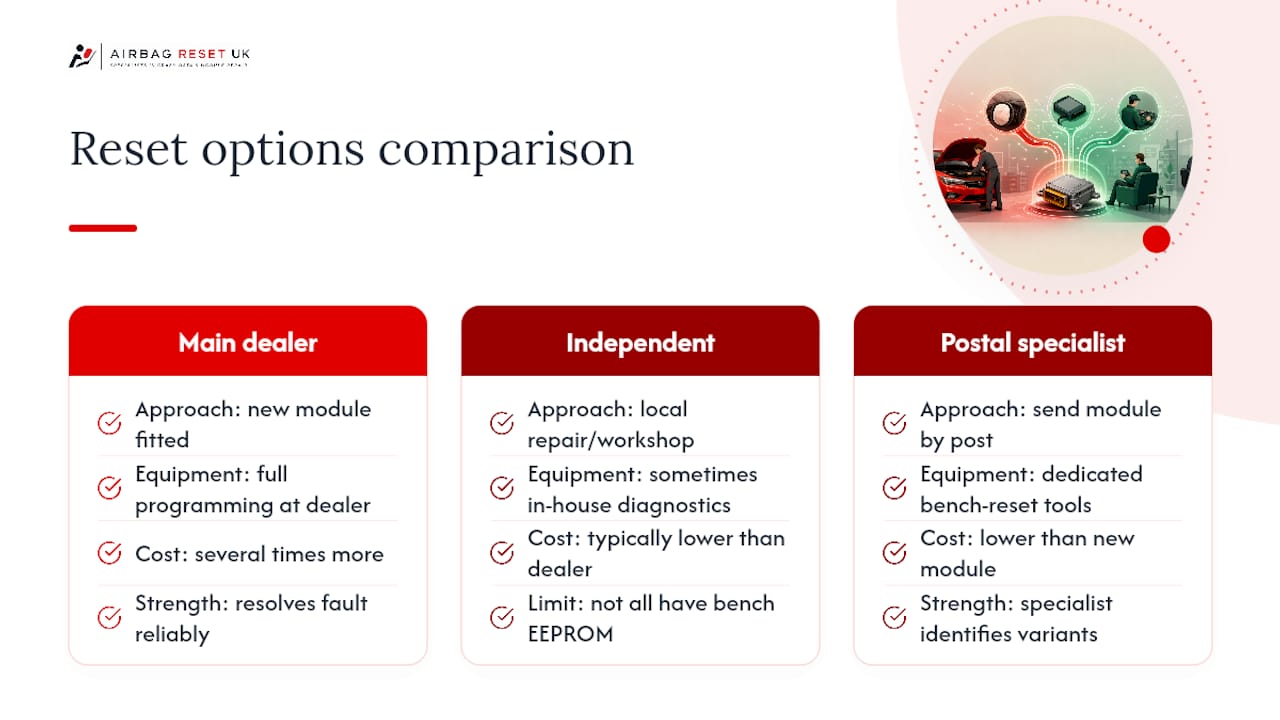
A reputable specialist postal bench-reset service operates in this third category, working with cars, vans and motorhomes sent in through a UK-wide postal service, with identification support based on part number or a photo if you're unsure exactly what you're looking at. That specialism matters for a repairer weighing options: a service that only does resets, day in and day out, tends to spot the module variants and edge cases a general workshop sees rarely.
Whichever route you choose, ask the same three questions: can they show you verification evidence, what's their turnaround from receipt (not from booking), and what happens if your module fails the bench test. A reputable provider answers all three without hesitation. If a bulb warning light was caused by something unrelated to a crash, such as a wiring fault, it's also worth ruling that out first, since illuminated warning lamps can stem from causes well outside the SRS system, as covered in this guide to diagnosing dashboard fault lamps.
From the workshop bench: what good documentation actually looks like
Photograph-led identification stops the single most common problem in this trade: a module sent in without a clear part number, which risks an unsupported return or a wasted turnaround cycle. Most repeat returns come down to two things being missed before the module was ever posted, unrepaired wiring, or a pretensioner that was never actually replaced. A properly run bench-reset job gives you test photos, a memory verification dump, and a plain pass or fail note, nothing vaguer than that.
— John
Book a postal reset with Airbag Reset UK
Airbag Reset UK exists for exactly the moment covered above: your hardware repair is done, the module's intact, and you need the crash flag cleared without paying dealer prices for a new unit. The service runs UK-wide by post, covers cars, vans and motorhomes, and includes identification help if you send a photo or part number rather than guessing which variant you've got.
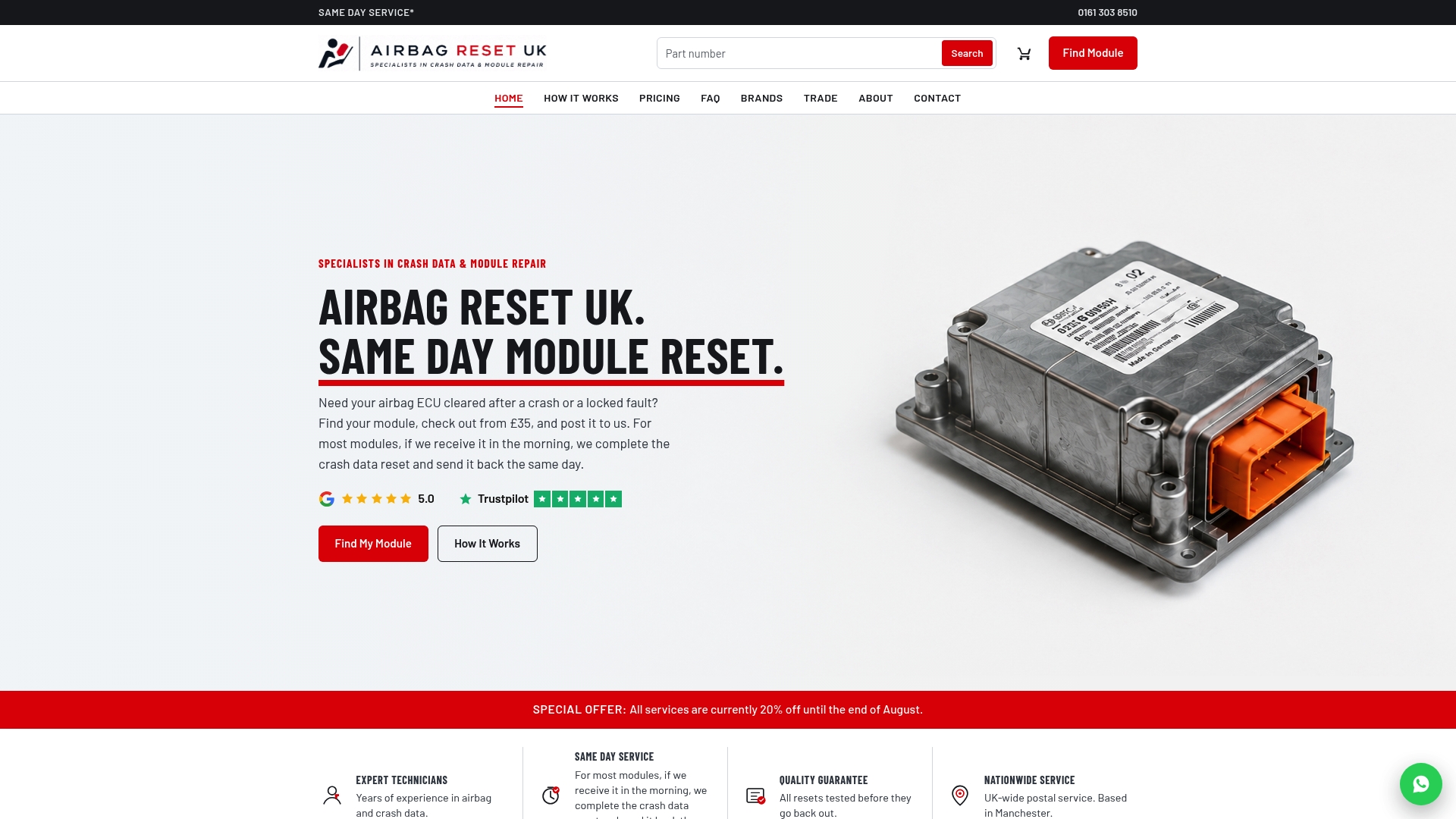
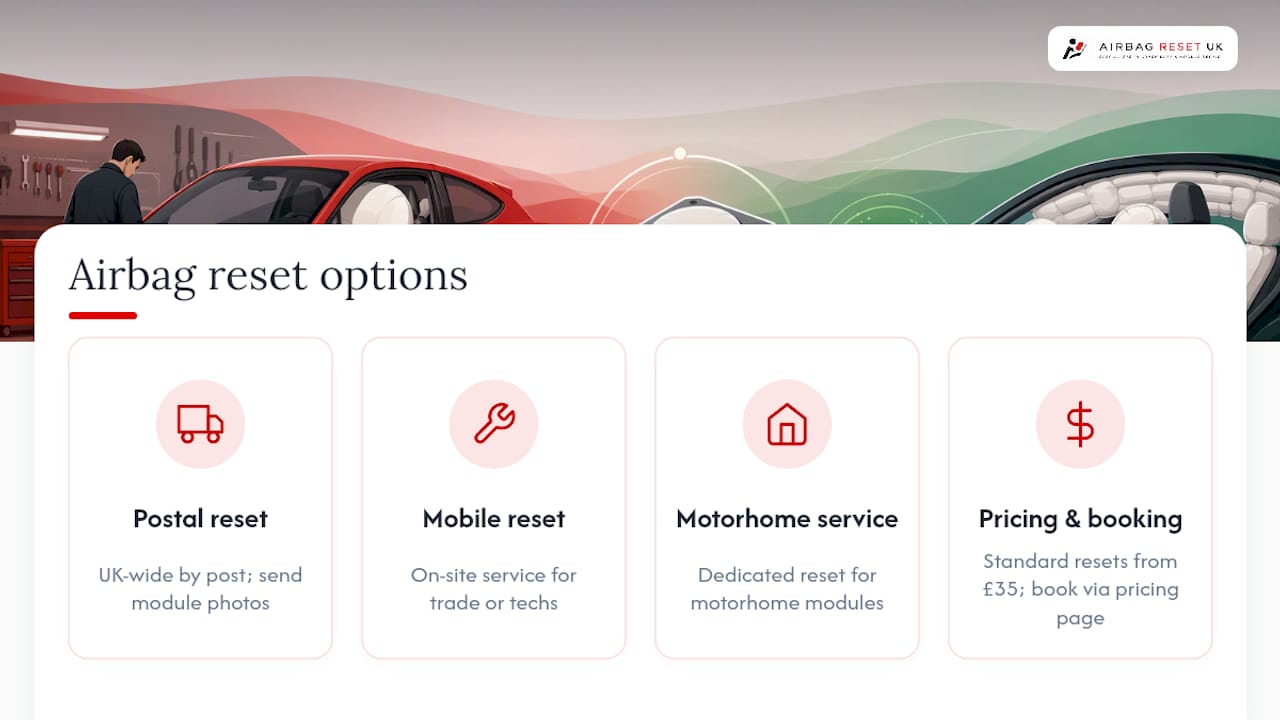
Standard module resets start from £35, with pricing scaled fairly for more complex units, and the business will price-match a genuine like-for-like quote you've been given elsewhere. Most modules received early in the day tend to get a same-day turnaround on the bench itself, which matters if you're working against an MOT date or a customer waiting on a car. Motorhome owners have a dedicated reset service built for the different module types those vehicles use, and trade clients or mobile technicians who need work done on-site can use the mobile reset option instead of posting anything at all.
To get started, take clear photos of your module's label and connector, note your VIN and any diagnostic codes, then head to the pricing page to confirm your cost and book the job.
Sources
Claims about SRS lamp behaviour and manufacturer warnings draw on the Vauxhall Corsa owner manual. MOT defect classification comes from the official MOT inspection manual. Bench procedure and EEPROM detail are drawn from the crash-data clearing guide and the pretensioner and SRS reset guide.
- Vauxhall Corsa owner manual — airbag system
- MOT inspection manual — Other equipment (airbags)
- Airbag SRS crash-data clear: the complete 2026 guide
FAQ
Can an airbag control module be reset?
Yes, provided the module itself is physically undamaged and any fired airbags or pretensioners have already been replaced. The reset clears the crash-event record stored in the module's memory, which is a separate step from the physical hardware repair, as Vauxhall's own guidance confirms.
Can I pass an MOT with an airbag light on?
Generally no. An obviously inoperative airbag is treated as a major defect under the MOT inspection manual, so a lamp signalling a genuine fault needs resolving before your test date.
How do I reset the "service airbag" light on my Vauxhall Corsa?
If the light is on because of a stored crash record, standard code clearing or a battery disconnect won't remove it, since that data sits in non-volatile memory. You'll need a bench-level reset once any physical repairs are confirmed, which is exactly the service Airbag Reset UK provides by post.
How much does it cost to have an airbag module reset?
Airbag Reset UK's standard module resets start from £35, with motorhome resets priced separately, and the company will price-match a comparable genuine quote. Costs vary by module complexity, so check current pricing on the site before booking.