
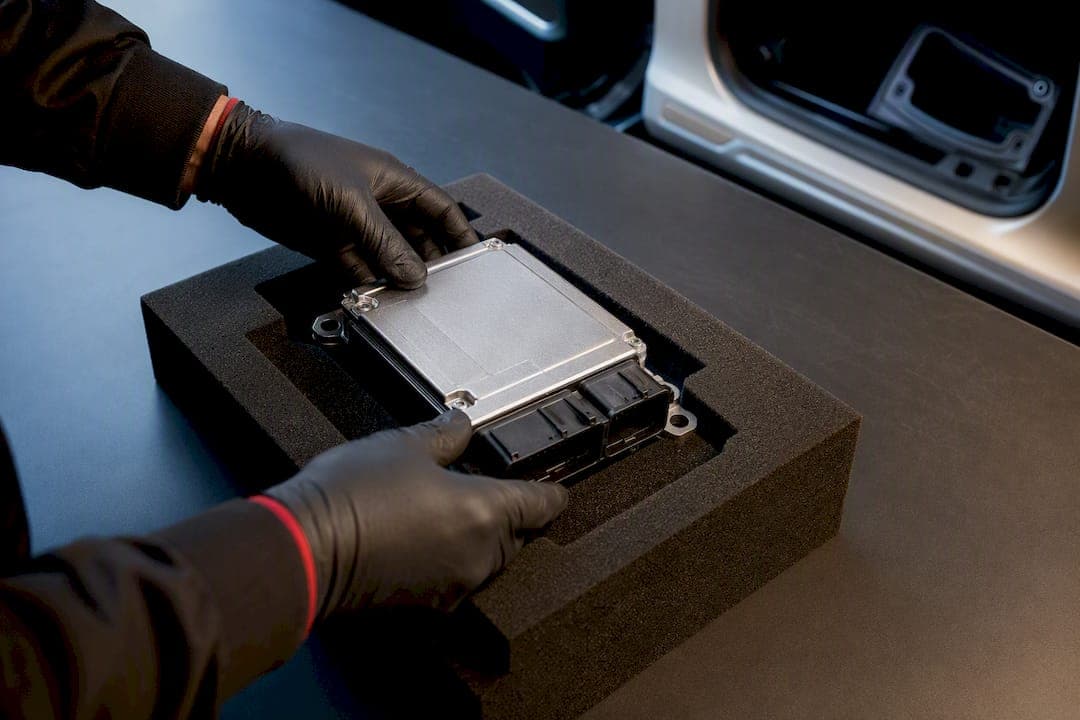
If the SRS light on your Vauxhall Vivaro won't go out, the airbag system has logged a fault and needs a diagnostic scan to identify it. Don't ignore it or hope it clears itself. Do a safe visual check first, then get a professional scan that can read and clear the fault properly.
TL;DR:
- The SRS light on your Vauxhall Vivaro indicates a stored fault that requires a proper diagnostic scan to identify and clear, as basic OBD-II tools usually cannot read airbag system faults.
- Common causes include damaged seatbelt pretensioner wiring, steering wheel clock spring issues, and wiring problems from seat modifications or water damage under seats, especially after seat work.
- Owners should perform safe visual checks under seats and around the steering column while disconnecting the battery, but must avoid opening inflator modules or disturbing wiring that shows signs of damage or burning.
- A genuine diagnostic scan with manufacturer-level tools is essential to determine if the fault is a live wiring issue or old crash data, guiding whether repairs involve fixing wiring or replacing the airbag module.
- If the physical wiring fault is fixed, postal resets of the airbag ECU are a quick, affordable way to clear old crash data, but only after confirming the fault has been physically repaired.
Table of Contents
- What does the Vauxhall Vivaro SRS light actually mean?
- Common Vivaro faults that trigger an SRS light
- Safe quick checks you can reasonably do yourself
- Why a proper diagnostic scan and ECU reset are usually required
- Repair and service choices: dealer, independent, mobile or postal ECU reset
- Safety, risks and MOT implications of driving with an SRS light on
- Author perspective: technician tips and common diagnostic traps
- A direct option: postal airbag ECU reset (how it works, when to pick it)
- Sources
What does the Vauxhall Vivaro SRS light actually mean?
The SRS light (Supplemental Restraint System) is your airbag warning light. Every time you turn the ignition, the airbag control unit runs a self-test, lights the SRS lamp briefly, then switches it off once the check passes. If the light stays on, flashes, or comes back after a few seconds, the ECU has found something it doesn't like and has stored a fault code.
That's the crucial bit most owners miss. The Vivaro's airbag system self-diagnosis runs on every start, and any detected fault, whether it's a loose plug or crash-related data from an old bump, gets written to the ECU's memory. That data doesn't disappear on its own.
Here's why a lot of owners get stuck:
- Basic OBD-II code readers, the kind that pull engine fault codes, generally cannot talk to the airbag module at all
- Even where a cheap tool shows something, it often can't clear crash data or SRS-specific hard faults stored in ECU memory
- Disconnecting the battery might clear a transient glitch, but it usually won't clear a genuine stored fault, and it risks losing radio codes and other settings for nothing
This is why so many people try the "pull the fuse, wait ten minutes" trick, watch the light come back on the next journey, and assume the car is broken beyond repair. It usually isn't. The fault is just sitting in memory, waiting for the right tool to read and clear it.
Common Vivaro faults that trigger an SRS light
Vivaro SRS faults tend to cluster around a handful of predictable weak points, and knowing them means you can describe the problem accurately to a technician instead of guessing.
- Seatbelt pretensioner wiring and under-seat plugs — the most frequently reported cause, especially on vans that see heavy seat movement or cleaning with a pressure washer
- Driver squib or steering column clock spring faults — the clock spring carries the airbag circuit through the steering wheel rotation and wears with age or after column work
- Aftermarket seat swivel or seat-movement damage — motorhome and camper conversions that fit swivel bases often nick or stretch the factory harness underneath
- Passenger presence sensor or seat-occupancy mat faults — corrosion or a cracked mat under the passenger cushion is a known cause on higher-mileage vans
- Loose connectors, corrosion, or crushed wiring under seats — years of grit, spilt drinks, and damp carpets take their toll on these low-slung connectors
Owner reports on the Vauxhall Owners Network forum repeatedly point to under-seat connectors and seatbelt pretensioners as the origin, with several threads describing successful fixes after seat-swivel installs disturbed the wiring.
Pro Tip: If you've ever had a swivel base, camper conversion, or aftermarket seat cover fitted, mention it to whoever scans the fault. Post-conversion wiring damage is one of the most common causes on Vivaros used as campers, and it's an easy thing to overlook when you're troubleshooting from scratch.
A pattern worth noting: faults that appear shortly after any seat-related work (base swap, cover fitting, cleaning under the seats) are disproportionately connector or harness issues rather than a failed airbag unit itself. That distinction matters for your wallet, because a reseated connector costs nothing and a replacement squib assembly does not.
Safe quick checks you can reasonably do yourself
There's a sensible amount of DIY checking you can do before involving a garage, and there's a line you shouldn't cross. Airbags are explosive devices by design, and poking around inflator modules or squibs is not a job for an owner with a multimeter and good intentions.
- Isolate power safely if you're going to check connectors. Disconnect the negative battery terminal and wait a reasonable time before touching anything, since airbag systems hold a residual charge in a backup capacitor for a short period after power loss.
- Note your radio code first. If your Vivaro's stereo needs a code after a battery disconnect and you don't have it recorded, you'll lose it. Check your owner's documentation or dealer paperwork beforehand.
- Visually inspect under-seat connectors without disturbing the seat mechanism itself. Look for a plug that's not fully clicked home, greenish corrosion on pins, or a connector sitting at an odd angle. Reseat it gently if it looks loose. Do not open, cut, or probe anything connected directly to an inflator or squib.
- Check the steering column area visually only, looking for obvious chafing near the clock spring housing. Leave any dismantling to a technician.
- Reconnect the battery and start the van to see whether the light behaviour has changed.
Know when to stop. Exposed copper wiring, torn insulation, a scorched connector, or any smell of burning under a seat means you park it and call a technician rather than continuing to investigate. Those signs point to a fault that's actively damaging the harness, not a simple loose plug.
Before your garage visit, gather a short bit of evidence: take a couple of photos of the dashboard light pattern, note the steering wheel position when it first appeared, and write down roughly when the light started (after a jet wash, after a seat swap, out of nowhere on a cold morning). Technicians on Vivaro forums consistently say this kind of detail speeds up diagnosis, particularly for intermittent faults that don't show every time the van starts.
Why a proper diagnostic scan and ECU reset are usually required
A generic OBD-II reader talks to the engine management system. It generally has no visibility into the separate airbag control module, which runs on its own protocol and its own fault memory. This is the single biggest source of owner frustration: buying a £20 code reader, getting nothing useful, and concluding the car needs a whole new airbag module.
What actually reads and clears an SRS fault:
- Manufacturer-level tools such as TECH2 or an equivalent dealer-grade diagnostic platform, which can communicate directly with the airbag ECU
- Specialist aftermarket scanners built specifically for SRS/airbag systems, used by independent garages and mobile technicians
- A proper diagnostic pass that distinguishes between a live wiring fault and old crash data still sitting in memory from a previous, unrelated incident
This distinction between live faults and stored history matters enormously for your repair bill. A technician who scans the module first can usually tell whether you're looking at a genuine current fault, like a broken wire, or historic crash data that's been sitting there since a minor prang years ago, unrelated to your current warning light. Guessing without that data means people needlessly swap seatbelt pretensioners, clock springs, or entire airbag units when the actual issue is a £2 connector or three-year-old logged event that never got cleared.
An ECU reset, clearing the stored crash data once any physical fault has genuinely been repaired, is safe and appropriate when the wiring or connector issue causing the fault has already been fixed. Module replacement only becomes necessary when the airbag unit or squib itself has physically failed, not simply logged an old fault.
Repair and service choices: dealer, independent, mobile or postal ECU reset
Once you know roughly what's wrong, or at least that something needs scanning, you've got four realistic routes, and they suit different budgets and situations.
The dealer route gives you manufacturer-specific tools and technicians who see Vivaros daily, but you'll typically pay a diagnostic fee on top of any parts and labour, and turnaround can stretch if they need to order parts.
An independent garage or mobile diagnostic technician works well if you already suspect a physical fault (a loose connector, damaged harness) and just need someone with the right scanner to confirm and fix it. Costs tend to sit below dealer rates, and a mobile tech can often come to you.
A specialist ECU reset or postal service suits a specific situation: you've already fixed, or paid someone to fix, the physical fault, and the light is on purely because old crash data or a cleared fault hasn't been wiped from ECU memory. You post the module, it gets reset, and it comes back ready to refit.
Whichever route you choose, ask these questions before committing:
- Can you show me the fault codes before and after any work?
- Is this a live wiring fault or stored historic data?
- What's your turnaround time, and is it guaranteed?
- Will I get written confirmation the fault memory has been cleared?
| Route | Best for | Typical turnaround | What to verify |
|---|---|---|---|
| Dealer | Full diagnosis plus warranty work | Days, depending on bookings | Itemised fault code report |
| Independent/mobile | Known physical fault needing a fix | Same day to a few days | Scanner readout before/after |
| Postal ECU reset | Fault already repaired, ECU just needs clearing | Often same-day once received | Before/after fault-memory report |
A reputable service in any of these categories should be willing to hand over a report showing what the ECU memory looked like before and after the work. If a provider can't or won't produce that, treat it as a red flag rather than a minor inconvenience.
Safety, risks and MOT implications of driving with an SRS light on
An illuminated SRS light means the system has detected a fault serious enough that it can't guarantee the airbags will deploy correctly, or at all, in a collision. That's not a small thing to drive around with, particularly with passengers or family in the van.
- The MOT test treats an illuminated airbag warning as a common fail point, and your Vivaro will likely fail its MOT until the fault is fixed and the light is confirmed off
- Driving isn't illegal with the light on, but you're doing so with a compromised safety system, and insurers can take a dim view if it comes up after an incident
- If you need to move the van before it's sorted, keep journeys short and low-risk, or arrange recovery or a mobile scan rather than driving distance with the fault unresolved
Book a scan sooner rather than later. An SRS fault rarely gets better on its own, and the MOT clock keeps ticking regardless.
Author perspective: technician tips and common diagnostic traps
The biggest waste of money in this whole process is replacing parts before reading the code. Technicians see it constantly: an owner swaps a seatbelt pretensioner assembly costing hundreds of pounds when the actual fault was a corroded pin on the connector feeding it. Reading the fault first, always, avoids that.
A postal reset is genuinely efficient, but only once the physical fault is actually fixed. Sending a module off to be cleared while the underlying wiring problem is still live just guarantees the light comes straight back on. Fix the fault, then reset the memory.
In the workshop, the checks that matter most are unglamorous: connector condition under the seats, harness routing around anything that's been unbolted or refitted, and seat-install history. If a van has had a swivel base fitted, that's the first place experienced technicians look, not the last.
— John
A direct option: postal airbag ECU reset (how it works, when to pick it)
If the wiring fault has already been sorted, whether by you, a garage, or the fitter who caused it, and the SRS light is only staying on because the ECU is holding old crash data, a postal reset is the cheapest and quickest way to clear it. This is the alternative to a full dealer diagnostic bill for a job that's really just a memory wipe.
The workflow with Airbagresetuk is straightforward: remove the airbag module from your Vivaro, post it in, the fault memory gets reset, and it's returned ready to refit. Before sending anything, take photos of the module and its part number, and keep evidence that the physical fault (the connector, the wiring, the pretensioner) has genuinely been repaired, since resetting a module with a live fault still present won't hold.
Airbagresetuk offers same-day turnaround on most modules, with pricing starting at £35 and price matching against genuine like-for-like quotes. You should also request a fault-code report showing the memory before and after the reset, as proof the crash data has actually been cleared. If your Vivaro's SRS light is on and you've dealt with the physical cause, get a quote for your module and check turnaround before booking it in.
Sources
For model-specific safety notes, check the Vauxhall Vivaro owner manual. For real-world fault examples, the Vauxhall Owners Network forum and a dashboard warning light guide are worth bookmarking before your next garage visit.
- Airbag system self-diagnosis — Opel Vivaro A technical page
- Service light & air-bag warning light — Vauxhall Owners Network forum