
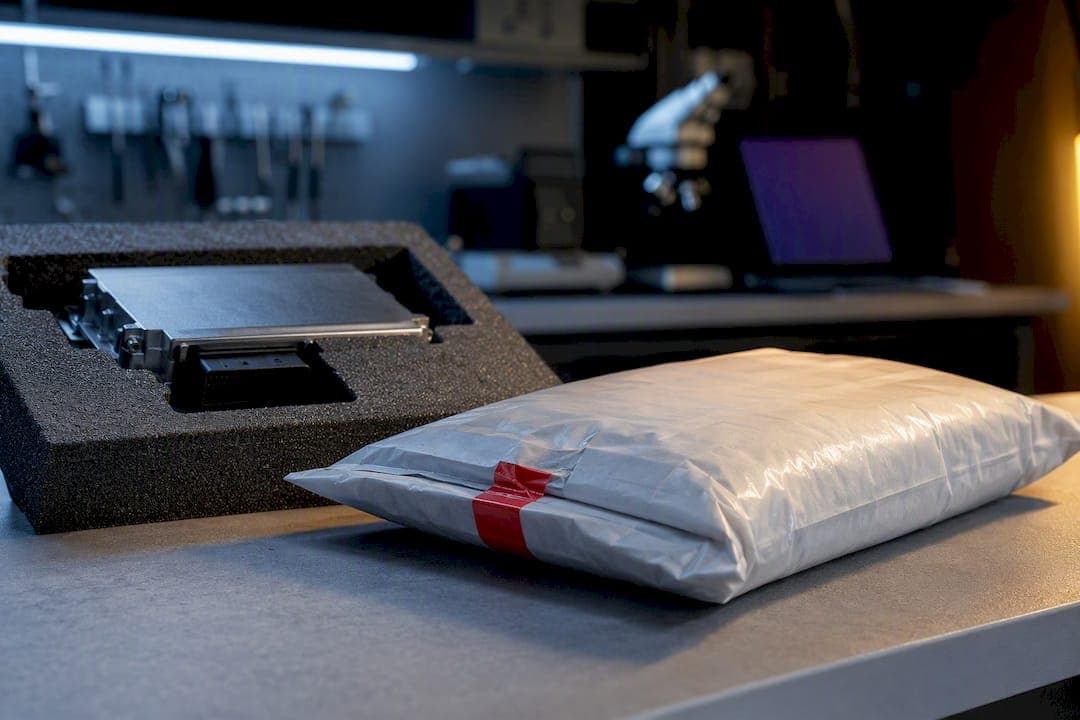
A crash-data lock is the fix, not a mystery. If your airbag warning light stayed on after a collision, the SRS module has recorded that crash event in its memory and refuses to arm until that data is cleared on a bench. A postal bench reset solves this, but only once every deployed airbag, pretensioner, or damaged sensor has been physically replaced. Reset before repair, and you're masking a fault, not fixing one.
TL;DR:
- A crash-data lock prevents the SRS module from arming again until the crash event is permanently cleared through a bench reset, not a simple code wipe.
- Proper repair involves replacing all deployed airbags, pretensioners, and damaged sensors before scheduling a reset to avoid masking unresolved hardware faults.
- Sending the module through insured, tracked courier with detailed labeling, photographs, and documentation ensures faster, safer processing by experienced technicians.
- The reset process involves EEPROM rewriting and checksum recalculation, which most in-vehicle scanners cannot perform, making bench-level access essential.
- Prices start at a modest fee and turnaround is usually same-day once the module arrives; always verify the reset's success with full system scans and in-vehicle tests.
Table of Contents
- Quick checklist: what to do the moment the light comes on
- What actually happens inside a crash-data reset
- How to prepare and post your module for a bench reset
- What to expect: pricing, turnaround, and proof it worked
- Risks and red flags: when a reset isn't the answer
- Why the postal route works and how Airbag Reset UK handles it
- The reset isn't the hard part. The sequence is.
- Get your module reset without the dealer markup
- Sources
- FAQ
Quick checklist: what to do the moment the light comes on
Don't drive further than necessary. A locked SRS module means your restraint system may not fire correctly in a second impact, so treat the car as unsafe for anything beyond getting it off the road.
- Stop unnecessary driving. Short trips to a garage are fine; commuting isn't.
- Record everything. Photograph the damage, note the time and location, and log your insurer's claim reference.
- Get an SRS-capable scan. Standard OBD-II readers often can't reach the crash-data area, so you need a scan tool built for restraint systems to confirm what's actually wrong.
- Send the car to a collision shop. Deployed airbags, spent pretensioners, cracked sensors, and damaged wiring all need physical replacement first.
- Book the bench reset last. Once hardware repairs are complete, arrange a postal crash-data reset with a specialist.
Pro Tip: Keep every diagnostic printout and repair invoice together in one folder before you send the module off. Providers move faster when they can see exactly what's already been fixed.
What actually happens inside a crash-data reset
The SRS module isn't confused. It's doing precisely what it was designed to do: once an impact triggers deployment, the module writes a permanent crash-event flag into protected EEPROM and refuses to arm again until that flag is cleared or the unit is replaced. This is a deliberate safety lockout, not a glitch.
Clearing it requires bench-level access that a plug-in scanner simply cannot reach. A specialist follows a defined sequence:
- Read the EEPROM and locate the crash-flag bytes
- Rewrite those specific bytes to restore a non-fired state
- Recalculate the checksum so the module accepts the change as valid
- Perform a verification read, followed by a bench arm test to confirm the unit responds correctly
This is why bench-level EEPROM rewriting is the only reliable way to clear a genuine crash flag. Most in-vehicle tools and generic OBD-II readers are locked out of that protected memory region by design, which is exactly why the fault persists no matter how many times you clear codes from the dashboard.
One thing a reset does not do: repair anything physical. Clearing the flag doesn't refill a fired pretensioner or replace a deployed bag. It restores the module's ability to arm once the hardware around it is sound again.
How to prepare and post your module for a bench reset
Getting this stage right avoids delays and rejected jobs. Start with safety: disconnect the battery and isolate the electrical system before touching the module, and if you're not confident with airbag wiring, have a trained technician handle the removal.
- Identify the module properly. Note the part number stamped on the casing, the vehicle's VIN, and take clear photos of any labels or connectors.
- Pack it securely. Use a rigid box with padding around the connectors; a cracked case on arrival often means a declined job.
- Choose a tracked, insured courier. Postal loss is rare but not worth risking on an uninsured service.
- Include paperwork. Contact details, VIN, part number, and photos of the damage all help the bench technician work faster and avoid back-and-forth calls.
- Label the parcel clearly, referencing any job or order number the provider gave you at booking.
Pro Tip: Photograph the module from all four sides before boxing it. If a dispute ever arises about pre-existing damage, timestamped photos settle it in seconds.
On arrival, a competent specialist checks for visual damage, signs of water ingress, and whether the unit still communicates correctly on the bench. Any of those failing means the job gets declined rather than rushed through.
What to expect: pricing, turnaround, and proof it worked
Postal bench resets sit well below dealer replacement costs, largely because the original module is retained rather than swapped, which sidesteps the VIN reprogramming that a brand-new unit usually requires. Pricing on standard units typically starts at a modest fee, with surcharges for complex or rare modules and return postage sometimes charged separately.
Turnaround varies by workload rather than complexity. The bench work itself is often same-day; the postal legs on either end are usually the longer part of the timeline, so garages should factor courier speed into their own customer promises.
A provider worth using will hand back more than a "fixed" text message. Expect:
- A pre-clear and post-clear EEPROM dump, showing exactly what changed
- Photos from the bench test confirming the module armed correctly
- Tracking numbers for both legs of the journey
Once the module is refitted, confirm the fix properly rather than trusting the dashboard light alone: run a full SRS scan, complete a key-on self-test, take a short road test, and pull the diagnostic trouble codes one final time to make sure nothing reappears.
Risks and red flags: when a reset isn't the answer
Not every locked module should be reset, and a provider who says otherwise is cutting a corner you'll pay for later. Watch for:
- Physical damage on the case. Cracks, burn marks, or smoke staining usually mean the unit is beyond a safe bench clear.
- Water damage. Moisture ingress compromises internal components in ways a checksum rewrite can't fix, and reputable providers will decline or flag it for repair first.
- Unrepaired hardware faults. Blown driver ICs, damaged squib loops, or missing inflators must be replaced before any reset. Clearing the flag without fixing these leaves a system that looks fine and isn't.
- Providers who skip inspection. Anyone offering to "just clear the light" without checking the module first, or without archiving the pre-clear crash data, is not doing the job properly.
There's an ethical dimension too. Crash-event data can matter for insurance claims or legal disputes, so ask any provider to preserve and hand back the original archive. If you're selling the vehicle later, disclosure obligations around prior structural or safety-system damage may apply depending on the circumstances, so keep that documentation on file regardless of how quickly the light goes out.
Why the postal route works and how Airbag Reset UK handles it
Posting a module to a specialist sounds like a detour until you compare it with the alternative: a dealer swap that reprograms the VIN and costs several times more. Airbag Reset UK specialises in crash data reset services for airbag ECUs across cars, vans, and motorhomes, built around exactly the workflow described above.
Some providers offer same-day turnaround on most modules once they're on the bench, so the postal leg becomes the main variable in your timeline, not the repair itself. Experience in crash data reset can result in faster verification of straightforward units.
Pricing typically starts at a modest fee, with some providers offering price matching against genuine like-for-like quotes. Whichever provider you choose, insist on the same evidence: a pre-clear and post-clear EEPROM read, a bench test photo, and tracking on the return parcel. That's what separates a documented repair from a light that quietly comes back on in six months.
The reset isn't the hard part. The sequence is.
Most of the frustration around this fault doesn't come from the technology. It comes from people trying to shortcut the order of operations. A bench reset is a well understood, mechanically simple procedure once you're actually on the bench. What trips owners and even some garages up is reaching for it before the hardware is sorted, then being confused when the light returns or, worse, when the restraint system doesn't perform as it should in a second incident.
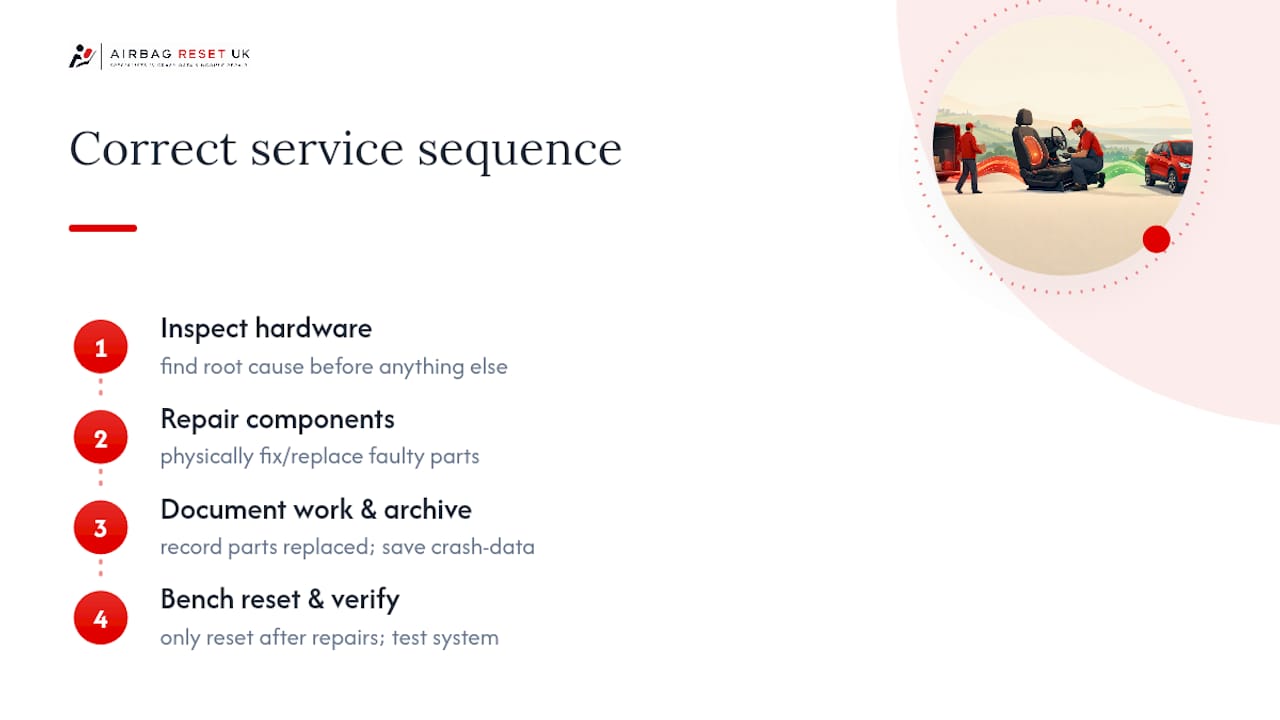
The conventional advice online tends to treat the reset as the headline event. It isn't. The inspection and repair stage is where the real risk lives, and it's the stage most likely to get rushed because owners want the warning light gone and the car back on the road. Prioritise the physical repair, get proper documentation of what was replaced, and only then think about the bench work.
If there's one thing worth taking from this: treat the crash-data archive as evidence, not clutter. It protects you if a claim gets disputed later, and any provider unwilling to hand it over isn't one you should be using.
— John
Get your module reset without the dealer markup
Airbag Reset UK is the practical alternative to a dealer swap for anyone facing a locked SRS module after a collision. Rather than paying for a brand-new unit and the VIN reprogramming that comes with it, you post the original module, get it cleared on the bench, and receive it back verified, usually within days rather than weeks.
This service suits both individual owners and independent garages, with discounted rates sometimes available for trade accounts. If you've already had the hardware repaired and just need the crash flag cleared properly, with evidence to back it up, book a postal reset and get a fixed quote before you send anything.
FAQ
What causes the airbag light to stay on after a crash?
The SRS module writes a permanent crash-event flag into its memory once it detects deployment, and that flag locks the module until it's cleared on a bench or the unit is replaced.
Can I clear a wet seat airbag light with a normal OBD-II scanner?
No. Standard scanners typically can't reach the protected EEPROM area where the crash flag is stored, which is why the light returns even after the dashboard codes are cleared.
Do I need to repair the airbags before sending the module for a reset?
Yes. Deployed airbags, spent pretensioners, and damaged sensors must be replaced first; a bench reset only clears the module's memory, it doesn't repair physical hardware.
How much does a postal bench reset cost?
Pricing for standard modules starts at a modest fee, with surcharges for more complex units and price matching sometimes available against genuine quotes.
How long does a postal crash-data reset take?
The bench work itself is often completed same-day once the module arrives; total turnaround mostly depends on how quickly the postal legs move each way.
What proof should I get that the reset actually worked?
Ask for a pre-clear and post-clear EEPROM read, photos from the bench arm test, and tracking confirmation, then verify in-vehicle with a full SRS scan and road test.