
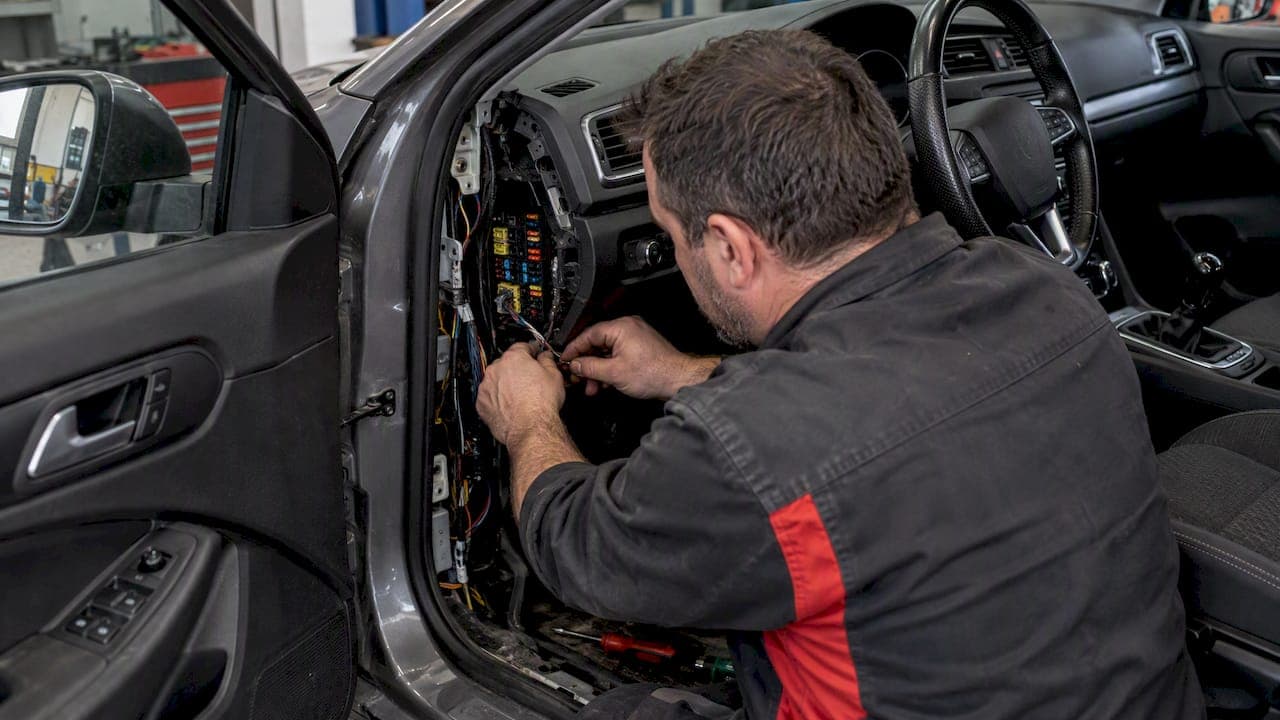
Airbag fuse failures can result from faults in the SRS wiring, connector pins, or control unit. Do not keep fitting new fuses. Disconnect the battery, read the SRS fault codes with a suitable scan tool, and trace the circuit before any more power goes through it.
TL;DR:
- A fuse that blows at ignition suggests a short; failure after moving the seat or steering points toward a connector, clock spring, or pinched loom.
- A wiring diagram shows which modules share the fuse; specialists should test isolated wiring with proper probes, never improvised leads or a live circuit.
- If visual and safe low voltage checks do not locate the fault, stop and book a professional diagnosis; trained specialists should handle SRS component work.
- An illuminated SRS lamp is a major MOT defect; testers inspect airbags and pretensioners, and the lamp should go out after the ignition self check.
- Repairing wiring may not extinguish the SRS lamp if crash data remains stored; have a specialist check the memory before replacing the module.
Table of Contents
- Which electrical faults most often blow the airbag fuse?
- What is the safe way to diagnose a blowing airbag fuse?
- How do clock springs, pretensioners, sensors and control units cause shorts?
- What wiring and connector checks can you do yourself?
- When should you stop and book a specialist?
- How do you confirm the repair has worked?
- Why do measured tests beat guesswork on airbag faults?
- How can we help once the SRS memory needs resetting?
- FAQ
- Sources
Which electrical faults most often blow the airbag fuse?
Start with the likeliest suspects. Each one leaves a pattern you can recognise before you pick up a single tool.
- Chafed or pinched wiring: a loom rubbed through against bodywork or trapped by a seat rail can short to earth and blow the fuse.
- Loose, bent or corroded connector pins: these can cause intermittent electrical faults.
- Clock spring failure: the flat cable inside the steering column can break or short.
- Seatbelt pretensioner plugs and wiring: connectors can be disturbed when the seat moves.
- Crash sensors or the control module: faults in these components can affect the circuit.
- Wrong fuse rating: a fuse of the wrong value will fail early, or hide a fault that should be found.
If the fuse blows when you turn the ignition on, suspect a short. If it fails after you adjust the seat or steering, suspect a connector or moving part.
What is the safe way to diagnose a blowing airbag fuse?
Work through the circuit in order. Guessing wastes fuses and, worse, can set off a live airbag.
- Isolate the power. Disconnect the battery and follow the manufacturer's safety guidance for SRS work before touching any airbag component or connector.
- Read the fault memory. Diagnostic trouble codes are the most reliable starting point, because modern systems are too complex for a visual check alone, and clearing codes without fixing the electrical fault is dangerous.
- Inspect by eye. Look at connectors, harness routes and the fusebox for melted plastic, heat marks, green corrosion or pinched sections.
- Trace the fuse feed. Use the manufacturer's wiring diagram to see which modules and components that one fuse protects. This tells you where to look and what to unplug.
- Test with the circuit dead. Have a trained specialist use appropriate equipment to test the isolated wiring. Do not test a live airbag circuit.
- Use the right probes. Specialist probes rather than improvised adapters protect the connector contacts, which are easily damaged by a paperclip or a bare meter lead.
Pro Tip: Photograph each connector before you unplug it and label what you disconnect, so the circuit goes back together exactly as you found it.
How do clock springs, pretensioners, sensors and control units cause shorts?
Each component fails in its own way, and the symptoms point you towards the culprit.
- Clock spring: A damaged clock spring is a recognised cause of SRS faults.
- Seatbelt pretensioners and switches: faults in these components or their wiring can cause SRS problems. Have a specialist investigate, particularly if symptoms change when you move the seat.
- Crash and impact sensors: faults in these components can cause SRS problems. Have a specialist investigate sensor faults and any need to reset stored data.
- Airbag control unit: a fault in the module is one possible cause. A specialist can analyse the fault memory and check the wiring before diagnosing the module.
Resist the urge to replace the module as a first move. Replacement may be costly and will not resolve an underlying wiring fault.
What wiring and connector checks can you do yourself?
Keep every check on a dead circuit with the battery isolated. These measurements tell you whether a section of wiring is sound.
- Fuse and holder: confirm the fuse rating against the manual or fusebox lid. Look for scorched contacts, spread terminals or a loose fit in the holder, any of which causes heat and repeat failures.
- Continuity and resistance: a specialist can measure wiring and connector resistance with appropriate equipment. Unusual or changing readings may point to a wiring or contact fault.
- Short-to-earth: have a trained specialist test for a short using appropriate equipment and manufacturer-specific wiring information.
- Probe technique: use proper test leads that suit the pin size. Forcing a stiff lead into a terminal spreads the contact and creates the very fault you are hunting.
- Record the symptoms: note when the fuse fails, such as after turning the wheel, moving the seat, hitting a bump or driving in rain. The pattern narrows the search to one area.
Pro Tip: Do not manipulate SRS wiring or connectors yourself. Have a trained specialist investigate intermittent faults.
When should you stop and book a specialist?
Know where the line sits, because the consequences of getting it wrong include a legal one.
- MOT consequences: an illuminated SRS warning lamp is a "Major" defect and fails the MOT. The lamp should light at ignition and go out after the self-check, and testers also look at airbags and seatbelt pretensioners.
- Fault not found: if safe low-voltage checks do not locate it, stop and book a professional diagnostic.
- Specialist access: technicians use manufacturer wiring diagrams and specialist probes, and may need to remove trim, seats or restraints to reach the fault.
- No shortcuts: never bypass the circuit or keep swapping fuses as a long-term fix.
How do you confirm the repair has worked?
Once the wiring or component is repaired, have a trained specialist verify the repair. They can check the fault memory and confirm the SRS lamp behaves as specified by the manufacturer. 3. Keep a short record of what you repaired and the test results, which helps at the next MOT or if the fault returns.

Why do measured tests beat guesswork on airbag faults?
Every blown fuse is information, and the worst response is to ignore it by fitting another. In my view, connector pins and damaged harness sections are worth checking before considering the module, and fault codes plus a wiring diagram can help guide diagnosis. Once the real fault is repaired, a module reset can restore normal operation without replacing the ECU.
— John
How can we help once the SRS memory needs resetting?
After the wiring fault is repaired, the crash data stored in the module can keep the warning lamp lit. We offer a postal airbag module reset, and we can identify your module from a part number or a photo. Our standard resets start from £35, which may avoid buying a replacement ECU. Send us the unit and we will take it from there.
FAQ
Why does a certain fuse keep blowing?
A fuse can blow when current exceeds its rating, for example because of a short circuit or a failing component. Replacing it only works if you find and fix the cause first. Reading the fault codes and tracing the wiring is the reliable route.
Why is my airbag light on?
An illuminated airbag warning light can indicate an SRS fault, such as a wiring problem, a sensor fault or a damaged clock spring. If the light stays on, the airbags may not deploy in a crash. Have the codes read as soon as you can.
Can I pull a fuse without a puller?
You can use fine-nosed pliers or tweezers, but only with the ignition off and the battery disconnected on SRS circuits. Grip the fuse body gently so you do not crack it or bend the terminals. A plastic fuse puller is safer where one is clipped inside the fusebox lid.
How do you change an airbag fuse?
Switch the ignition off, disconnect the battery and find the fuse using the fusebox diagram. Remove it and fit one of the exact same rating. If it blows again straight away, stop and diagnose the circuit instead of trying another.