
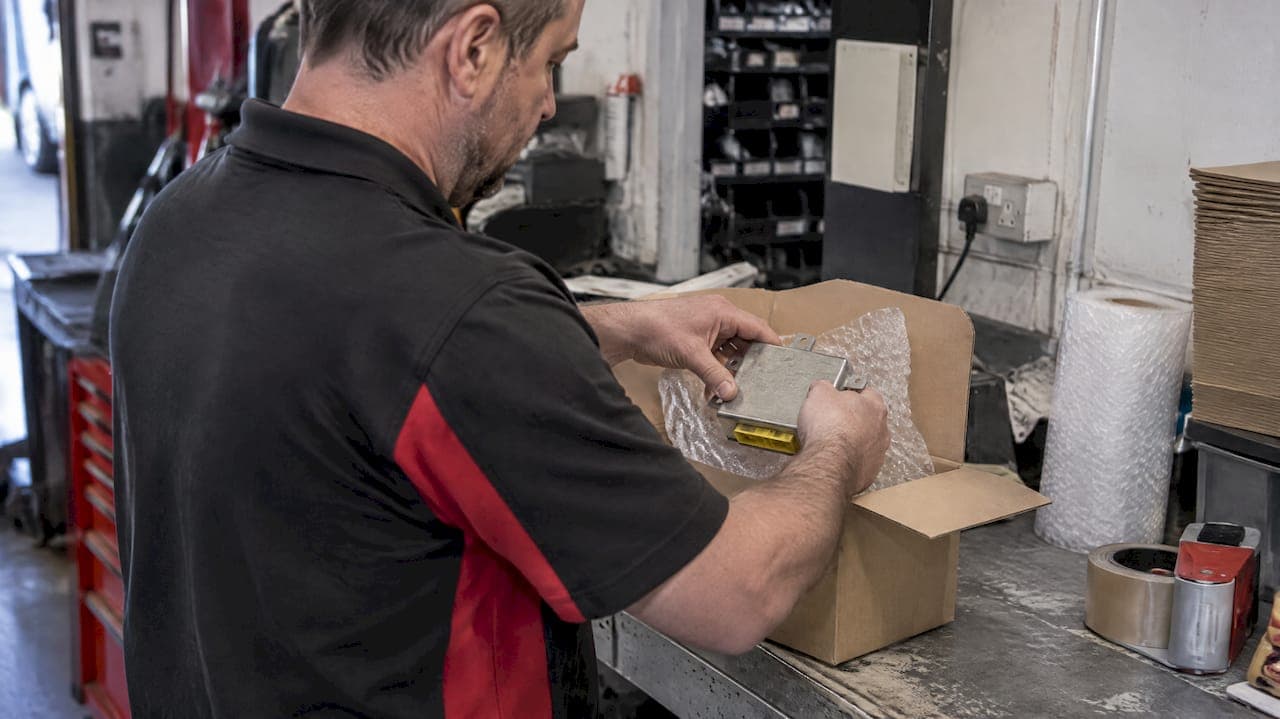
On a Citroën Relay, an airbag light is most often caused by a seatbelt pretensioner, seat wiring or occupancy-sensor fault, or by an internal control unit fault such as B0100 or B010049. A lit SRS lamp fails an MOT, so don't leave it. Start with a few safe owner checks, then get the module read with an SRS-capable diagnostic tool.
TL;DR:
- Generic OBD II readers built for engine diagnostics usually cannot access the SRS module; record the exact code with a compatible scanner before clearing it.
- Check battery voltage, but leave SRS wiring to a qualified technician; never probe squib circuits or use a resistor to imitate a missing sensor.
- B0100 or B010049 that returns immediately indicates a hard internal fault; specialists can assess memory repair before replacing the module, which may require recoding.
- A postal reset cannot repair damaged wiring or deployed airbag parts, and replacement may require recoding; ask the specialist for a fixed quote and turnaround.
Table of Contents
- What usually switches the Citroën Relay airbag light on?
- How do you diagnose the fault and read the SRS codes?
- Which safe checks can you try before calling a specialist?
- When does the airbag control unit need repair, reset or replacement?
- How does a postal airbag module reset work?
- Why a measured, safety-first approach saves money
- How we help when your Relay airbag light won't clear
- FAQ
- Sources
What usually switches the Citroën Relay airbag light on?
Owner reports on Relay and Ducato-family vans point to a short list of culprits. Mapping your symptoms to one of them saves you from chasing the wrong part.
- Seatbelt pretensioner and buckle switch faults: these are reported repeatedly on Relays and related Ducato vans, and the light often returns after a belt has been replaced or disturbed.
- Occupancy sensor and seat swap problems: owners describe persistent faults after swapping seats on converted or refurbished vans, where a sensor was left off or the wiring did not match.
- Internal control unit errors: B0100 and B010049 are a recurring fault on Ducato and Relay family units, and they usually need specialist attention rather than a simple code clear.
- Voltage events: a flat battery, a jump start or careless disconnection can corrupt the module's memory and leave a hard fault.
Forum threads suggest the control unit fault is the one that catches people out. Owners in one long thread report that a B0100-49 internal fault is often tied to voltage events and that repairing the corrupted memory is commonly faster and cheaper than buying a new module.
Owner reports describe sending the module to a specialist repairer as a fix that often works without recoding, based on a B010049 thread on a Ducato-family forum. These are community accounts, not a guarantee, but they show the pattern clearly.
How do you diagnose the fault and read the SRS codes?
Airbag faults are stored as B-codes, and reading them properly takes a diagnostic tool that can talk to the SRS module. The codes you are most likely to meet on a Relay break down like this:
- B0100 or B010049: an internal control unit fault, often linked to memory corruption after a voltage event.
- Squib or pretensioner circuit codes: these point to the belt, its connector or the wiring beneath the seat.
- Occupancy circuit codes: these suggest a missing, disconnected or mismatched seat sensor.
Codes in the lower B00xx range generally cover squib circuits, while higher codes such as B0100 tend to mean a system-level or internal unit fault. Manufacturers use some proprietary codes, so check factory service information before drawing firm conclusions.
The catch is the scanner. A generic engine-focused OBD-II reader usually cannot access the SRS module at all, so it cannot interpret these codes or clear them reliably. That is why so many owners clear a code on a cheap reader and watch the light return a moment later.

Pro Tip: Photograph the fault code and note the exact wording before anything is cleared. A code that comes back straight away points to a hard fault, not a one-off glitch.
If the control unit has been replaced, recoding or adaptation may be needed so the new unit matches the van. Our guide to airbag diagnostic steps walks through the process in more detail.
Which safe checks can you try before calling a specialist?
Work through these in order, and keep safety first. An airbag system can fire if mishandled.
- Check the battery. Make sure it is healthy and the voltage is stable before any diagnostics, because low voltage can trigger or mask SRS faults.
- Leave SRS connectors alone. Do not disconnect the battery or touch airbag-system wiring unless you are following the vehicle manufacturer's service procedure. If you are unsure, have a qualified technician handle it.
- Have seat wiring checked by a qualified technician. Do not handle the SRS connectors yourself.
- Check the seatbelt buckle and pretensioner. Look for loose or damaged connectors, but never put an ohmmeter across a squib circuit. Owners warn in the French Car Forum thread that probing these circuits risks deployment. Use a scan tool or a technician instead.
- Log any intermittent behaviour. If the light clears after several ignition cycles, note it for diagnostics, but don't assume the system is healthy.
Pro Tip: Do not use a resistor to spoof a missing occupancy sensor. Have the correct sensor and wiring checked by a qualified technician.
If the light persists after these checks, our post on why an airbag light won't clear explains what to look at next.
When does the airbag control unit need repair, reset or replacement?
Clearing a code and repairing a control unit are different jobs. A hard fault such as B0100 or B010049 will not stay cleared, because the unit's memory or internal logic is the problem. That usually means a specialist repair or a replacement unit.
- Diagnosis first: the module is read on the bench to confirm whether the fault is internal or sits elsewhere in the circuit.
- Memory repair or data clear: where stored data is corrupted, specialists repair or reset it, and owners report that this often avoids recoding.
- Replacement: this is the fallback when the unit is physically damaged, and it may need recoding to the vehicle afterwards.
Cost and turnaround vary between repair and replacement, so ask for a fixed price before you commit. Resetting the original unit is often the cheaper route when it is safe to do so.
The MOT inspection manual treats an illuminated SRS warning lamp indicating a system malfunction as a major defect, which means an immediate failure. A passenger airbag that has been deliberately switched off is not a defect, but a lit malfunction lamp must be resolved to pass.
How does a postal airbag module reset work?
A postal reset lets you skip the garage queue and the cost of a new unit. Here is what the process looks like from start to finish.
- Identify the unit: locate the airbag control unit and photograph its part number so the correct module is confirmed before removal.
- Arrange safe removal: have a qualified technician remove the module and pack it so the connector and casing are protected in transit.
- Specialist service: the module is tested, its memory is repaired or reset, and it is returned to you.
- Turnaround: ask the specialist about the expected turnaround for your module.
- Know the limits: a reset cannot fix physical damage to wiring or deployable parts, and recoding may occasionally be needed after refitting.
We can often confirm the unit from a photo before you post it. Our Fiat Ducato reset page covers the closely related Ducato units.
Why a measured, safety-first approach saves money
In my view, most Relay airbag faults are less dramatic than they first appear. The light looks alarming, so owners rush to buy a new control unit, when a careful read of the code and a few safe checks often show a simpler cause. A specialist reset can then avoid an expensive replacement. The rule I stick to is simple: do the safe checks yourself, and hand anything involving the squib circuits to someone with the right tools.
— John
How we help when your Relay airbag light won't clear
If the light is still on after your checks, we can reset or repair the original module and send it back, so you avoid buying a new unit you may not need. Our airbag module reset pricing lists fixed prices of £35–46, and we also reset motorhome airbag modules for £65, which suits Relay-based conversions.
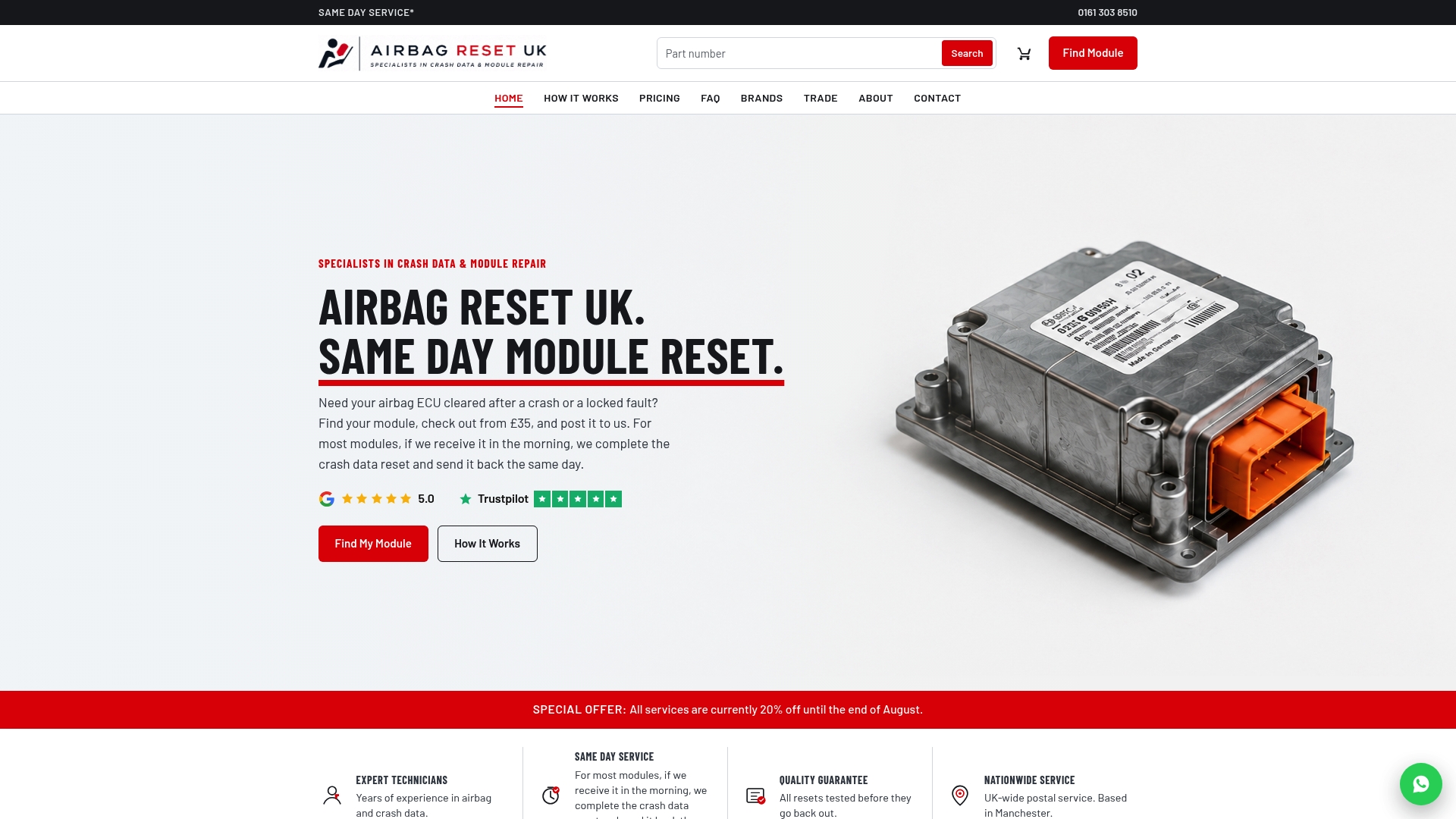
- Postal reset and repair: we handle vans and motorhomes across the UK.
- Identification help: send a photo of the part number by WhatsApp or phone and we will confirm the module.
- Turnaround: ask us about the expected return time for your module.
- Trade accounts: garages and workshops can apply for discounted rates.
To start, identify your module, contact us through our Citroën Relay service page, and post the unit to us.
FAQ
What will make an airbag light come on?
A fault anywhere in the airbag system will switch it on, from a worn seatbelt pretensioner or a disconnected seat sensor to a problem inside the control unit. Low battery voltage and damaged wiring can also trigger it.
What are some common faults with the Citroën Relay airbag system?
Seatbelt pretensioner and buckle faults, occupancy sensor problems after seat swaps, and internal control unit errors such as B0100 or B010049 are the ones owners report most often.
Is it expensive to fix an airbag light?
It depends on the cause. A loose connector costs little, while replacing a control unit costs far more. Resetting the original module is often the cheaper route, and our reset prices run from £35–46 for a standard module.
Will a generic scanner reset a Citroën Relay airbag light?
Usually not. Engine-focused OBD-II readers generally cannot reach the SRS module, so a specialist tool or a module-level reset is needed.
Sources
- Gov
- Citroen Relay 2022 airbag codes - French Car Forum
- Ducato Air Bag ECU | FIAT Ducato/e-Ducato (Gen 3) | The FIAT Forum