
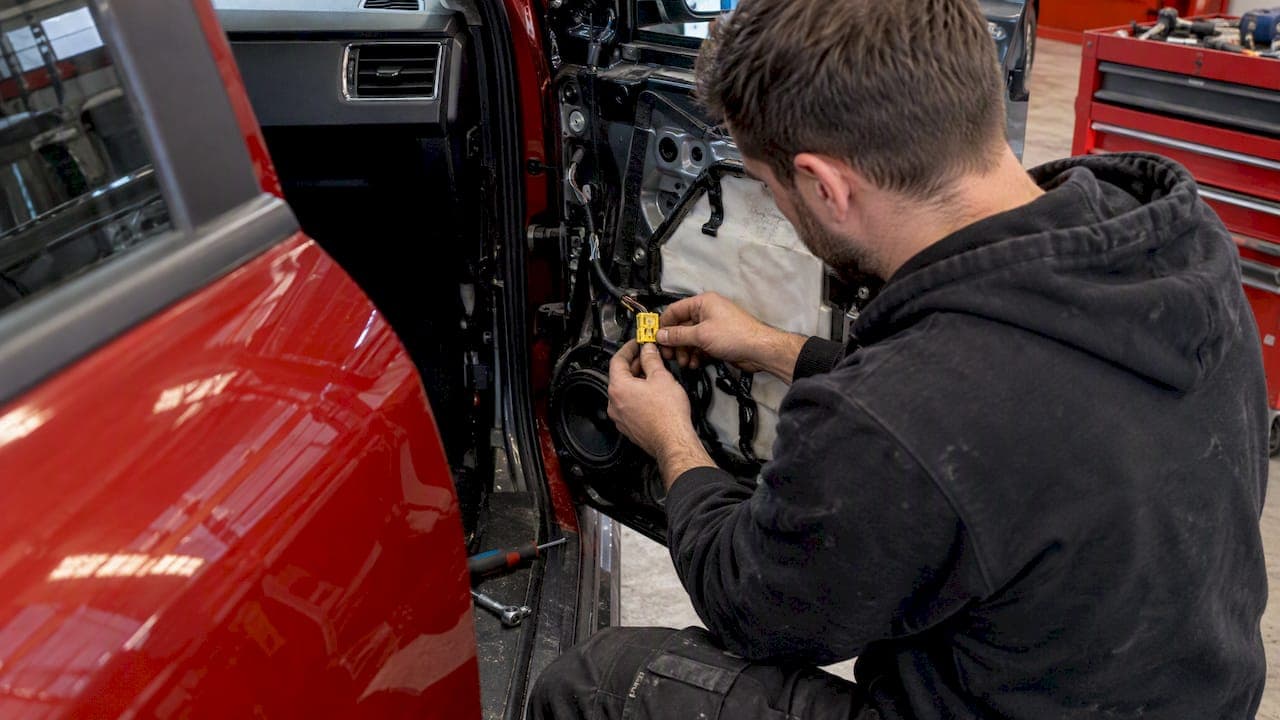
If your airbag light came on, or refused to go out, after a bodyshop or garage had your car, the cause is usually one of three things: a connector that was unplugged and not seated properly, a sensor or wiring loom that was disturbed, or a fault stored in the airbag control module that nobody cleared. The first two need a physical fix. The third needs the module's memory dealing with properly. Either way, the light is telling you the restraint system may not work in a crash, so it is worth sorting out rather than living with.
TL;DR
- Bodywork often means removing bumpers, doors, seats or trim that carry airbag sensors and wiring. One loose plug is enough to light the warning lamp.
- Do not just disconnect the battery or wipe the code. If the fault is real, the light comes straight back.
- Ask the repairer to read the airbag module's fault code with a scanner that can access the SRS system, then fix what the code points to.
- A lit SRS lamp is a major defect at MOT, so it is an automatic fail.
- If the wiring is fine but the module still holds crash data or a fault, a postal crash data reset is a fixed-price alternative to buying a new unit: £35 to £46 at Airbag Reset UK.
Table of Contents
- Why the airbag light comes on after bodywork
- Is it safe to drive with the airbag light on?
- What a garage should do to diagnose it
- Should you disconnect the battery or clear the code?
- The MOT consequence
- What it costs in the UK
- Perspective: why we reset before we replace
- When a crash data reset is the right fix
- How our postal reset works
- A sensible order of action
- FAQ
- Sources
Why the airbag light comes on after bodywork
Airbag systems are spread across the whole car. Crash sensors sit in the front end and the sides, there are wiring connectors under the seats, in the doors and behind the dash, and the control module sits somewhere central, often under the console or seats. Bodywork touches many of these places.
When a bodyshop strips a car, plugs come apart. If one goes back in half-seated, or a pin bends, the module sees an open circuit and turns on the lamp. Ashton's Garage notes that bodywork or interior work can damage wiring or connectors, and that a fault left stored in the control module can keep the light on afterwards.
The usual suspects
- Crash sensors. After front-end work, common causes include sensors left unplugged, misaligned, damaged or hit by water ingress, according to a diagnostics guide.
- Bumper connectors. A Porsche owners' forum thread describes a warning after bumper removal, with the advice to reconnect the multi-plug connections correctly and check for damaged pins or sockets.
- Seat wiring. Moving a seat or working in the cabin can disturb the connectors under the front seats and cause an intermittent warning, as Ashton's Garage explains.
- Door harnesses. Side airbags and door sensors are wired through the door shut. Taking a door skin or trim off means unplugging them.
- Clock spring, seat-belt switch or crash sensor. The Motor Ombudsman lists a faulty seat-belt switch, a damaged clock spring or a defective or unsynchronised crash sensor as causes of an illuminated lamp. Steering column and wheel work can easily upset a clock spring.
- A stored fault that was never cleared. The wiring may now be perfect, but the module still remembers the fault from when the plug was out. RAC says that after a repair a warning light may stay on until the car's onboard system is reset, but also that if it stays on, the underlying issue may still be there.
Similar patterns show up after other kinds of work. If yours followed dashboard or interior work, our guide to airbag lights after dash work covers it, and subframe repairs have their own causes.
Was there an actual impact?
If the car was in a collision before the bodywork, the module may also have logged crash data. Start Rescue says a vehicle may need its airbag light reset after an accident even when the impact was not serious enough to fire an airbag. That is a different problem from a loose plug, and no amount of re-plugging connectors will clear it.

Is it safe to drive with the airbag light on?
Treat it as a fault, not a reminder. The Highway Code says warning lights that do not go out after starting, or that come on while driving, should be stopped for and investigated because they could indicate a serious fault.
Volkswagen UK says an illuminated or flashing airbag and seat-belt lamp means a fault, recommends driving carefully to an authorised repairer without delay, and warns the system may not trigger in an accident. The Motor Ombudsman takes the same line: the lamp should be rectified promptly because the airbags may not deploy.
In practice, with the light on, one or more parts of the restraint system may not work as intended. Sensors might not report, or the module might have shut the system down. You do not know which until it is read.
What a garage should do to diagnose it
The starting point is the fault code held by the airbag module. A garage reads it with a scanner that can talk to the SRS system, and the code is the beginning of diagnosis, not the end. A suitable diagnostic check is usually needed before the problem can be confirmed, as Ashton's Garage says.
Two points matter after bodywork:
- Generic scanners often cannot see the airbag module. Effective diagnosis needs an understanding of the car's specific SRS network, and a basic engine code reader may not reach the module at all.
- Looking at the panels proves nothing. Collision repair professionals stress that visual inspection of sheet metal is not enough; an electrical assessment with an OEM-level scan tool is how system integrity is confirmed.
A useful code tells you which circuit is open or out of range: a particular door sensor, the passenger seat, the clock spring, a belt pretensioner. That points the technician to the exact plug the bodyshop disturbed.
Questions to put to your bodyshop
- Did you disconnect any airbag, sensor or seat-belt connectors, and did you scan the SRS system before and after?
- Can I see the post-repair scan report?
- Was the light on when the car came in, or did it appear after?
The last question matters. A light that was already on before the repair may point to an old crash data fault rather than something the shop broke. A light that appeared the moment you collected the car points to a disturbed connector.
Should you disconnect the battery or clear the code?
This is the most common shortcut, and the one to avoid. Clearing a code without finding the cause simply brings the lamp back, and it can leave an unsafe problem unresolved. RAC advises that a mechanic should diagnose the fault and reset the system, rather than the owner guessing.
A battery disconnect rarely clears an SRS fault anyway, because the module stores faults in non-volatile memory. Even where it appears to work, you will have hidden the symptom, not fixed the loose plug. If you are tempted to poke around under the seats, do not: if the light stays on, leave the wiring alone and get a diagnostic check. Airbag connectors are often yellow for a reason, and careless handling is exactly how the original fault starts.
If the lamp still will not go out after a proper fix, our page on an airbag light that won't clear covers the next checks, and the intermittent airbag light guide helps if it flickers on and off.
The MOT consequence
This is not only a safety point. The DVSA MOT inspection manual classes an SRS malfunction indicator lamp showing a system fault as a major defect, which means an automatic MOT failure. A lit passenger-airbag-disabled lamp is not itself a defect, so a deliberately switched-off passenger airbag is a separate matter.
If your MOT is due soon, get the light dealt with first. Our guide to airbag diagnostic costs and avoiding MOT failure sets out the options.
What it costs in the UK

Figures vary by garage and car, but one UK defect guide gives a useful range: an initial diagnostic scan at an independent garage is typically £50 to £90, a repaired or replaced seat loom runs roughly £120 to £250, and replacing an airbag or control module is the expensive end.
That last point is where owners overspend. A garage that reads "module fault" or "crash data present" may quote for a new control unit, which then also needs coding to the car. In many cases the original unit can be reset or repaired instead.
| Route | What it fixes | Typical cost |
|---|---|---|
| Diagnostic scan at an independent garage | Finds the fault code | £50 to £90 |
| Seat loom repair or replacement | Damaged or disturbed seat wiring | £120 to £250 |
| Crash data reset by post (Airbag Reset UK) | Stored crash data or module fault in the original unit | £35 to £46 |
| Replacement control module | Module that cannot be recovered | Highest of the four, and usually needs coding |
The first two rows come from the UK guide linked above. The reset price is from our pricing page.
Perspective: why we reset before we replace
We see the same story repeatedly: a car comes back from the bodyshop, the lamp is lit, and the next quote is for a new module. Often the wiring has already been put right by someone, yet the module is still holding a fault or crash record from when the plug was out or the car was hit. The light stays on because the module has not been told the problem is gone.
Our view is simple. Find the physical fault first, because a reset on top of a real fault is pointless and the lamp will return. Once the wiring and sensors are sound, reset the original module where it can be done safely, instead of paying for a new unit, coding and delays. That is why we focus on resetting the original unit, and why our technicians, with over 40 years of combined experience, will help you identify the module from a part number or photo by WhatsApp or phone before you post anything.
We would rather tell you your light needs a garage first than take a job that will not hold.
— John
When a crash data reset is the right fix
A reset makes sense when the physical side has been checked and the module itself is the remaining problem. Typical signs:
- The scan shows crash data stored, or a module-internal fault.
- The bodyshop has confirmed connectors are seated and sensors are in place, yet the lamp is still on.
- The car had an impact before the repair and the light has been on since.
- You have been quoted for a replacement module and want a cheaper, fixed-price alternative.
It does not make sense when the code points to an open door sensor, a damaged clock spring or a seat wiring fault. Those need hands-on repair, and a reset alone will not hold. Our guides to no-codes airbag lights and diagnostic steps to avoid buying a new module help you judge which side of that line you are on.
For a broader view of how crash and no-crash causes differ, see our airbag warning light overview. The same logic of checking basics first applies to other dash lamps too, as this piece on warning lights after vehicle body repairs explains for general causes and why proper diagnostics matter.
How our postal reset works
Airbag Reset UK is a UK-wide postal service for airbag ECU crash data reset and repair on cars, vans and motorhomes.
- Identify the module. Send us the part number or a photo of the label, or message or call us. We confirm it is something we can reset.
- Post the module. Remove it, or have your garage remove it, and send it to us.
- Same-day turnaround for most modules. Units that reach us in the morning are, for most jobs, turned around the same day.
- Refit and recheck. Your garage refits it and confirms the light stays off and the code does not return. After a sensor repair you should verify the code has cleared and does not come back.
Prices are fixed and published. A standard airbag module reset is £35 to £46, a motorhome airbag reset is £65, and our mobile airbag reset starts from £75. We also price match genuine like-for-like quotes, and approved garages, bodyshops and mobile technicians can use discounted trade accounts.
Bodyshops get this callback often. If you run one and want the module sorted without sending the customer to a dealer for a new unit, trade accounts are built for that.
A sensible order of action
- Do not drive far on a lit lamp. Get it checked promptly.
- Go back to the repairer and ask what was disconnected.
- Get the SRS module scanned with equipment that can read it.
- Fix any physical fault the code points to: plug, sensor, loom, clock spring.
- If the light persists with sound wiring, consider a module reset rather than replacement.
- Confirm the lamp stays off before your MOT.
This order protects you from paying for a reset that does nothing, and from paying for a new module you did not need.
FAQ
Why is my airbag light on after bodywork?
Most often a connector or sensor was unplugged during the repair and not seated correctly, or a fault was logged in the airbag module while it was disconnected. Seat wiring, door harnesses, bumper sensors and the clock spring are all common culprits. A scan of the SRS module tells you which.
Will disconnecting the battery reset the airbag light?
Not reliably, and it is not a safe way to deal with it. Airbag faults are stored in the module's memory, and if the cause is still there the lamp returns. Get the code read and the cause fixed first.
Is it expensive to fix an airbag light after a repair?
It depends on the cause. A UK guide puts diagnosis at £50 to £90 and a seat loom repair at £120 to £250. If the original module only needs a crash data reset, ours costs £35 to £46.
Can I pass an MOT with the airbag light on?
No. An SRS warning lamp indicating a fault is a major defect and fails the test. Fix the cause and confirm the light is off before you book.
Can I just post my airbag module to you?
Yes, once the module is identified. Send the part number or a photo and we will confirm it before you remove anything. If your scan points to damaged wiring or a sensor instead, fix that first, as a reset will not cure a physical fault.
Sources
- What Does the Airbag Warning Light Mean? | Ashton's Garage
- Getting to know airbags | The Motor Ombudsman
- Why is my airbag light on? | Start Rescue
- Dashboard warning lights: all symbols explained | RAC Drive
- Airbag System Failure following removal and refit of front bumper | Porsche Club GB forum
- Airbag Light On After Repair? How to Test Airbag Sensor
- Airbag warning lamp on, or airbag missing | MOT Files
- Air Bag systems estimates, diagnostics and repairs
- The Highway Code, Annex 6: Vehicle maintenance, safety and security | GOV.UK
- Red Airbag & Seat Belt System Warning Light | Volkswagen UK
- MOT inspection manual: other equipment | GOV.UK