
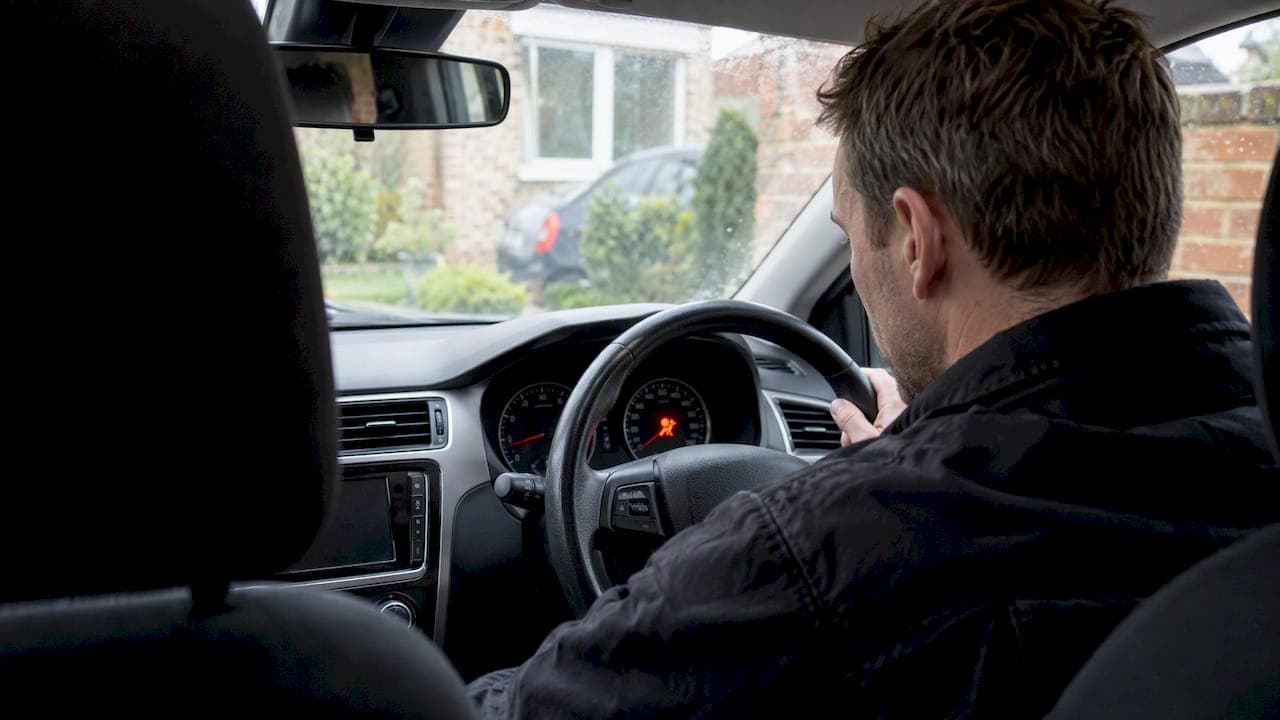
If the airbag light came on, or stayed on, after the dashboard was removed, repaired or refitted, the SRS system has almost certainly logged a fault it cannot clear by itself. Common culprits are a connector that was not refitted properly, a disturbed clock spring or sensor, or a crash event stored in the airbag ECU's memory. The light means the system may not work in a collision, so get it checked before it becomes routine driving. This guide explains what to check, what it costs and when a postal crash data reset is the sensible route.
TL;DR
- An airbag light after dash work means the SRS control unit has stored a fault. Plugging in a basic code reader rarely clears it.
- An illuminated SRS light is a major defect in the MOT inspection manual, so the car will fail.
- Find the fault first: connector, clock spring, sensor or stored crash data. Only then decide between repair and reset.
- If the original airbag ECU is sound but holds a hard crash code, a postal reset costs from £35 with us and often saves buying a replacement unit.
Table of Contents
- Why the airbag light appears after dashboard work
- What the light actually tells you
- Check these things before anything else
- Why a cheap code reader will not settle it
- What it means for your MOT
- What the repair bills look like
- Repair, reset or replace: how to decide
- Our view: don't buy a new ECU before you know what is stored
- How our postal reset works
- Mistakes to avoid
- FAQ
- Sources
Why the airbag light appears after dashboard work
The dashboard is crowded with the parts the airbag system relies on. Wiring runs for the passenger airbag, the steering wheel airbag, the seatbelt pretensioners and often the occupant sensors. Any of them can be unplugged, pinched or knocked while the dash comes out. The SRS control unit checks every circuit each time you switch the ignition on, and if one reads open, shorted or out of range, it stores a fault and lights the warning lamp.
The usual causes after dash work, roughly from most to least common:
- A connector not fully seated or not reconnected. Airbag connectors are often yellow and have a locking clip. Half-engaged, they give an intermittent fault.
- A disturbed clock spring. This is the coiled ribbon cable behind the steering wheel that feeds the driver's airbag. It can be damaged or misaligned if the wheel is turned or the column is moved. Broken clock springs are one of the typical faults technicians find behind an airbag light.
- Seat or occupant sensor wiring. If the dash job involved the centre console or seat removal, the wiring under the seats is worth a look.
- Moisture or damaged wiring. A heater matrix leak is a classic reason for taking a dash out, and water in the footwell can reach the SRS module or its connectors. The same source lists moisture-damaged wiring among the common causes.
- A stored crash or deployment event. If the car was in an accident, the module may hold hard-coded crash data that stays until it is cleared with the right equipment, even after the physical parts have been replaced.
The last point matters for anyone who bought a dashboard and airbags after a collision. New components do not wipe the old record. The module still believes the crash happened.
What the light actually tells you
It is tempting to treat the symbol as a nuisance, because the car drives perfectly normally. It is not a nuisance light. When it stays on, the airbags and seatbelt pretensioners may not deploy in a crash, which Mazda's owner's manual says could lead to death or serious injury. Its advice is to have the vehicle inspected by an expert repairer promptly.
A flashing light, or one that appears for a few seconds and goes out, is still a fault being recorded. Intermittent faults after dash work usually point to a loose or marginal connector, and they tend to return.
Some cars also sound a warning beep when the fault is detected. The Mazda manual describes a repeating beep alongside the lamp on the CX-5, for example, and other makes behave differently.
Check these things before anything else
You can do a few safe checks, and one important thing you must not do.
Do not probe or unplug airbag connectors with the ignition on or the battery connected. Service procedures call for the ignition to be off and the system left to power down before work starts. The i-CAR service information for a Ford warns that incorrect repair techniques can cause accidental deployment. Treat any airbag circuit as live explosive hardware. If you are not trained, leave the connectors to someone who is.
What you can do safely:
- Ask what was disturbed. If a garage or body shop did the dash work, ask which airbag, sensor and wiring connectors were touched. They should know.
- Look for obvious signs. A trim piece pressed against a harness, a loose floor connector, or damp carpet is worth reporting.
- Note the pattern. Does the light come on immediately, after a few seconds, or only over bumps? Does it clear and return? Those details help a technician.
- Check the history. Was there a battery disconnection, a low-voltage event or a previous accident? Our guide on the airbag light after a battery change covers a related situation.
Why a cheap code reader will not settle it
A generic OBD scanner usually talks to the engine management and sometimes gearbox, not the airbag unit. Basic scanners often lack the deep access needed to interact with the SRS ECU, so they cannot perform a real crash data reset. Even when a cheap tool does read an SRS code, clearing it does not help if the fault is still present or the module holds a locked crash record. The light returns on the next start-up.
Specialist tools can read the SRS module, identify the circuit at fault and, once the physical repair is done, clear the stored data. That order matters: diagnose, repair, then clear. Clearing first only hides the symptom for a drive or two.

If you want the longer version, our guides on diagnosing before you reset and airbag diagnostic steps walk through it.
What it means for your MOT
The MOT inspection manual is clear on this. An airbag malfunction warning lamp that stays illuminated is listed as a major defect, which means a fail. The test does not involve a full diagnostic of the system's electronics, as one service centre explains, but the tester can see the lamp, and that is enough.
This catches many people out after dash work. The job was finished, the car drives, and the MOT is due in a fortnight. A major defect also means you cannot legally treat the car as roadworthy for the test, so plan the SRS fix before the test date rather than after a fail. Garages see the same pattern with other dashboard lights, and this piece on what UK garages check when a warning light stays on shows how a methodical check-by-check approach saves time and money.
Our article on avoiding an MOT failure with a diagnostic and reset goes further on the costs.
What the repair bills look like
Costs depend entirely on what is wrong. Figures published by This is Money in June 2026, drawn from 8.5 million diagnostic checks, show:
| Fault type | Typical UK cost |
|---|---|
| Simple cable connection repair | from £139 |
| Sensor-related issues | £540 to £768 |
| Full airbag unit replacement | £1,440 to £2,160 |
These are industry-wide figures, not our prices. The gap between the first and last rows is why a proper diagnosis comes before any parts. A connector fault found early costs a fraction of a replacement airbag unit, and a stored crash code does not need new hardware at all if the original control module is healthy.
Repair, reset or replace: how to decide
| Situation | What usually fits |
|---|---|
| Light came on straight after dash work, connector or clock spring suspected | Diagnose and fix the physical fault, then clear |
| Car was in a collision, parts replaced, light remains | Crash data reset on the original module |
| Module is physically damaged, water-soaked or fails self-test | Module repair, or replacement if beyond repair |
| Light flashes or returns after clearing | Fault still present: further diagnosis |
A reset is not a cure-all. It is a precise operation that clears permanent crash data from the module, not a generic fix for electrical faults. If the underlying circuit fault remains, the lamp comes back. See our comparison of repairing versus replacing an airbag ECU and what to do when the light will not clear for more detail.
Our view: don't buy a new ECU before you know what is stored
We reset airbag control units by post, and the mistake we see most often is spending on a replacement before anyone has asked what the original is actually reporting. After dash work, the story is usually one of two. Either something was left unplugged or disturbed, which is a workshop fix, or the module is holding a crash record from before the work, which is ours.

Our technicians have over 40 years of combined experience, and our advice is simple. Get the physical circuits proven first. Then, if the original module is sound but holds crash data, reset it rather than replacing it. A new unit often also needs coding to the vehicle, and that adds cost and delay.
We would also say plainly that some modules should not be reset: if a unit is damaged beyond a safe reset, we would rather tell you than send back a light that returns. Safety comes before the sale, because the whole point of the system is that it works in the one moment you need it.
— John
How our postal reset works
If the diagnosis says the module needs its crash data cleared, our airbag module reset is priced at £35 to £46 depending on the module. The motorhome airbag reset is £65, and our mobile airbag reset starts from £75. Fixed prices, no surprise additions, and we price match genuine like-for-like quotes.
The process:
- Have the module removed by you or your garage, with the ignition off and the system powered down first.
- Send us the part number, or a photo of the label, and we help identify the module by WhatsApp or phone.
- Post the module to us anywhere in the UK.
- Most modules received in the morning are turned around the same day.
- Refit, and the light should go out.
Garages and workshops can ask about a discounted trade account. You can see the main service on our airbag module reset page, or start from our homepage.
Mistakes to avoid
- Clearing codes repeatedly to get through an MOT. The light returns and the fault is still there.
- Working on connectors with the battery connected. Accidental deployment is a real risk.
- Replacing the airbag ECU first. It costs far more than a reset when the module is healthy.
- Ignoring an intermittent light. If it flickers on start-up, the system is already reporting a problem. The fault-finding in an airbag light with no codes shows how to approach it.
- Assuming it is only the dash. Seat sensors and floor wiring are also frequent victims.
FAQ
Can I drive with the airbag light on after dash work?
The car will usually drive normally, but the airbags and pretensioners may not work in a crash. Mazda's manual says this could lead to serious injury or death. Keep journeys to a minimum and have it checked promptly by an expert.
Will the car pass its MOT with the airbag light on?
No. An illuminated SRS lamp is a major defect under the MOT inspection manual. It needs to be fixed and the lamp off before a retest can pass.
Can I clear the airbag light myself with a code reader?
Usually not. Basic readers often cannot communicate with the SRS module, and they cannot remove locked crash data. Even if a light goes out for a while, an unfixed fault brings it back.
How much does it cost to fix an airbag light?
It depends on the fault. This is Money's June 2026 figures run from £139 for a simple cable repair to £2,160 for a full airbag unit. If the issue is stored crash data on a healthy module, our reset starts from £35.
Sources
- MOT inspection manual: 7. Other equipment (GOV.UK)
- What the warning lights on your car dashboard mean (This is Money)
- CX-5 Owner's Manual (Mazda)
- Airbag Light On? Causes, Fixes, and Costs (The Motor Guy)
- Airbag MOT: Do they need checking? (Willand Service Centre)
- 2022 Ford Edge SRS service information (i-CAR)